


Functional Medicine for Service Members With Geoff Dardia, MSG (retired), and Bryan Stepanenko, MD
Service members and first responders put their own safety and well-being aside to protect others, and that same instinct often makes them the last to seek care for themselves, even though their work means they may need it most. Two retired military members and service-oriented healthcare professionals share their strategies for reaching people who tend to push through rather than ask for help and discuss what it takes to care for the people who serve and protect.


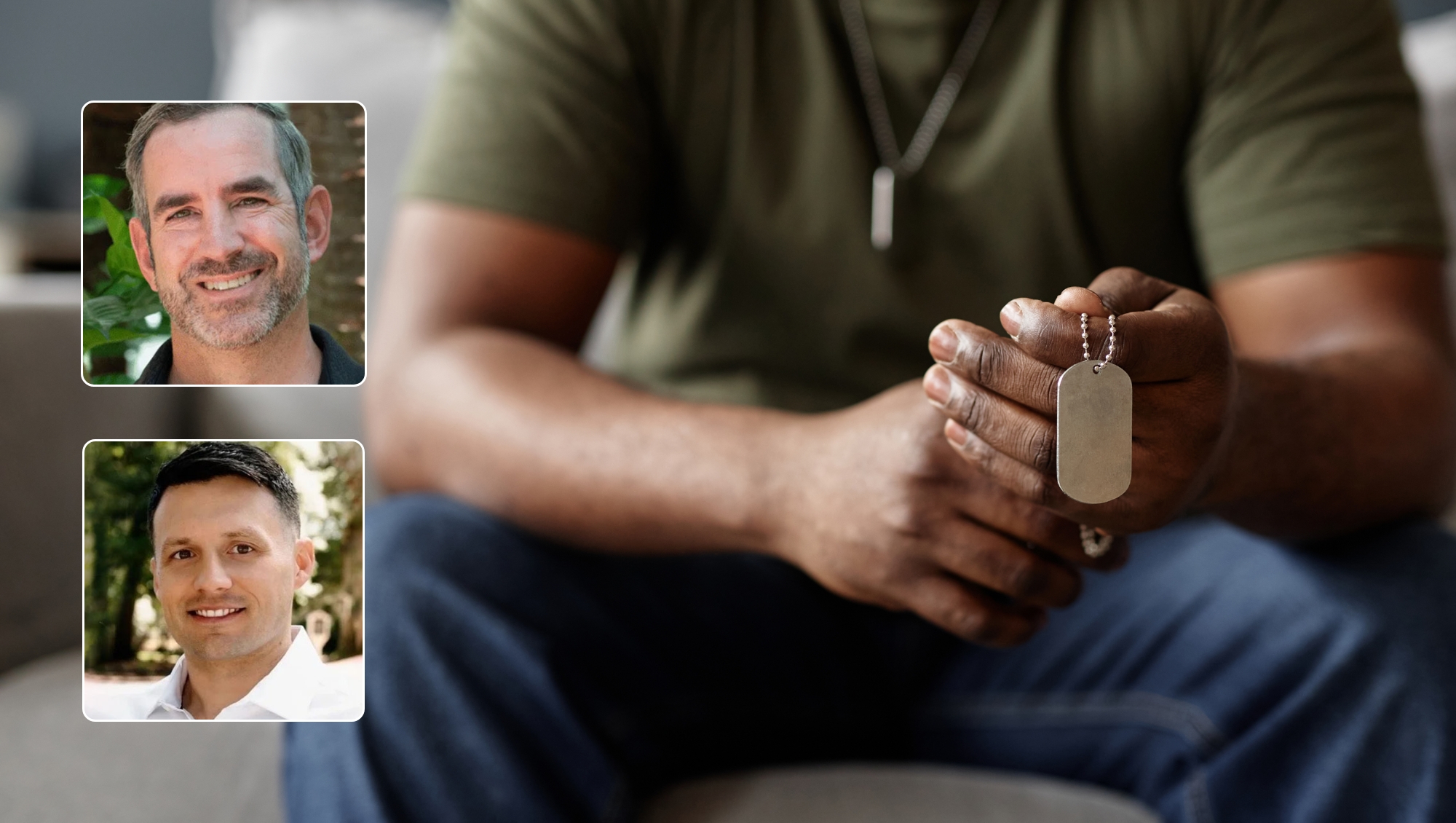
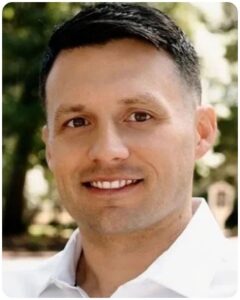
Service members and first responders are the people you want by your side in a crisis. They act fast, stay calm under pressure, and put their own safety and well-being aside to protect others. That same instinct often makes them the last to seek care for themselves, even though their work means they may need it most.
In this episode, we’re sitting down with two service-oriented healthcare professionals who understand this challenge from the inside: Geoff Dardia, MSG (retired), and Bryan Stepanenko, MD. Both are retired military members who have spent decades helping service members access functional health solutions for the unique mental and physical challenges they face. They’ve mastered the art of communicating complex health issues and the rationale for care to healthcare-avoidant individuals and are sharing some of their strategies for bridging that divide so we can better understand what it takes to care for the people who serve and protect.
Geoff Dardia, MSG (retired), is a 24-year U.S. Army Special Forces veteran and subject matter expert in functional and performance-based medicine. While still serving, Dardia founded Task Dagger Special Operations Foundation to serve special forces officers and their families. He started the SOF Health Initiatives Program in 2012, aiming to close gaps in care for SOF personnel. Now serving full-time as program director, he leads efforts that provide cutting-edge assessments and personalized treatment pathways for SOF warriors and their families, addressing issues such as TBI, toxic exposures, neuroendocrine dysfunction, and trauma. He is a functional-medicine-certified health coach, certified personal trainer, and VA-certified recovery care coordinator.
Bryan Stepanenko, MD, is a board-certified family physician and functional-medicine-certified practitioner with a unique background as a former Army family physician, a firefighter and paramedic, and a cancer survivor. With more than a decade of experience integrating evidence-based lifestyle and functional medicine into the military health system, he now serves as a lifestyle and performance clinician. His leadership in the military functional medicine program and other programs such as Operation Restore Collaborative, Joint Task Force Resilience, and the Warfighter Brain Health and Suicide Prevention Virtual Learning Collaborative reflects a lifelong mission to optimize care for high-performing populations through system innovation, collaboration, and education.
In this episode, Dardia and Stepanenko explore how functional medicine and a root-cause approach can help “quiet professionals,” including service members, first responders, and others in high-stress roles, recover from years of pushing through. Their insights include the following:
- Many service members, first responders, and other professionals in high-stress careers fit what Dardia calls the “masters of chaos” phenotype: They run on adrenaline and cortisol and only notice serious symptoms once the pace slows down.
- Dardia and Stepanenko emphasize that “an abnormal response to an abnormal situation is normal behavior.” This means the unique symptoms and concerns these professionals experience are expected given their experiences and environments.
- Operator syndrome describes the cluster of health problems that often surface due to allostatic overload. Instead of one isolated issue, multiple interconnected biological systems begin to break down together.
- Chronic stress — from ongoing factors, traumatic brain injuries (TBI), or toxic exposures, for instance — can lock the body into a sympathetic, catabolic state. This leaves little room for the parasympathetic “rest, digest, feed, breed” mode, in which repair happens.
- TBI is the leading health condition associated with suicide, followed by insomnia and chronic pain — all of which are prevalent experiences with this group of professionals.
- Conventional military medicine often aims to keep people minimally deployable, using medications to quiet symptoms; functional medicine asks why those symptoms are happening in the first place.
- Stepanenko advocates for a full assessment of systems biology rather than treating symptoms in separate silos. The approach is straightforward: “Understand your exposures, control the controllables, and treat the treatables.”
- Military equipment gets rigorous routine maintenance, yet the “human weapon system” — a.k.a. the body — rarely gets checked. Dardia and Stepanenko are advocating to change that.
- The HOPE — or “Healing-Oriented Plan to Execute” — framework Dardia and Stepanenko use offers a structured, actionable recovery path. It helps restore something many of these professionals have lost: a sense of control over their own health.
Transcript: Functional Medicine for Service Members With Geoff Dardia, MSG (retired), and Bryan Stepanenko, MD
Jamie Martin
Welcome to this episode of Life Time Talks. I’m Jamie Martin, and I’m really excited for this episode today. I have a special guest co-host with me, my colleague and friend Courtney Helgoe. She’s the executive editor at Experience Life and a longtime team member as well. And we’re having a great conversation today about how to support quiet professionals with functional medicine.
Service members and first responders are the people we want around us in a crisis. They know how to act quickly to help in life threatening situations. And their ability to put their own safety and well being aside is paramount to what they do on a day-to-day basis.
So it’s not surprising that they’re also the people who often have the hardest time seeking healthcare for themselves. And because their work is so stressful, they’re often the ones who need it most. In this episode, we’re sitting down with two service oriented healthcare professionals to talk about how we can support these quiet professionals. And with that I’m gonna hand it over to Courtney to introduce our two guests.
Courtney Helgoe
Okay. Well, welcome, Geoff and Bryan. I’m so happy to be chatting with you again. Just to give our listeners a sense of who you are, we’re first talking to Geoff Dardia. He’s a 24-year US Army Special Forces veteran and subject matter expert in functional and performance-based medicine. While still serving, Geoff founded Task Dagger Special Operations Foundation to serve special forces officers and their families.
He started the SOF Health Initiatives Program in twenty twelve, aiming to close gaps in care for SOF personnel. Now serving full time as program director, he leads efforts that provide cutting edge assessments and personalized treatment pathways for SOF warriors and their families, addressing such issues as TBI, toxic exposures, neuroendocrine dysfunction, and trauma.
He’s a functional medicine certified health coach, certified personal trainer, and VA Recovery Care Coordinator.
Our other wonderful guest is Bryan Stepanenko, MD. Dr. Stepanenko is a board certified family physician and functional medicine certified practitioner with a unique background as a former Army family physician, a firefighter paramedic, and a cancer survivor. With over a decade of experience integrating evidence-based lifestyle and functional medicine into the military health system.
He now serves as a lifestyle and performance clinician. His leadership in the Military Functional Medicine Program and other programs such as Operation Restore Collaborative, Joint Task Force Resilience, and the Warfighter, Brain Health and Suicide Prevention Virtual Learning Collaborative, reflects a lifelong mission to optimize care for high-performing populations through system innovation, collaboration, and education. Welcome, Geoff and Bryan.
Geoff Dardia
Word.
Bryan Stepanenko
Really great to be here. And Courtney, this is once again like almost ten years from the first time we touched base. So it’s it’s serendipitous, it’s it’s beautiful and yeah, really excited to be here.
Courtney Helgoe
Well can’t believe it’s been that long.
Jamie Martin
Well, and we had this special opportunity this past May to sit down with both of you out at the i IFM’s annual international conference. And what a treat that was to be able to hear how far you’ve come in the last decade since we first covered this and experience life. I mean, Courtney, I don’t know if you wanna just for a second talk a little bit about that first piece that we did with them and like why we did that story a while back.
Courtney Helgoe
Yeah. Well, and serendipitously, my physician here in Minneapolis is Dr. Cara Parker, who is a sort of pillar of the functional medicine community. And she and I ran into each other at the airport on the way to IFMAIC. And she said, You have to meet these amazing service professionals that I’ve been working with. and she started telling me the story of the work that she was doing with you to get functional medicine to the military community. We almost got on the wrong plane.
We were so deep in our conversation. We like we got we I tried to hand my ticket to the to the person at the desk and they were like, This you’re not going to San Diego. You’re going to Florida. And I was like, Okay. And that at that point, Kara said, Well, we just need Geoff to lead us around the airport so that we can be at our, you know, in our heads and Geoff will get us where we’re going. So that was my introduction to you by proxy.
Yeah. And then I got to meet you at the conference and we had a wonderful conversation about the initiatives that you were developing, which to me just were so exciting because they were bringing functional medicine to and root cause medicine to an underserved community that also deals with complex chronic health issues in a way that the rest of us, you know, can hardly understand. And so I I just found it really inspiring the idea of scaling this medicine and making it accessible to people.
And also bringing it to people who might otherwise be skeptical. So I I just am thrilled by what you do and I love I love the opportunity to learn more about what you’re doing now.
Geoff Dardia
Yeah, I mean, talk about coming full circle, right? As when Bryan and I were first trying to bring this into the military, like you said, it was not an easy task. You couldn’t even say the word functional medicine. We had to call it other things. that’s how much of the stigma was behind it and how much we were up against. But now it’s like, you know, call it whatever flavor you want. They’re doing it. It’s just in different capacity, right? And yeah, now it’s no it’s no more tilt and windmills. It it’s how do we implement this and you know, what does best practice look like?
And that’s, you know, Bryan’s got that gift of implementation. And, you know, my gift’s the education, be able to take highly complex issues and make them simple. And so both of us putting our brains together have been able to do this for over a decade now. And now we’re we’re watching other people do it, which was our goal to begin with, was to be a force multiplier. So it’s incredible to watch it all come full circle and you know, watching everybody run with it. It’s been great.
Jamie Martin
Right. Well go ahead, Bryan. Jump in there. What more would you add?
Bryan Stepanenko
I was going to mention, yeah, it’s the the complexity of the the individuals that we’re serving, but it’s the complexity of the context, the cultural context, the real world lived experience context, and this ability to take that complexity and be able to communicate it and and spread the narrative in a way that people get it quickly. Geoff’s superpower of sharing that ground truth lived experience has been phenomenal, painting the picture of the problem.
And motivating people to action. And ever since I met him, we’ve paired his ability to, you know, do that with okay, complex frameworks down to a simple way of communicating that and then focusing on immediate implementation. What do we do next? it’s been a beautiful synergy over the last decade and it’s gonna continue for decades to follow. So yeah, excellent touch base at this point.
Jamie Martin
Yeah. Well, and I wanna jump back to your lived experience, Geoff, because you shared at IFM like your own story as a special forces NCO where you were able to function at a high level for a really long time and you really only started to notice like health symptoms when you started to slow down, right? So you said you were being, quote, held together by adrenaline. Tell us a little bit about that. And is that a common experience for other service members too?
Geoff Dardia
Yeah. I mean, they call us the Masters of Chaos. There’s actually a book about it. But I mean, most of it starts in childhood, it, you know, adversity, overcoming things. And then you come in the military and it’s wide open. You’re going, you’re living off adrenaline cortisol your whole career. for some people, as from a kid all the way up to that point. So it it’s it’s like a it’s like musical chairs. Once the music stops, you know, and things slow down a little bit, you look around, you’re like, what happened? What’s going on here?
And yeah, none of us really noticed it until the deployment slowed down. We weren’t in combat and we had to come back home and try to, you know, transition back to family life or a garrison military environment where it was paperwork and training and we were all struggling. some people did way better than others, but I was not one of those people and it was like hitting a brick wall. I didn’t know I didn’t understand what was happening to me. And, you know, trying to explain that to a medical provider, they’re like, No, you look fine, everything’s good. You have PTSD.
And I was like, you know, I I love my job. I love going to war. I just didn’t fit in when I came back home. It wasn’t a disorder, it was just a slowed it down, highly complicated environment. It sounds funny saying that when you compare it combat to home life, but combat was pretty simple. It was black and white and I was adapted and trained and conditioned for that environment. And that’s where everything made sense. When bullets were flying, my brain was working great. And when I came out of that environment, I was struggling.
And You know, come to find out an abnormal response to an abnormal situation’s normal behavior. It’s exactly what we would expect to see for someone who’s been trained to condition for chaos. And so coming out of that and finally learning about it was it was like, okay. This is exactly what you would expect to see in this population group. But at that time, it was being called everything else, depression, anxiety, major depressive disorder, all of these things. And in reality, it wasn’t. It was just I didn’t understand the changes that happened to me.
And how they were impacting my family and you know the home environment. And once I was able to piece it all together, I’m like, this is actually pretty simple. This is exactly what you would expect to see for someone who’s experienced what I’ve experienced. You can’t expect people to go into that type of environment and then come back and be Mr. Emotionally Available, Mr. Feelings, you know. For us, it was hey, problem solution, black and white. And when that translates to your family or your spouse.
They don’t care about that type of language or culture. It’s I want to be safe emotionally, physically, I want to be heard. I want to be understood. And it was just like for me, that was the complete different operating system that I was used to. And it was like, hey man, I don’t have time for feelings. Like, you know, my schedule is packed and I don’t have time for any of these things. So just tell me what’s wrong. I’ll fix it and then we’ll go to the next thing. Imagine talking like that to your spouse.
And you know. you know, the a-hole thing we talk about with the shot and the stelly ganglion blocks, but you know, when when you go from that type of environment to home, no one teaches you about that langu language and culture. We didn’t get any training and education on any of that. you know, I got limitless training and education about going to war and weapons and radios and medicine and all those things, but we never had any type of formal training, how to detransition coming out of that environment to home.
And so that was my my latest lesson in life as far as how to do that and then going into retirement. So it all came full circle again, you know, serendipitous. But it was like the last piece of the puzzle that I had to figure out in my health journey was, you know, and it went back to being a green beret, which is understand the language and the culture, and being able to, you know, shared goals and visions and be able to do that.
And that’s how Bryan and I bridged the gap between functional medicine and the military was functional medicine is a is basically military planning. the military decision process, MDMP decision making process was just like how you do functional medicine. Look at the why, not the what. And then contingencies, right? Look at the big picture. And that was something I did my whole entire military career and we just translated it to medicine and we get the same results as preventative and proactive. So
Courtney Helgoe
That’s I that’s such a journey. and I I do think a lot of listeners, even who aren’t service members, but maybe who are first responders or who work in really high stress professions, can probably relate to that feeling of being held together by adrenaline and and also maybe a stranger in the rest of the world when you’re like, What are these customs? What are people talking about?
Geoff Dardia
It’s actually more detrimental to first responders because there’s no buffer or gap between what they do at work and coming to the dinner table. it’s it they’re immersed in it. They don’t have a break or a separation in it. They literally go from a shooting to the dinner table, hey honey, what’s wrong? And it’s like compartmentalization.
So you know, I’d I’d like to caveat that in with this is that if you’re a first responder or you know, a medical provider, someone out there in a high stress, high op tempo career. It’s you’re gonna get the same thing. So
Bryan Stepanenko
Yeah. And I appreciate it. In terms of sharing his kind of lived experience with his health and performance journey throughout a military career, I mean, he he shares that he’s hit peaks and troughs multiple times throughout his career and avoided losing his career multiple times, because and and thankful to, you know, functional medicine frameworks and way of thinking.
And it was his military decision making process and military planning and the Green Beret mentality about understanding the problem, understanding the context that allowed him to pursue the solutions that were not being offered and available on the inside of the military health system.
So, like, he almost became a SEAL to start off with. Like we mentioned in in the introduction, like he was a career Green Beret. BUDS, the original training pathway and program, ex was such an intense exposure to the physical breakdown that happens, the sleep deprivation, the stress, and then the in terms of the nourishment or the lack of target and specific nourishment for someone who ultimately had methylation genetic defects, he learned that with an antibiotic reaction, right? Yes, sip of flux, you got fluxed and like basically his connective tissue was breaking down in one of the last phases of of Buds training.
So didn’t become a SEAL, got medically retired from the from the Navy early, came back to Green Beret, and then had a full, fruitful career as Green Beret, solving problems, saving lives and, you know, doing what what Green Berets do, but broke, hit the wall, like he explained. this concept of operator syndrome or allostatic overload syndrome, he lived it. every way, shape, or form that you can break this syndromic picture on the back end of a career.
he had hit that wall, but was not accepting the solutions being offered, was not accepting that it was all in his head. And that’s one of the worst things you can tell to a career problem solver, someone that is solution oriented, that is forward leaning. And then when they hit the threshold to raise their hand and say, Hey, I’ve got a problem and like I need help, they’re already past the point to where if you tell them, you know, it’s all in your head, that’s that’s one step more towards the ledge.
and Geoff uses that analogy all the time, but like this functional medicine approach to care, we wish people had access to it way earlier in their career. There’s an opportunity to understand, hey, what does a look look under the hood look like? You know, what does a full assessment of systems biology look like?
And the framework of thinking about it through a performance medicine lens, because these people want to be best. They want to be better, they want to understand what’s the tweak that I can do to fix things? How can I get more greens? You know, I don’t want to know all the things that are wrong with me and that, you know, I need to rely on you to fix for me. I I want to know what can I do? How can I control this?
We always say understand your exposures, control the controllables and treat the treatables. And that was just some of the language that resonated with the audience because yeah, when you understand your operational environment and you understand what’s trying to kill you or degrade your health performance, then now you can come up with countermeasures, mitigation strategies, and that’s all controllable.
Here’s what’s on your plate. Here’s your checklist. And there’s terminology: personal protected nutrition, personal protective lifestyle, PPN and PPL. And that’s as important as personal protected equipment, PPE. so really you’re hearing some of the terminology that has emerged out of the iterations over the last decade of the what we call Geoff his force health protection brief.
And that’s established. you know, content that we’ve matured over a decade and he’s delivered hundreds of times. and I’ve helped him deliver probably tens of times various audiences and you know, sixty minute lectures, thirty minute conversations, four four hour workshops, but it resonates, it hits different audiences and it makes it obvious to them that yeah, there’s a better way of doing business.
Geoff Dardia
Yeah, and I’ll I’ll tell you guys too, it was like, you know, how everything worked out, you know, life doesn’t usually work out the way you want it sometimes. But that catastrophe that happened to me at a young age actually steered me into functional medicine. because I want to know why that happened to me.
You know, how did I get all the way, you know, to my last couple of weeks of training in the most difficult pipeline world where I was doing extremely well to a certain point, and then all of sudden things changed significantly after I started taking a certain medication. And then all of a sudden it was like I was falling off the cliff.
And, you know, that drove me that loss at a young age drove me to figure all of this stuff out so it would never happen again. If you talk to anybody who’s been through anything horrible in the life, their new purpose becomes I don’t want this to happen ever again to me or somebody else. Yeah. And that’s where I changed. That’s where the empathy came in. Cause before that, I was not that guy. I was just like, you know, you know, sucks to be you. Like, you know, don’t, you know.
I’m gonna be fine. Nothing’s gonna affect me. And then all of a sudden it’s like smack. Okay, you’re gonna be humbled and you’re gonna learn a lesson. And then you’re gonna come back and then you’re gonna spend the rest of your life helping those that have been through what you went through. And that was like how everything came full circle.
And then I had to fight for three and a half years to get back in the military and go from a guy who, you know, was top physical condition to someone who was in a leg cast for six months and muscle atrophy and tendon. nerve damage and all these things that happened back to, you know, top physical shape again with no help from outside sources, just by what I learned from reading and doing things. And then, you know, did a 20-year career as a green brick.
So it it was everything I always just want to put out there, the lesson and all that was, you know, sometimes you might go through a rough patch, but it pushes where you need to be if you pay attention. And that’s exactly what happened. It came, you know, I was pushed exactly where I needed to be. And learn some of the most invaluable lessons in my life.
Jamie Martin
That’s super powerful.
Courtney Helgoe
I was just thinking how Ryan, your description, all of the ways that you both frame functional medicine in these sort of operational ways, in some ways makes the military seem like the perfect place to scale it. Because you have people who are already thinking in these sort of methodical, step by step, very self-motivated ways about their physicality.
Bryan Stepanenko
It’s military doctrine from day one. in the in the army we say PMCS, preventive maintenance checks and services. And PMCS is done for every piece of equipment that you own and that you bring into battle, reduces the chance of failure, reduces the chance of mission failure in battle. So PMCS is established and standard for every piece of equipment except the human weapon system. And that’s something Geoff and I talk about all the time.
But Yeah, in terms of military decision making process, it aligns exactly with the functional medicine approach to care, composite risk management, another term that is military doctrine. Everybody understands it, you know, understand the threat. What are the countermeasures and mitigation strategies for it? And that’s exactly how we operate, PPN, PPL.
And then in terms of two level maintenance. two level maintenance is okay, how can I maintain and repair myself? How can I do the things that I can control? And then when it’s too much for me and what I can handle. Then I take it into the shop. So that’s the controllables, treat the treatables. Yeah.
Geoff Dardia
Right.
Courtney Helgoe
Right, right. That’s that’s where I wanna that’s actually sort of leads to my next question is like when I reach my threshold and I take it into the shop, like that seems like that that gesture might be the place where a lot of people stumble. Is that that and so when you talked about the silent professional, Geoff, in your presentation and Bryan, you talked about the the person who is just generally gonna they’re gonna go until they drop.
And they will not raise their hand. And what you try and encourage people to learn to be is the quiet professional, right? Who will raise their hand. So can you can you talk more about that? Like how you help people over that threshold?
Geoff Dardia
Yeah, I mean you to get into this type of military profession, you have to have certain attributes. One of the biggest ones is compartmentalization to be able to push through pain and suffering and never quit and never show weakness, never ask for help and put everyone else’s needs ahead of your own.
And so imagine being that person, you know, you’re taught in training, suffer in silence. So you don’t drag the person you’re left and right down. When you’re in a bad situation, stop complaining. You know, try to make light of it, ri lift your people up. Instead of being that vampire that’s pulling everyone’s energy away, right? And bringing them down from they’re already down. You don’t want to bring them any lower, right?
So that’s an an attribute that usually starts in childhood, right? Walking on eggshells, people pleasing and all these things to because you know, you want to be heard, you want to be loved. And it’s a great fit for the military. Why do you think they love people coming from that type of background? Because they will run themselves in the ground. But how do you help someone who does not self-identify?
And it it was told never show weakness, right? Put some dirt on it. Yeah, you’ll be fine. You know, don’t worry about it. Just keep going. And then all of a sudden, these people get to a point where they’re not bouncing back psychologically and physiologically. And they’re like, I don’t want to let anyone down. I can’t let my team down. I I gotta go on this next deployment. I gotta graduate this school. I can’t, you know.
And I’ve seen people to include myself who duct tape limbs that have broken and fractured bones and ruptured tendons and ligaments. And just drive through. One of my buddies broke his back in Hell Week Tuesday night and finished Hell Week with a broken back, not a fractured sprain, but broken back where he was medically retired within his first six months in the military. And I’ve I watched it over and over again in these training pipelines where people were press persevere, right? They’ll push through all these things no matter what. And that’s it. Right.
And then but once you normalize and be like, hey guys, you know, when your weapons malfunctioning, we have this thing called sport or you know. Tap rack bang where you identify and clear a malfunction because it’s your weapon’s life sustaining and you have to do it. And if that weapon doesn’t go back up or your close proximity, you transition to your pistol.
And we have all these contingencies for our equipment and our weapons and tactics, but when we malfunction, we don’t know how to identify and correct the malfunction. And there’s no standard operating procedure to be like, hey, when I have, you know, mood behavior disorders, when I have chronic pain, migraine headaches. you know, hormone imbalances and all those things. Who do I tell and how do I do it? And what’s the normal program that looks at all these things?
If you look at your vehicle, it’s got a check engine light panel, right? So when your car malfunctions, all of a sudden you can see a little light pop on. You’re like, oil pressure. Okay. I need to take it to the mechanic. They’re going to do a diagnostic assessment. And then we’re going to resolve the issue and the light goes off. With us, all the check engine lights are going off. The panel’s lit up like a Christmas tree.
And we’re putting tape over every single check engine light and the foot is mashed to the gas pedal. Why is it falling apart? Why is it getting cancer? Why is it killing itself? Like it’s pretty obvious when you ignore all the check engine lights of pain, migraine headaches, bounce issues, fatigue, depression, anxiety, all of those are check engine lights. They’re telling you, hey, you are not adapted to your environment. It’s having a negative effect on you.
And how do we in modern medicine manage our environment through medications? We’re literally medicating people so they can survive, not thrive in their environment to get by. Right. And where functional medicine looks at the why to resolve these things so you can thrive in your environment. And military medicine, their job is to keep you deployable, keep you in the fight. There’s no fixing or optimizing anything yet. We’re working on that now, but it it’s one of those things where, you know, once we explain, like you said, in military terms, hey.
Imagine I was a helicopter or a plane and all of a sudden all my pendulum lights are going up. How do they maintain an aircraft when that happens? They pull it offline, they fully assess it, they fully disassemble it, put it back together, go through a pre-flight checklist, look at everything, check every functionality of every part on the aircraft. It gets blessed off and then it goes back out and flies. Humans are more important than hardware. That doesn’t happen with us.
As long as you don’t want to kill yourself, somebody else have cancer, AIDS, heart disease, or kidney disease, the military considers you fine, right? Unless it’s some major disease. The things that our people in our population group are dealing with are not these major diseases. We’re a healthy, fit population, but we have people with cortisol in the single digits, testosterone in the 200s. They’re not sleeping. They have degenerative spines, knees, shoulders, backs, and we’re 20s and 30s.
Yeah. But because we don’t look at those things proactively and preventatively, you know, try to go get an MRI for something after an injury in the military or even civilian world. It’s, hey, you got to go get an x-ray, pain management, physical therapy, maybe a CT scan, but it takes six months to get an MRI. Instead of just looking right up front, doing the MRI, doing the full assessment, and then fixing it, you take something that could have been healed or fixed in four to six weeks, and now it takes six months to a year to get fixed.
In most cases it gets worse because they continue driving the car and operating without doing any type of maintenance. They’re just told, hey, pain management, keep keep going until it becomes catastrophic, then we’ll help you. It doesn’t make any sense.
Jamie Martin
So so to that exact point, I think that’s why this conversation is so important because the work you’re doing is really trying to change that culture and that mindset. Like how do you bring more of that? Well, you said protective maintenance, checks and services into the forefront in a in a culture, in a military that has not historically done that. So talk a little bit about how you’re bringing that and how you’ve been introducing that and beginning to scale it more broadly.
Geoff Dardia
All right. So it in special operations, we have what’s called the soft truths and the soft imperatives. The first soft truth is humans are more important than hardware. So when we were getting pushback from leadership at the highest levels, all I said is, Hey, do you think our humans get as many checks and services as our hardware? No one can argue that. Right. Because they don’t. It it’s I’m holding you to your doctrine and your truths and your principles.
And then the first soft imperative is understand your operational environment. Do you think people in the military fully understand the health effects of their operational environment? Right. And so if you look at any military process or framework, the first part of all of them is to understand the environment. What do you think functional medicine is? Understanding the effects of the environment, right? And the lifestyle.
And so all I did was frame that to my language, what I was doing in the medical community and say, hey, look, I’m sticking to the first soft truth and the first soft imperative. Once that went out like that, nobody could argue intelligently to why we shouldn’t do that. And it’s like, hey, it’s our it’s our frameworks. It’s our principles. It’s the backbone of the military. Same thing with with sustainment in the military. It’s the backbone of readiness.
And once we did that, everyone was like, we get it. This is pretty simple. And that was the the the thing that changed everything was to get them to do the the principles and frameworks. And we wrote a paper about it, about you know operator maintenance, but it was force health protection. Force self protection is like the backbone of readiness as well, of protecting your force from all the things that are in the environment and your lifestyle. And so we just we held people to those truths and those principles.
Bryan Stepanenko
Jamie Courtney, I would add that it starts with education. when people know better, they do better. And once you learn this stuff, you can’t unlearn it. and this is where Geoff’s superpower and my superpower combined at even after our first conversation, we realized that he was able to list out these operational exposures, these environmental, you know, exposures. And I was pairing that with how it affects physiology.
Literally, I didn’t have to, but he’s got like this honorary MD and he spent the time understanding how it affects physiology. But I I was able to kind of add that extra layer of credibility and another way of thinking about it to where, okay, here’s the exposure, here’s the effect on physiology, here’s what the earliest check engine lights look like. So things you look out for. And then here’s what early assessment looks like, self-assessment first. And then here’s what early intervention looks like, self-care first.
So, like, you know, could understand your exposure, control the controllables. When the check engine lights going on, start here. But then if you need to get further assessment, further evaluation, further treatment, you’ve done what you’ve done, but check lights still on in that domain or that area, then here’s where you go for the next thing. So we created these blocks of instruction.
And I think it starts with instruction when people understand how do we think about these exposures and experience that degrade our health and performance that No crap. It’s a matter of if it’s not a question of if it’s when and how much, because that is the truth of you know the the operational environment. So when and how much and what is my check engine lights look like? how do I think about that? Where do I go? What do I do first? But then who do I who do I ask for help if I know that I have a problem with this?
Because that’s the other thing. You become a smarter consumer of resources and services when you know what the check engine light means. You know, you’re not gonna get sold, you know, some brake pads. You’re not gonna get sold a you know, an additional fuel line. You know, your your muffler bearings are not bad. Those aren’t a thing.
Jamie Martin
You’re addressing the real issue that is happening now versus covering something else up.
Geoff Dardia
Right. Yeah. Let me I’ll just I’m gonna put something out there. It’s super simple, right? If Bryan threw me into a fire a burning fire, what’s gonna happen to me? Right. You’re gonna get burned, right? You’re gonna get burned.
Courtney Helgoe
Yeah.
Geoff Dardia
We know what fire does to things, right? We know the effects of fire. It burns. If I take somebody and I throw them to an environment with horrible air pollution, with chronic stress, with sleep deprivation, exposure to known hum human carcinogens, radiation, chemicals, solvents. And trauma repeatedly over and over again, we know the effects of those things, right? Yep.
And so why would we tell somebody who’s constantly immersed in all of those things that it’s all in your head? And so it came back from not what’s wrong with you, it’s what happened to you. Right? Like what were you exposed to? And so when you teach somebody about the operational environment and the known effects of all of those things cumulatively. Because no one ever looked at any of it cumulatively. They all looked at it in silos for each individual thing.
And then we go, okay, I understand what all those things do to you. You have to tell me anything. I already know what you’ve been exposed to. Let’s see to what extent you’ve been affected. That’s exactly what we do with our equipment, right? If we know we fly a helicopter for eight hours, it has to get maintained and all those things done.
But for us, it was you get looked at when you join at MEPS, you get a You know, if you go into special operations, you get another physical. And then it’s, hey, every five years if you’re on dive or flight status. And then for regular army folk, it’s over 40 in a separation physical.
So you’re telling me humans are more important than hardware, but you only check them every 10 to 20 years. That’s insanity, right? Like no one would ever do that for any piece of equipment that they operate and put into harm’s way or in adverse extreme environments and say, no, it’ll be okay. It’ll fix itself. Like that’s not how we work. So.
Courtney Helgoe
I can jump in here with a question. I I wonder so I’d love to talk about the mental health aspect of service the service members who come to you because I know Bryan, you’ve shared some really moving case studies at IFM. and I think for a lot of people, something like suicidal ideation might not look like a check engine light. That they might not be able to perceive it that way. But I wonder how you put mental health struggles into this context for your patients.
Bryan Stepanenko
Yeah, I would say first off, the of the patterns of things that I see in more senior individuals and throughout their career struggling with brain health is a is a big one and mental health is brain health and brain health exists in the system of things. So being able to pull the lens back from just harmful thoughts to because in all honesty, a lot of these individuals just see it as a math problem. Like I’m yeah, and Geoff, you can t you can talk about that in a minute, but in the in the patterns of things, we see brain, brain issues, gut issues, hormone issues, sleep issues, and pain issues.
And and then there’s kind of self medicating and self treating behaviors that they see as solutions to address these things. So yeah, just pulling the lens back for a minute, but in terms of the suicidal ideation, Geoff, if you can talk to like, you know, when I say like they see it as a math problem. Or like it becomes the easy the easy answer to fix the problem and they’re, you know, they always think in terms of like, How can I fix my problem? Like, what do you what do you see from the brain aspect?
Geoff Dardia
I’ll go TDI is the number one health condition associated with suicide right off the bat, because your brain and your nervous system control how you respond to your environment, everything, good, bad, or indifferent. And if that system is malfunctioning, you’re not going to be making sound decisions or adapting and overcoming things easily in your environment. Your environment becomes intolerable.
And for people who know they have to be in pain and suffering every single day and don’t see any relief or you know, hope to get out of that pattern, it’s just easier. Hey, man, like Bryan said, a math problem. I’m never going to get better. I can’t overcome that thing. I’m done. I don’t want to drag everyone else down around me. That’s what happens in our community.
And I I will go back to you say like, hey, you know, how do you know when you know people mask and compartmentalize without ever asking anybody a question? I know the environment, right? And typically I’d say about 75% of the population that come into our community. Come with high ACE scores, right? Adverse childhood experiences, that one thing right there already predisposes you to suicide astronomically higher than the general population. We’ll start there.
Then you add brain injury on top of it. Remember, I said brain injury is the number one health condition associated with suicide. And then guess what? Insomnia, sleep issues is the number two medical condition associated with suicide. Guess what number three is? Chronic pain or chronic illness.
And so you have a population group that checks every single one of those boxes. And then you add high divorce rate and then financial struggles on top of it. So if I know somebody comes into my program already without me even talking to them, I already know the problem’s probably ten times worse than what they’re leading to believe because they don’t ask for help. The fact that they ask for help tells me this is a significant issue right off the bat. So we’ll start there.
And then I look at their Questionnaires and then I see the brain injury, I see the divorce, you know, I see the chronic illness, I see a cancer diagnosis, I see insomnia or sleep apnea. I’m checking all the boxes, and then I see the SI box check, which is suicidal ideation. I surveyed for four years, Bryan can tell you in the paper that people with over 15 years of service, 80% of
Jamie Martin
Yeah.
Geoff Dardia
Surveyed transitioning special operations soldiers had considered suicide. With that same survey, we surveyed the spouses, and it was over 50% of the spouses at at the same time frame of being married to somebody in the service. And so these numbers weren’t being tracked.
And but once we started, we used Slido, which is a it’s an anonymous live survey tool where we would be speaking and then we put up a QR code and then we asked the question. And they all look at it. And then all of a sudden you can see on the big screen in a convention or a seminar that the percentage is going like this. And everybody’s looking around the room going, I’m not alone.
And they were like, you know, when we we pushed those numbers up, it was like, no, but I’m like, hey man, this is four years of surveying. And th this was somebody, you know, once people saw that, they were like, my God, I’m not alone in this. But it’s one of those things where You don’t have to ask questions. If you know the environment and you know what people have been exposed to and you know what things they’re dealing with, it’s not one of those things, it’s just like, hey, man, I I see what you’re going through. Let’s talk about it.
And it’s it’s normal to have those feelings and it’s not normal to act on them. And so there’s things you can do because that’s a permanent solution to a temporary issue in most cases. And once you have that conversation, you pull those people off the edge. That’s a game changer.
And that’s in our program, our greatest number is zero, meaning everyone who came to us for help is still alive. That means zero people took their own lives. And that’s something that you know we pride ourselves on knock button wood, because that can’t last forever. You know what I’m saying? But that’s a testament to understanding somebody who’s going through something without having to tell them or gaslight them and be like, just get over it. It’s all in your head.
Great. It’s like, hey, an abnormal response to an abnormal situation’s perfectly normal behavior. And this is exact exactly what you’d expect to see for someone who’s dealing with what you’re dealing with. Let’s do something about it. And then show them a solution. And then you just guide them. That’s the coach approach, right? I’m not doing it for you. I’m helping you identify some things, some obstacles, setting some goals and helping you get there and providing you resources. They save themselves.
And guess what happens after they do that? They help the next person because they overcame that thing. post-traumatic growth, some understanding, they become the next advocate and the problem solves itself. So we’re not making people dependent on any type of system, medication, or program. It’s teaching them how to do it themselves.
And that’s exactly what the military framework for special operations is, is force multipliers. We work ourselves out of a job. And that’s what functional medicine does. As a functional medicine provider, your job is to work yourself out of a job. To get the patient to take ownership of what they have going on, train them, educate them, empower them, and then inspire them and then help guide them along the way. Right. And then they become the next spokesperson for functional medicine. That’s a it’s the same system I grew up with as a green beret, is functional medicine. It’s just a different capacity, right? So
Bryan Stepanenko
Geoff, I want to elevate one thing. You mentioned one of those top risk factors for suicidal ideation. You said TBI, and I think you said it was number one. and in terms of the ongoing research, especially around military TBI, both you know, the underreporting nature of it, like are we actually capturing the true burden? because there’s concussive and then there’s blast over pressure exposures that both contribute to this cumulative. Traumatic brain injury over time.
And then there’s this whole other area of non-traumatic brain injury, like you know, high altitude, low oxygen, even anesthesia for surgeries, like there’s toxin exposures, even mold exposure, but like there’s this non-traumatic brain injury. There’s the traumatic brain injury, there’s the blast, and there’s concussive. And then just understanding these downstream secondary effects of traumatic brain injury, that I also see contributing to the total of how somebody got to this point where. thinking that, you know, taking their own life is is the way out.
we’ve learned so much and I educate a lot in terms of downstream effects of TBI, but the gut health impact, the hormone impact, and the sleep impact that TBI itself has. And you said, yeah, the insomnia component, but let me elevate real quick like those three areas of downstream effects.
we know that the gut brain access Intimately involved, right? There’s the neurotransmitter production, there’s the inflammatory cytokine signaling. And then you know, you’ve got the the nervous system that you know three main pathways to directly communicate and influence the brain’s activity day in, day out. and we know downstream from TBI, your ability to digest changes, your ability to coordinate activities within the gut changes, and that sets the conditions for intestinal overgrowth issues like candida or cybo.
And that also leads to intestinal inflammation and then malabsorption of amino acids and micronutrients that are critical to making the feel-good and keep going brain chemicals. So just making this connection here, but then also be being a source of inflammation. a brain that’s sitting in inflammation, that’s bathed in inflammation is not one that’s going to be focused, happy and paying attention well or remembering things easily. You know, so a lot of these individuals will come with gut dysfunction that’s been overlooked for a decade or more. and they’re wondering why words are hard. They’re wondering why they can’t focus, pay attention or remember things easily.
the hormone aspect, these exposures change the pituitary gland and the way that it signals the rest of the body to make hormones. So literally the the hormone dysfunction is not just the chronic sleep deprivation and the chronic stress. There is literally a physical change to the pituitary gland and the way it does business. That is being overlooked.
So I’m actually very excited about this testosterone screening that’s going to be happening, but it’s a complex subject and a single data point that there’s so much to unpack when you have low T, you know, low testosterone. so there’s so much that goes into that. and and I’m excited for it, but it’s gonna be complex. And actually, there’s a lot of education that we’re gonna need to push out to try and kind of help transition and implement that component.
But the sleep apnea. Sleep apnea is so prevalent following TBI, following traumatic brain injury, that when you’re not sleeping, when the brain is not restoring, when you’re not making hormones overnight, when you’re not restoring the integrity of tissues, you know, there is a an expected downstream effect cumulative in nature. The brain is not gonna be happy. You’re you’re not gonna be clear minded.
You know, the There is sources of inflammation and an a dose of inflammation every night that you’re not being adequately treated for sleep apnea. And that’s another thing that we see as a downstream effect from T BI, setting the conditions for the state where I think taking my own life is is a solution. You know. So I just wanted to dive into that. Yeah.
Geoff Dardia
Well I think
Jamie Martin
I think you’re getting to is something that we talk about on this podcast all the time. We have a kind of a sub-series of this on performance and longevity and our with our chief science officer, Jim LaValle. And he talks all the time about the body is a system of systems. Nothing operates in isolation.
So to say like I’m gonna take and isolate these mental health issues that I’m having and they’re not affecting my body, right? That’s there’s no way. I mean, everything is interconnected, it’s all a web and we’re it’s all working together. So if we don’t address all of it, be I mean, and that’s where the functional medicine matrix is so powerful. Like when you look at You know, looking at all these things from adverse childhood experience to your exposures, like all of this comes together and tells a story of how you’ve gotten where you are right now, right?
Geoff Dardia
Yeah. Yeah. I’ll I’ll simplify even further on that one. Think about this, right? We we talk about the operating system with us, how our body works and the interconnectivity to everything. we talk about the synthetic nervous system, right? The rest, digest, feed, and breed. The rest, digest, feed, and breed is everything Bryan just covered. Yeah. And that autonomic dysfunction is where we see people struggling with chronic and traumatic stress and brain injuries specifically and toxic exposures. They all affect the nervous system.
And if you have someone who’s grown up walking on eggshells or in a high threat, high stress environment, right off the bat, your operating system’s going to be stuck in survival mode. And survival mode’s catabolic. It’s breakdown, right? Breakdown. And to do the whole rest, digest, and feed and breathe thing, which is repair, maintenance, and thriving, you have to learn how to balance that nervous system. And after brain injury, guess what happens with that? after trauma, guess what happens that after toxic exposures, what happens to that?
Every one of those systems Bryan discussed, which is the rest, the digest, the feed, and the breed, they’re all suppressed. And you have a body that’s in a catabolic wear and tear breakdown, accelerated aging, accelerated inflammation, inflammation. And that’s exactly what we see with operator syndrome. It’s metabolic syndrome for operators with some blast overpressure, impact concussions and some toxic exposures that normal people don’t get. And then chronic stress immersion and high op tempo. And In austere environments. That’s what separates metabolic syndrome from operator syndrome.
But it’s again an abnormal response to an abnormal situation, it’s normal behavior. It’s exactly what we’d expect to see. So with a little bit of basic understanding of how the nervous system and immune system work together, you can understand that we’re seeing exactly what we expect to see with people living and working in those environments.
Bryan Stepanenko
Can I share with you guys the ex the exciting and kind of hopeful part of this?
Courtney Helgoe
That’s the interesting I was just about to ask you. Yeah. If you could share something, like what do how do you define success and share with me what what is hopeful?
Bryan Stepanenko
So it starts with insight, it starts with education. But the beautiful thing about doing the functional medicine with this population and our community in general is that when they have this frame shift, when their understanding shifts to like, no crap, like that’s expected. Or like, man, that explains so much. Like you just told me about me without knowing me. when when they hear that, hey, this is this is the patterns we see, this is how we fix it. There is a restoration of hope.
and hopeless, helpless stressors are the worst kind. I mean, that when you feel unable to control the situation or change the outcome, that’s that’s, you know, the path nobody wants to be on. But being able to give them that frame shift, give them that insight that, hey, this is expected. Here’s what we see, here’s what we’re gonna look for, here’s the assessment that we’re doing right now. And then we gain some insights and now we have a plan to execute.
Geoff and I have an acronym and we we play with words a lot and kind of do a lot of things to kind of communicate very simply, but restoring hope is literally a healing-oriented plan to execute. So if if you define hope as a healing-oriented plan to execute, and you know, we’re providing that insight, that’s a frame shift. So now we we understand things, they’re clicking. I understand how I got here.
Okay, here’s the controllables. This is what I’m responsible for. Ready to do ready to roll. And then here’s where I need to treat the treatables. Further evaluation treatment. Go to this person, ask for this. Go to this person, ask for this. That’s locus of control back in their hands.
Geoff Dardia
All right.
Bryan Stepanenko
And well, for someone who’s lost hope, for someone who felt helpless and hopeless, like a healing-oriented plan to execute changes everything. Right.
Geoff Dardia
Yeah, that’s yeah. I mean people want to see a way out of their situation, right? And the cool thing in our community is most of the people there are goal oriented and they want to get better and you don’t have to convince them. There’s no ambivalence or pre contemplation. It’s I want to get better, how do I do it? Show me the way. Yep. And that’s the easiest client to work with. You don’t have to coerce them into wanting to be well, right? You don’t have to worry about that intrinsic thing. Well, you still do, but you don’t have to try to nudge them along, right? They just want to
Bryan Stepanenko
Your way out of it.
Geoff Dardia
Situation. Yeah. That’s it. It it makes my job easy as a health coach in this community. It’s just like, all right, we got this. And then, like Bryan said, once they understand their situation of how it happened, you know, and how to get out of it, it’s like I I it’s the happy cry. You can watch it. I do it every day. And you watch them go from, hey, I’ve tried everything, nothing worked, I’m ready to check out, to, my God, you have a whole plan for this.
And what do I need to do? And like, hey, you’re going to get an email here in a second with your recovery care plan, right? Like you’re going to have an RCP recovery care plan. And then all you got to do is show up to everything we sign you up for, like based on your needs assessment. And they have a whole plan of action right there, just like a military op order, operations order.
And they just say, okay, you know, this person’s going to call me tomorrow. This one’s going to be the next day. And I show up and go do that procedure. And you guys are gonna check on me every 30, 60, 90 days, right? And they they’re blown away because they’re like, Yeah, this is how it should be
Bryan Stepanenko
Sure.
Geoff Dardia
done. And you know, I’ve been trying for years to get health in the conventional medical system. And you did more in one hour than has been done for the last 20 years. And when they see it unfold in front of them, they are sold for life, right? You you you don’t have to try to walk the dog on that one. It’s literally like This is exactly what I did as a soldier. Why can’t we do this for us? You know, and it it like Bri Bryan sees it every day too. And it’s incredible watching that.
Bryan Stepanenko
Geoff, I’ve been lucky enough to be part of the care pathway for Task Force Dagger and the Health Initiative here for like the last six years coming on seven to where the opportunity to work with a person and to not spend two hours, three hours digging through the the history. They they give me just a little bit of their history, they give me a little of their current state and I let them know what what we see, what we’re looking for and the assessment that we’re gonna do. And the insight that we gain right after that data set and even after the first touch point
That happy cry that you’re talking about, like I’ve seen it several times, but just that that feeling of man, I’m on the right path. Damn, I wish I would have had this sooner. Like it’s such a mixed emotional state, but I’m I’m ecstatic to be able to help, you know, witness that experience and also facilitate that experience. Cause yeah, when when we can help them see that it’s it’s not just things that are out of their control. And put that control back in their hands. that’s powerful experience.
Jamie Martin
Well, and what I’m hearing too is that you’re also meeting people where they are with a language framework that connects with what they know and not trying to force them into an environment back in like civilian life that they maybe don’t speak that language as well, but you’re meeting them with a language that they can speak and understand and help them forward and transition into that, but with a with a language that they know. So incredibly powerful.
We could keep talking for another hour if we wanted to. We could keep going. But I wanna be really cognizant of your time. Is there anything else? I mean, I know there’s so much important work happening. We’re gonna link to all of your work in the show notes for this, but anything else you wanna make sure to add or leave our listeners with before we wrap up today’s episode and I do our last one final question.
Geoff Dardia
I’ll I’ll just say, Bryan, a big thing. This what we talk about Tate applies to every human being on the planet. this isn’t just a military issue, right? It applies to everybody. We’re humans, our environment’s our environment, our lifestyles are our lifestyles and our how we were built, our genetics.
You know, that might differ for some people, but it goes back to basics. If you understand all three of those on a basic level, you’ll be able to maintain and take care of yourself at a pretty decent level to stay out of the doctor’s office. And that’s That’s what we wanna do. We wanna be preventative and proactive.
Bryan Stepanenko
I would echo that and say stress is stress, trauma is trauma, physiology, physiology is physiology, and the body responds to those things in predictable ways. So really the lessons learned with working with our population translate not only to first responders, law enforcement and fire rescue, but the the busy mom at home who’s got five kids that’s you know, overextending themselves and prioritizing everybody’s needs ahead of the other. I had a patient yesterday that was exactly that.
And I said, listen, your your phenotype is exactly the same of who I treat every day. And, you know, we’ve got a systematic way of addressing it. We’ve got a way of understanding it. It’s just figuring out what’s your stressors, what’s your trauma, what’s contributing to your total burden, what’s filling your cup.
Because when the cup overfloweth, you know, that’s a problem. And that’s where we’re we’re gonna we’re gonna figure out what spigots do we need to turn on to empty things out of the cup, right? agreed. Yeah. Lessons learned, best practices translate to everybody.
Jamie Martin
Yep. We gonna it’s something for everybody within all of this. So Courtney, I’m gonna let you last ask the last question because you posed it here for them. So what are what’s the last question we’ve got?
Courtney Helgoe
If e if you would like to say just share what is the best part of retirement from active service? Is there one? Or do you feel like you’re still in service and it it’s no different?
Geoff Dardia
it’s freedom of movement. I don’t have to answer anybody except the people I’m helping now. I I I call it unrestricted welfare, or unconventional welfare. You know, what what I did at unconventional warfare is at Green Beret. I have the freedom of movement to help people, to educate, to speak without fear of retribution or saying Bryan’s nodding his head because he knows we both encountered the same things, but it’s
We can go out there and and do what we were put on this planet to do without someone holding us back. and having the freedom to to implement, to innovate and to be creative without being stuck in a silo or have a left and right limit that is more confined than it should be. And that’s been that’s been great. and being able to, you know, do it now without a uniform on, it’s the same mission.
I get to help way more people now than I ever did as a Green Beret. And I’m helping the people I want to be helping and that appreciate it. And so that is the, you know, I can have way bigger of an impact now than I ever could as a service member. So beautiful. Beautiful.
Bryan Stepanenko
Couldn’t couldn’t echo that more, man. freedom of movement and the opportunity to team and align with other organizations and professionals that are solving the same problem and being able to do that in an unconstrained manner. but also the the first four years out of active duty service for me was learning to expand on the what’s possible with the functional and performance medicine in an unconstrained environment.
And we had the beautiful opportunity to have some some payers and some patients that ensured, okay, ideal if if money wasn’t a thing, what could we do in total? Because good enough is right where a lot of us are are living and we can do phenomenal things even without the most expensive or the most you know most ideal access to things. So the opportunity to to grow, to learn, to connect and do that in an unconstricted environment, freedom of movement. It’s been the beautiful opportunity post service here.
Courtney Helgoe
Fantastic.
Jamie Martin
Well, huge thank you to both of you for taking the time. To Courtney for joining me for this episode. We’re gonna make sure to link to all of your resources in the show notes. If there was one place you would want people to go right now to learn more about the work you were doing, where would you send them?
Geoff Dardia
So I’ll go www.taskforce dagger dot org. go in there, learn about the programs. You can connect with me on there, my contact information’s on there. Bryan?
Bryan Stepanenko
I would say alloperformance.com. That’s the new virtual practice, my medical practice. we’ve concentrated some talent. We’re doing some great things and we’re part of the health initiatives pathway.
and then in the future, six to twelve months down the line, whenever Geoff and I get an opportunity to prioritize launching it, the Institute for Military Functional Medicine is something we’ve stood up as an entity. you will eventually be able to find us at military functional medicine dot org. so that’s probably putting a a fire underneath me to to get that up and running. but yeah, grateful for the opportunity to talk with you guys today. This has been phenomenal.
Jamie Martin
then there’s more conversation to be had. I know Courtney, after our last conversation at IFM, we’re all like, okay, what there’s another story in this somewhere. So we’ll link to that first story we did back in like twenty seventeen or whatever that was. And and we’ll watch for more coverage on this because this is really important. So thank you both. Thank you again and we’ll talk to you soon.
Geoff Dardia
Right.
Courtney Helgoe
Thanks you guys. Great to see you.
More like this



We’d Love to Hear From You
Have thoughts you’d like to share or topic ideas for future episodes? Email us at lttalks@lt.life.
The information in this podcast is intended to provide broad understanding and knowledge of healthcare topics. This information is for educational purposes only and should not be considered complete and should not be used in place of advice from your physician or healthcare provider. We recommend you consult your physician or healthcare professional before beginning or altering your personal exercise, diet or supplementation program.
Life Time provides administrative, non-clinical support to MIORA as well as services and amenities related to general wellness and fitness; Life Time does not provide medical advice, diagnosis, treatment or care.
Advertisement