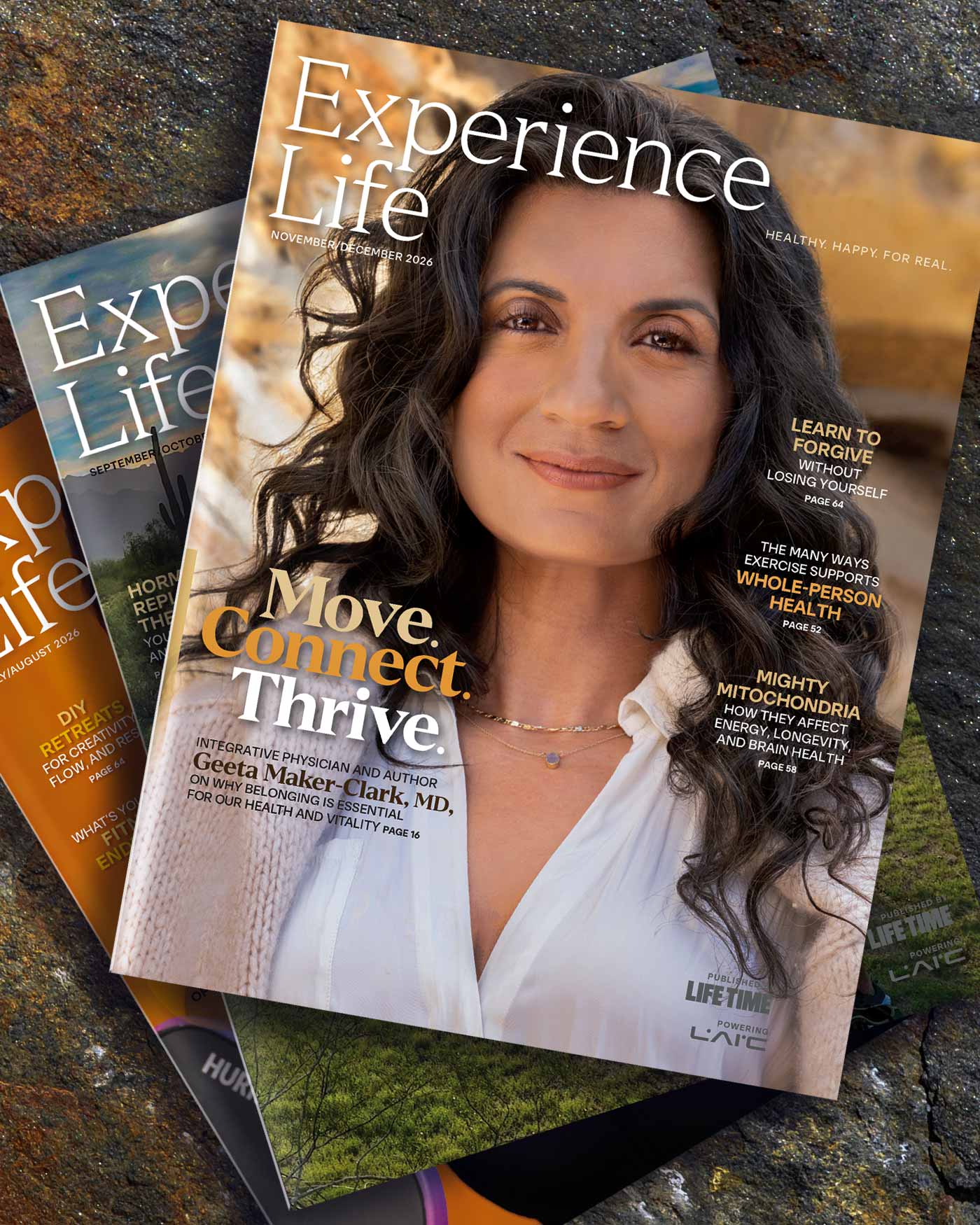


A New Way to Move Through Change, Grief, and Loss
Sooner or later, loss finds all of us. Sometimes it takes the form of a lost job, a health change, the end of a relationship, or the passing of a loved one. This episode explores what it means to move through loss with resilience, honesty, and care, offering hopeful and practical insights for supporting yourself or someone else through grief.


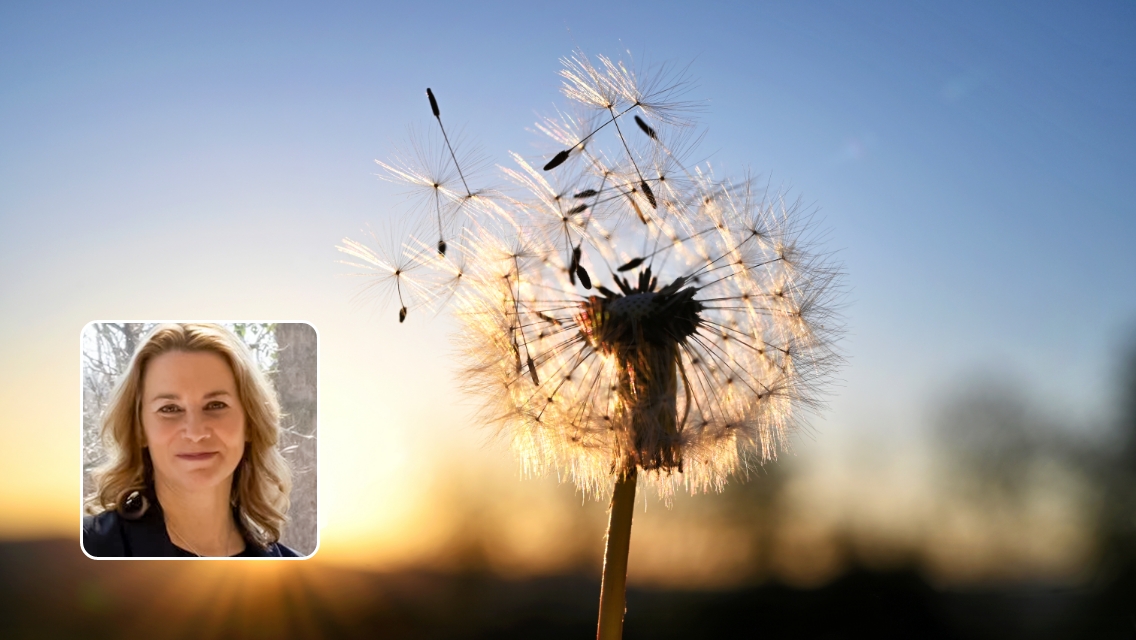
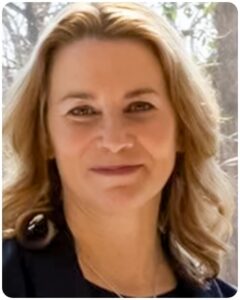
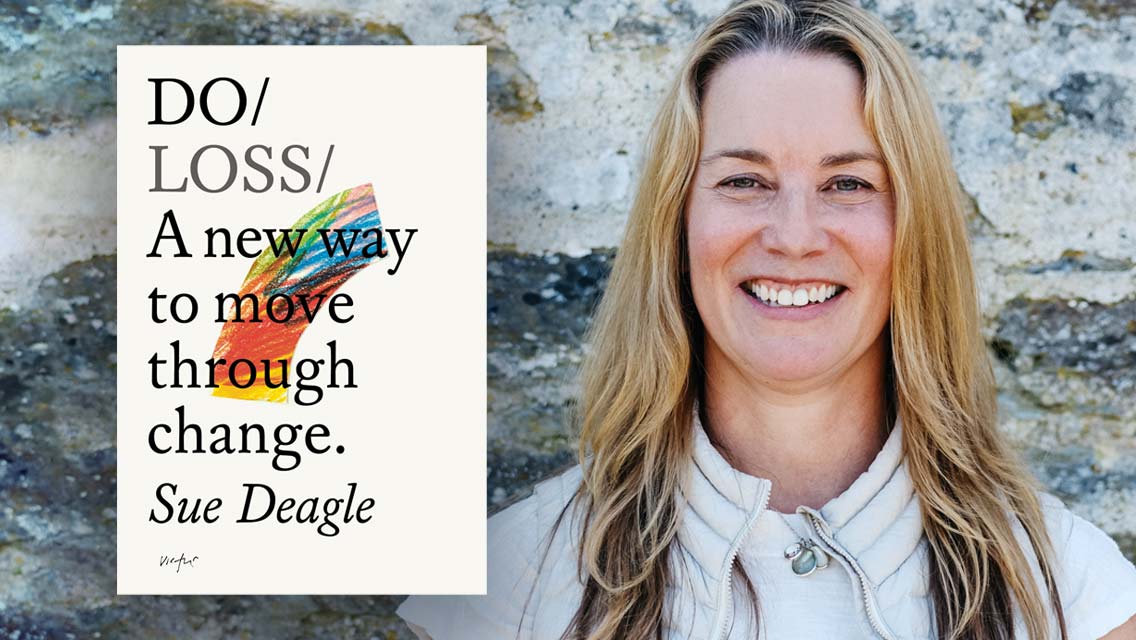
Sooner or later, loss finds all of us. Sometimes it takes the form of a lost job, a health change, the end of a relationship, or the passing of a loved one. In this episode, Sue Deagle, author of Do Loss: A New Way to Move Through Change, joins us to explore what comes next. She shares why resilience may be our default mode, how to support someone who’s grieving without reaching for perfect words, and why boundaries can protect your energy. She also reflects on the power of small actions and what it means to choose “aliveness.” It’s a hopeful, practical conversation about living through loss and finding a way forward.
Sue Deagle is a writer and speaker. She is the author of Do Loss: A New Way to Move Through Change. She also writes weekly on her Substack, The Luminist, and has a YouTube channel where she shares book recommendations that helped her through her grief process. She writes and speaks internationally on the art of thriving amid uncertainty, and how to trust our own capacity for change when life demands it.
In this episode, Deagle talks openly about grief, loss, and what she’s learned about carrying the full weight of those emotions while still holding on to hope and aliveness. Her insights include the following:
- Loss comes in many forms. It can be the death of a loved one, but it can also include a lost job, declining health, a missed opportunity, or the end of a relationship. When you see these experiences as connected, each one helps build what Deagle calls a “rucksack full of coping mechanisms” that you can carry into the next challenge.
- Loss doesn’t make you “less than,” and it doesn’t have to shrink your life. When you actively engage with the change, Deagle encourages that life can become “a different kind of great.”
- Chasing the reason “why” can keep you stuck. People often fixate on why a loss happened. Deagle explains that this search is usually an attempt to regain control and prevent future pain. Real healing starts when you accept that life is unpredictable and much of it is out of your hands.
- Resilience is your default setting, and research backs this up. Deagle references psychologist George Bonanno, PhD, who found that most people recover from hardship better than they expect.
- You don’t need the perfect words to console someone. Instead, show up and be honest about the discomfort. Deagle suggests saying something simple like, “I don’t know what to say, but my heart goes out to you.”
- Good memories are a meaningful gift. One kind thing you can offer someone who’s grieving is a positive story about the person they lost. Those memories remind them that their loved one mattered to others too.
- Grief takes a lot out of you, so it’s OK to protect what you have left. That might mean thanking a neighbor for a meal without stopping to chat. Saying “no” to some things allows you to say “yes” to what matters most.
- Loss often leaves an empty space where old routines used to be. Deagle recommends small, low-pressure experiments of new experiences. Some attempts won’t work, and that’s useful information.
- Aim for aliveness, not a return to the past. Deagle describes “aliveness” as being fully present for every part of life, including the painful lows, rather than looking backward or dimming your light.
Transcript: A New Way to Move Through Change, Grief, and Loss
David Freeman
Welcome back to another episode of Life Time Talks. I’m David Freeman.
Jamie Martin
And I’m Jamie Martin.
David Freeman
In this episode, we’re talking about the topic of loss. We’re doing so with an author who has a new book on the topic, Do Loss: A New Way to Move Through Change. Her book grew from her search for real wisdom about grief and how life reshapes itself around what’s missing. We’ve got a special guest. Who do we have, Jamie?
Jamie Martin
Yes, we’re really excited to have Sue Deagle with us today. Sue is a writer, speaker, and, as you mentioned, author of the book Do Loss. She also writes weekly on her Substack blog, The Luminist, and has a YouTube channel where she shares book recommendations in the Loss Canon.
Sue is a proud product of Pennsylvania’s steel country and a three-decade veteran of corporate America. The best job she ever had was working around the globe with veterans and active-duty military, who taught her life-changing lessons about resilience and community.
Sue writes and speaks internationally on the art of thriving amid uncertainty and how to trust your own capacity for change when life demands it. When she’s not on the road visiting her young adult children, pilgriming in Scandinavia, which we have to talk a little bit about, or exploring other beautiful locales, you can find Sue walking in the forest near her modern-day treehouse in Virginia. Sue, thank you so much for joining us.
Sue Deagle
Thanks for the opportunity. I’m looking forward to talking to you two today.
Jamie Martin
Well, we came across your book through an introduction from a mutual colleague. When I saw the title, as someone who, like all of us, has experienced loss, I immediately thought of certain losses in my own life. My mind went straight to the topic of grief. But this book is about more types of loss than that.
I’d love for us to start the conversation by talking about how you define loss and what that word means to you.
Sue Deagle
Yeah, great. Thanks, Jamie. I think our minds automatically go to the catastrophic losses, right? When we lose people in our lives. But when we don’t think about loss as a whole, with all the other permutations of loss — lost jobs, lost health, lost opportunities, lost relationships — we’re kind of doing ourselves a disservice.
We will all, of course, lose loved ones in our lives. That’s just the nature of it. But we also lose these other things, and we accumulate skills from losing them. When we don’t group loss together, because we’re afraid of loss and don’t really want to think about it, we just want each one to be a one-off thing, like it’ll never happen again. We miss the opportunity to say, “Hey, wait a second. I’ve got a rucksack full of coping mechanisms that I used when I had different sizes of losses in different parts of my life. I might be able to pull some of those out as loss moves on.”
As for a definition of loss, we can look at it intellectually: wherever there’s a gaping hole in our lives, wherever something isn’t turning out the way we thought. But loss is actually more of a feeling, right? You might lose something and say, “Okay, I’m moving on to the next thing.” Or I might need to take six months to really think about how that loss affected me and really feel it.
So I think the feelings of loss are actually a better way to define it. How does it make you feel going forward? How much time do you have to spend in the stages of thinking it through and moving ahead? That’s how I look at it. It’s an intellectual thing, but it’s way more of a feeling thing.
David Freeman
Yeah, you can almost frame it up as a paradox. When you lose something, you find something more about yourself in that loss, if I’m hearing you correctly.
In your book, you unpack something unexpected: the death of your husband. And in that time, you found different ways, little things, to help you move forward. I know I gave you a little bit of a paradox, but break that down for us. When you lose something, how do you end up finding out something more about yourself?
Sue Deagle
Yeah, I love this. One of the big reasons I wrote the book is because of the loss of my husband. My kids at the time were 11 and 13, and now they’re 21 and 23. I don’t know how that happens, but they’re really thriving in the world.
So many times, of course in the first year, but even years later, people would come up to us and say, “How are you? How are you?” There was this weight of expectation that we should somehow be less, that those catastrophic losses resign us to a life of less than.
That was not what I was experiencing. Of course, I was experiencing a terrible transition and trying to keep us all afloat. But I was also experiencing this incredible connection with nature, an incredible connection with other people, and an openness to learning about myself and how others had gone through their losses.
So I’m battling against this idea that loss makes us less than. And this is like serendipity: I was just in Norway doing a 21-day pilgrimage on something called St. Olav’s Way. I met this beautiful Norwegian woman named Mela, and I was telling her about the book.
When you pilgrim, you normally walk by yourself during the day, and then you meet other pilgrims in the evening and have a conversation. Mela said to me, “I was really thinking about how you said people think loss makes us less than.” And she pivoted to that minimalist idea we hear: Less is more. She said, “I’m thinking about how loss makes you less than, but less is more.”
So, David, to your point, I like to use a Bruce Springsteen quote in the book: “Death’s last gift to those still remaining is to remove the veil of the ordinary from your eyes.” Bruce Springsteen is the poet laureate of the American songbook, and I took a ton of wisdom from him. Remove the veil of the ordinary.
While you’re suffering and going through this really hard time of grieving and mourning, when the veil of the ordinary gets removed, you see life in a different way and yourself in a different way. So less becomes more. It doesn’t become better or worse.
I think people want you to say about loss, “I’d take it all back in a heartbeat. I would rewind the clock.” But that’s just a counterfactual thought exercise that’s not actually that helpful. I can’t bring Mike back. But I can strive to say, “Okay, this pivot in my life, this new path I never wanted to be on and never expected to be on — what kind of greatness lies within it? When less reveals more of me, what can I see there?”
I used to say life feels like it has an electric line around it, like it’s leaping off the page. And only by having the veil of the ordinary removed can I see that.
Jamie Martin
Mm. It makes me think of the word Glennon Doyle used in some of her early books: brutiful. Life is brutal and beautiful, and the two can coexist at the same time, right?
Sue Deagle
Yeah. And there’s Laurie Anderson, the avant-garde artist who was married to Lou Reed. When he passed away, she said in her remarks at his funeral, “I traveled all of life with him, the beautiful, the painful, and the dazzling.” I always remember that. Beautiful, painful, dazzling. That is life.
I think one of the points of my book, and of the conversation I’m having with you, is that when we expect life to be beautiful all the time, then when it’s painful, we say, “Wait, this isn’t fair. What just happened to me?” Buddhists call that the second arrow. The thing happens to you, and then you shoot yourself again by being outraged about it forever.
But we have to accept the suffering, the painful part of life. It’s just the hand we’re all going to be dealt. And the more we rail against that or ask, “Why did that happen to me?” — these are perfectly good things to go through in your first stages of loss, as you should. Shake your fist at the heavens. I did that plenty of times.
But there comes a point when we have to say, “No, it’s all of our lot in life to have different kinds of losses.” When we accept that, we come closer to the actionable moving forward that I also talk about in the book. You have to have engaged participation in your way forward. If you’re spending your life saying this suffering shouldn’t be happening or this suffering isn’t fair, it’s hard to take steps forward.
Jamie Martin
Absolutely.
David Freeman
Something that stood out to me is that we hear a lot about the expectation that everything is sunshine and rainbows. So when a storm comes in, all of a sudden we don’t know how to respond to it. It draws parallels, because with the storm comes the lesson. And even in the sunshine and rainbows, there are lessons.
I can’t remember who we had on, but they were distinguishing between joy and happiness. Remind me, Jamie?
Jamie Martin
Was it Dr. Judith Joseph? Yes, Dr. Judith Joseph came on.
David Freeman
She was talking about happiness and joy, and how a lot of what’s taking place in happiness is based on what’s currently happening in life.
Sue Deagle
Okay.
David Freeman
Whereas joy is rooted within. Happiness is determined by the things happening in life. Joy is what’s rooted in me. So even when we’re grieving the loss of something, what’s deeply rooted in me is where the joy comes from.
And to your point, the discovery of that is going to happen through an experience. That experience is the unveiling, as you put it earlier. Experience is always going to be the best teacher in this space.
Sue Deagle
It’s the only thing that can. My daughter’s 21 now. She’s doing an internship this summer, and she has one more year left at university. In the internship, she gets things wrong all the time, right? And she says, “Ah, it stings, but I’ve had a lot of failure in my life, so I can do it.”
Without that, she’d be in a shell, saying, “No, I’m going to be bad at this forever.” We know that we’ve ridden that out. That’s what gives us confidence to face the inevitable losses coming our way.
Jamie Martin
Yeah. That really gets into this idea you have of connecting loss and resilience and how we tap into that.
I’ll share a quick story with you that’s tied to a catastrophic loss I had. My nephew had a rare genetic disorder, and we knew for a year that he wasn’t going to survive it. So for that year, we were embracing being present with him, but also grieving. I remember we just kept having to show up despite how hard it was. We were grieving at the same time, knowing what was coming, and still trying to enjoy our time.
I remember a colleague said to me, “You have been so resilient through all of this.” At the time, I thought, “Well, what is that about?” But she was right. All these little things prepare you to face the hard things when they happen, even if it feels impossible in the moment, right?
Sue Deagle
And the science used to say either you’ve got it or you don’t. Either you’re resilient or you’re not. Good luck to the rest of you. How could that possibly be?
When I was writing the book, I went back to my reading — I have my library behind me, and that’s one of my saving graces. In the early years, I read a book by Dr. George Bonanno. He teaches at NYU or MIT, something like that. It’s called The Other Side of Sadness.
That book was so profound because he actually did studies about what happens to people on the other side. That book is focused on grief and loss. Then he wrote another book called The End of Trauma. In that book, he uses examples of people who survived 9/11 but had PTSD from it, or people who got mugged or robbed — different kinds of losses. Again, he goes back to the science. And he’s the one who says resilience is our default mode. Resilience is baked into us.
His work is based on Dr. Ann Masten, who is the OG of resilience researchers. She went to the island of Kauai. We think about Hawaii as all rainbows and unicorns, like David said. But there was a really underserved population there where the kids didn’t have appropriate parental guidance, and she studied them.
What she found is a term I just adore: ordinary magic. We all have ordinary magic. We think resilience is something you’ve got and someone else doesn’t. But she said we all innately possess ordinary magic.
Now, you need things to bolster it. You need a group of adults to help you, and you need guidance. She has a system around that, but it’s not rocket science. It’s the things that have helped us move through our losses to date.
When we reflect on our last loss — which, again, we prefer not to do, because we want it to be one and done — we can ask: What friend was most helpful to me? Did I spend time alone? Did I exercise, and did that make me feel a lot better? We have things we’ve done because we have ordinary magic, like she says.
But our culture tells us we’re less than. It doesn’t tell us we have ordinary magic.
And Jamie, in your family, as you moved through that year with your nephew, being present in the moment while knowing it was going to come to an end, it only seems terrible. But afterward, you honor your nephew by living a life of resilience.
That’s what I always say. I think people thought, “Well, if she’s not wearing sackcloth and ashes, she must not have loved her husband that much.” I’m doing exactly what my husband would want me to do. I’m honoring him every day by thriving.
Jamie Martin
And living life to the fullest. That also goes to something you talk about in your book: how loss can actually make for better living. I do think it changes your perspective. It forces you to really look at what matters and what you care about, and it shifts everything.
Sue Deagle
So much so. In the early days, the kids and I — and this sounds kind of harsh — when things would go sideways in the years after Mike died, we would say, “Well, nobody died.”
We know what the worst thing is. I failed this thing at school, or this job went sideways. It’s bad. We’re not going to lie about it being bad. But nobody died. We know we survived the worst of the worst, and that infused us with strength.
I used to think people would see the kids as a charity case, like, “Well, they don’t have a dad,” and it would be that way forever. But they actually are different. They’re knuckleheads, just like every teenager and early-20-something. But they also have a profound view of what they’re capable of. Maybe not in the moment, but in the long term, because they’ve proven it to themselves.
Jamie Martin
Yeah.
David Freeman
I’ve got a few things that came to mind while you were talking. First, you mentioned PTSD, and I know you spent years in the C-suite with defense contractors and veterans who face loss directly.
Sue Deagle
Yes.
David Freeman
I want to unpack that. But first — and maybe this is in that same vein — I don’t think we talk about death until it happens. Nobody wants to talk about it, whether it’s preparing a will or speaking to our parents. It’s almost taboo, or we don’t want to think about what you called the inevitable.
Knowing what the military does and how they fight for the country, loss is very much something that could happen in that space. So walk us through it. How did you train these veterans to face loss?
Sue Deagle
I will say it was the exact reverse, because they trained me.
I started that last job with these veterans four months after my husband died.
Jamie Martin
Wow.
Sue Deagle
People said, “You mean you’re not going to take some time off?” But I was 48 and my husband was 50. Although he set us up great, that’s a lot more years to go. I had to earn a living and provide for my family.
I believe in mystery. Mystery is my religion. And I was able to get this job with these veterans and be alongside them day and night, along with active-duty military, because the company I worked for operated military bases throughout the Middle East, some in the US, one in Greenland, and some in Europe. So I traveled with these guys all the time.
They were never afraid to talk about my husband. They were never afraid to see that maybe I wasn’t having a great day. They’d say, “Okay, we can talk about this. Do you want to talk about it?”
David, to your point about people not wanting to talk about death or loss, they had all experienced the loss of someone in the military, someone who was alongside them at some point. So they weren’t afraid of me becoming a widow. They were game to talk about it.
Over time, I realized they’re trained in a way. We used to have church, synagogue, temple, and so on to help us communally work through our biggest losses. As a nation, we’re just not as religious as we used to be, so there’s no place to do that. Indigenous cultures would train you — and I say train, but it was a cultural thing you’d learn.
What’s left in our society that’s willing to talk about loss? The military. They have a concept called a battle buddy. The guy or gal next to you is your responsibility. And that responsibility also means knowing that sometimes that person isn’t going to come home and you are.
There are rituals, like at Arlington Cemetery here, that incredible ritual where we give the flag to the fallen person’s family. The fact that you play taps. All of those things are part of that culture, that ritual, and that mission.
The mission remains in the military. If you lose the person next to you, the mission remains. And just like we talked about on my level with Mike or your level with your nephew, we proceed with the mission in honor of our fallen.
Watching them be so comfortable talking with me about my journey through loss, and knowing they were trained that way as a culture — I was so lucky to be around that. They could show me what matters.
Jamie Martin
Yeah. Go ahead, David.
David Freeman
I was going to say my father served 22 years in the Army, and I have a few friends who served as well. I was raised on a military base.
A close friend of mine, Edwin, lost one of his partners in an IED explosion. He always talks about survivor’s guilt. He reaches out to that family every year on the anniversary. Did you all tap into anything like that?
Sue Deagle
I think survivor’s guilt is a really real thing. Although the military is going to experience it at a higher rate, I saw a little of it with my own father. He said, “I would have rather died than Mike.” I said, “Well, that doesn’t make sense, Dad. Mike had a heart attack.”
I think it’s a very natural thing to think: Why am I the one who’s still here? Why didn’t the IED get me? Why couldn’t I be swapped out?
So survivor’s guilt is real. But what it’s trying to do is intellectualize the fact that a person isn’t here anymore. Our brains are looking for the meaning. How did this happen? When we say, “This could have been me,” or “It should have been me,” or “I wish it had been me,” we’re trying to exert some small amount of control over an uncontrollable circumstance.
It’s such a natural thing to feel. One of the things I want to make very clear about any kind of loss is that our feelings about it aren’t bad. Being afraid of death, feeling bad that we weren’t the person — those are all ways of coping and making meaning.
Eventually, over time, we have to say, “These are the facts. This is the hand we were dealt, and we have to figure out how to move forward in whatever way works for us.” But our brain is doing the best it can under the circumstances to make sense of a terrible thing that happened.
Jamie Martin
I think that’s the question so many people have: Why? Why them? It’s a why you’re never really going to know or understand, but we can torment ourselves with it.
So how do you advise people, or what have you learned in your research? How do we move past that question and embrace what is when we can’t know the why for so many things?
Sue Deagle
Yeah. My husband was incredibly healthy. He was 50. He went to the doctor all the time and had just had a major physical. He ate salmon and blueberries and never ate the chocolate chip cookie. Then he had a heart attack and was gone.
I honestly had to wait for the medical examiner’s report to know what he died of, because I had no clue. In that time, I thought, “Should I have had him go to the doctor?” But that guy took such good care of himself.
In a way, he freed me from those feelings, because there was nothing I could have done. I think we have to know that at a time that’s right for us in our mourning, we need to step back from blaming ourselves. The more we blame ourselves, the less we honor the person who’s gone.
We have to accept that we don’t know the whys. That’s incredibly hard, because when we say we don’t know the whys, we can’t control the next bad thing.
Jamie Martin
Right.
Sue Deagle
Part of trying to figure out the why is prevention. We’re in prevention mode. And there’s really not much that’s preventable about loss. I’m not saying we’re terrible for thinking about the whys. Why is a natural thought. There’s nothing wrong with asking why. There’s nothing wrong with being afraid.
But we have to intellectualize a little in our mourning process and know that it’s the mystery of life, and we can’t control it. Accepting that is a pervasive part of living, right?
Jamie Martin
Right. You recently wrote in one of your posts on The Luminist about releasing our death grip on expecting, forecasting, and prognosticating. If we don’t know why this happened, we try to control what happens going forward. But the reality is, and you wrote this too, it never turns out the way we think. So how do we let go of the need to control what’s going to happen, or the belief that we know what’s going to happen?
Sue Deagle
I love to beat this drum: something called imaginative possibility.
When we’re young, we think we know. “Okay, I’m going to go to high school, then college, then get this job, then find a partner, then have 2.5 kids and a picket fence.” We have the script of life.
I’m 57 now. Once you get to a certain point in life, you realize there’s actually not a script anymore. But we struggle to accept imaginative possibility, which is: I can’t write the next step. I’m going to do everything I can. I’m going to be myself and live my life. I’m going to spend time with the people I want, make connections, and learn new things. But I don’t know what’s next.
That can be really terrifying to people. We’re used to writing our own script, and you find that a lot in corporate America. I’ve been out of corporate America for two years now, and extracting myself was crushingly hard. What’s going to happen next? This is what I’ve done for 30 years.
So I think we have a bit of a failure of imagination. And imagination isn’t, “Let me draw the next three steps.” Imagination is, “This is going to unfold one step at a time, and I’m going to try not to control it or be afraid of it.”
I’m going to imagine that my future will be great, because even when things haven’t been good up to now, I’ve always been able to get myself out of the pickles. I’ve always been able to celebrate when things were good. I have faith in myself that even though I don’t know the future, I’ll figure out how to navigate it.
David Freeman
I go back to another guest we had, Nora McInerny, who dealt with loss. Do you know Nora?
Sue Deagle
I know who she is. I’ve read her — she’s up here on the bookshelf.
Jamie Martin
Yeah.
Sue Deagle
I think her husband died very young. She was in her 30s or something, incredibly early.
David Freeman
Yeah. I remember her talking about how people who are trying to console or support, for lack of a better word, get it wrong. They’re trying to fix whatever is going on. What do you see as a common mistake for people who mean well? What should they do instead?
Sue Deagle
We all want to console better. From the bottom of our hearts, we really do.
David, you said people whose hearts are in the right place. We should say for a second that fear makes people run from those who’ve had a loss. I think the first step in consoling well is gut-checking yourself and saying, “I’m genuinely afraid of thinking about death, or of visiting someone in the hospital for a health issue. But I’m going to step into my fear anyway.” That’s a person with their heart in the right place.
I’ve lost a husband, lost a job, lost a lifestyle when I was young in Pennsylvania steel country, and gone through an empty nest. You’d think I’d say, “Here are your three things for this particular loss.” I never, ever do that. I don’t know what that person is going through, even if they lost their husband at 50 when they were 48.
So I always say, “I don’t know what to say, but my heart goes out to you. I’m with you. My energy is with you. I’m praying for you. I don’t know what to say, but I’m thinking about you.”
Then, if people want to ask a question, like, “What do you think I should do here?” Great. But that’s an invitation-only exercise. It’s not, “Let me open my file and give you the 17 things I did.”
It’s so individual, and in a way that’s frustrating. People want the map so they can follow the steps, or a flow chart, because that would give us control. But what worked for me isn’t going to work for everyone. Some people don’t love nature and don’t want to be out with all the bugs in Great Falls Park here where I live in Virginia. That’s not going to make them happy. They want to sit in front of a fire and knit. They want to spend time with their family. It’s so individual.
So I’m here for the questions, but my lead is always, “I don’t know what to say during this time. My heart’s with you. I’m with you every step. I’m going to check in with you.”
In fact, I just had a friend who lost her husband suddenly, and I said, “I’m going to check in with you every day via text. You do not need to respond.” I’m just thinking about you and sending energy your way.
It’s such an uncomfortable and unfamiliar circumstance. Sometimes it turns back around to us: “Wait, why aren’t they responding to me?”
After Mike died, there was a lady I didn’t know well who said she was going to bring me a lasagna. I texted back, “Fantastic. You can leave it on the porch.” And she said, “Well, wait. I thought maybe I’d come in and we’d chat.” These military guys teach you over time, so I said —
Jamie Martin
You had your boundaries.
Sue Deagle
Yeah, I had my boundaries, because I had my eyes on the prize, which was the kids. I knew what my priorities were. They were crystal clear.
Maybe right when she came to the door, I’d finally regulated and felt calm. Then we’d unpack the whole “Mike Deagle is no longer on this planet” thing? No.
We just have to be very conscious of being supportive. The energy is supportive energy, and you let it go from there. It’s tough and it’s uncomfortable. We have to accept that consoling feels a little uncomfortable, because there’s no script.
Jamie Martin
Right. But sometimes all it takes is a little note, just knowing you’re on somebody’s mind. You don’t have to actually do something or give them anything. It’s more like, “Just know I’m here, and you’re on my mind. I’m holding space for you, whatever that looks like.”
Sue Deagle
When Mike died, he worked for a big consulting firm, PwC. For a solid two months, I got letters in the mail where people told me stories about Mike that I didn’t know, because I wasn’t at the workplace with him. That was the most incredible gift. They talked about how amazing my husband was. “He took us out to lunch,” or “He did this silly thing.”
Good consoling is showing up. When the consolation is about someone who’s missing, it’s telling stories about that person and keeping them alive. Mike is very much alive in our hearts and in the stories. We still say, “Boy, Daddy would not like this thing we’re doing,” or “Oh, he’d love this.”
Jamie Martin
Yeah.
I want to talk a little about how to help people who are standing in what you describe as the blank space where something used to be. What’s a concrete first step you’d point them toward? It doesn’t have to be a mindset shift. I mean an actual action.
Sue Deagle
Yeah. This goes back to the woman I met in Norway, which is why pilgrimage is so great. You meet a person for 48 hours, and they totally change your point of view about something.
She had worked at a helpline. In Norway, the church runs a helpline. When people called in, the first thing the volunteers would ask was, “Have you gone through something really difficult before? If so, what did you do in those circumstances?” And people would say, “I went to my neighbor, and my neighbor helped me with XYZ.”
It may sound odd, but having navigated grief for the last 10 years, I’ve found it’s very empowering to take action to make your life just a little better. That’s what they’d ask the callers: What actions have you taken in the past?
And you have to know that not all actions will work. It’s trial and error, and you have to be willing to accept that.
Very early on, the kids and I went on a vacation Mike had planned to a water park. Once we got there, I thought, “My God, the guy who rides all these rides isn’t here.” I said to the kids, “This was an epic fail. We probably shouldn’t have come on this vacation.” And they said, “No problem. We’ll figure it out.”
Then we figured out what worked for us: vacations with our extended family. But I might not have known that without the epic-fail water park vacation. I might not have reached for that next thing, and it was so nourishing and important.
So that active engagement in your way forward can be the tiniest thing. Maybe you don’t feel like leaving your house today. But if you go to Starbucks and ask the barista about the pin on her apron, you’ve had an interaction with another human. You got two minutes outside your own head. Two minutes is more than you get on some days.
Those tiny things, even when you don’t want to do them, lead you to what makes the most difference for you. It sounds harsh: Take action. But not some major action. Just a small one. Call your friend. Text your friend. Step out. Go to the grocery store and talk to the cashier. Then come back home to your cave and cocoon. That’s okay. Only through trial and error, just like anything in life, will we figure out what works for us.
Jamie Martin
Yes.
David Freeman
All right. Say you’re sitting across the dining room table from your daughter. You tell her the ultimate takeaway is that loss doesn’t have to make you less than, and that life can be a different kind of great. What do you want her to take away from that, understanding what she’s already lost?
And like you said earlier, it’s inevitable. We don’t talk about it enough, but at some point, Mom will be gone. How do you break through that barrier with your children?
Sue Deagle
Let me say, that’s one of their biggest fears — that their mom would be gone, too. There are choices I’ve made, and continue to make, because I have what I call a no-orphans policy.
At my job with the defense contractor, I said, “Okay, Iraq is a bridge too far. I’m not going to go visit the teams there.” I kept my sphere safe. And taking a pilgrimage in Scandinavia is like walking around Western Pennsylvania. It’s pretty dang safe.
So I let them know that managing my safety is important to me for their sake. I also let them know that what they’ve already survived shows they have all the strength they need to survive going forward. That’s empowering. It doesn’t mean they won’t be bereft when it’s time for me to go.
But sometimes we have to hold a mirror up to people and show them what they’ve already survived. We hesitate to do that because we don’t want to remind them of the hard thing. But reminding them of the hard thing is tied to empowerment, because that strength got them through.
Sometimes I actually hear my daughter tell people, “Well, my mom went through this, and this is how she handled it.” Or, “You could read my mom’s blog, and she’ll tell you XYZ.” I never said, “You’ve got to read my blog.” It’s so funny to hear her talk about the things I do.
Just like with all the guests you have on to talk about different things, sometimes it’s not the exact words they say. It’s what they’re projecting. I live an amazing life. If all people took away from our conversation was, “That lady’s a widow, and look at her 10 years later, living this crazy, adventurous life, talking to Jamie and David,” that’s enough.
Sometimes it’s just a vibe. We show each other all the time what we’re capable of, and that’s almost more important than any words we can say. We’re here, we’re surviving, and we’re thriving in this beautiful, painful, dazzling life we have.
Jamie Martin
You’re living fully.
Sue Deagle
Fully. We don’t use the term “aliveness” much, because it feels like kind of a weird, made-up word. But I’m more alive to every part of life than I was before Mike died.
Of course, that’s 10 years of maturing as a human being. But everything I’ve been through makes me realize, “My gosh, this life is so amazing, and we’re so lucky to be living it,” even when we’re riding out the troughs. We’d like to say, “Thanks, I’ll pass on the troughs.” Not an option.
Jamie Martin
Not an option. It’s not a matter of if but when for all of us, with different things.
Sue Deagle
When. And that’s not some doom-and-gloom thing. It’s just the fact. The more we can accept that, the more we can deal with the suffering itself when those times come, rather than all the stuff around the suffering: Why did this happen? How can I stop this from happening again? It’s my fault. That isn’t the core suffering. The core suffering is the thing we’ve lost.
I think it’s about getting better at saying, “Oh my God, here’s a trough. I don’t want it, but I can get through it.”
Jamie Martin
Right. We’ve covered a lot of ground. Before we get to David’s final mic drop moment, I want to share something from another one of your recent blog posts. I really enjoy reading your blog, by the way. I’ve gotten a lot out of it.
Sue Deagle
I’m so glad.
Jamie Martin
I think it was two posts ago as of the day of this recording. You wrote, “I learned to stop longing for my old life. Today is too rich to waste energy looking backward.” What I took from it is that as much as you might miss somebody, you still get to move forward every day.
Sue Deagle
I get to miss Mike every day, in a real sense. And I still get to live the life I’m in, the life that’s in front of me. Why would I squander that? He wouldn’t want me to squander that.
I think we’re put on this earth to connect, to be with each other, to show each other what’s possible, and to inspire each other. Looking back would dim my light. And I’m not hiding my light under a bushel. I’m here on a mission to say, “Let’s talk about loss, because it could be better for all of us if we do.”
Jamie Martin
Mm. That’s beautifully put. Thank you.
Sue Deagle
Thank you.
David Freeman
Is it mic drop moment time?
Jamie Martin
I think we’re ready. Sue, is there anything you want to add before we get to it?
Sue Deagle
I love the conversation. I just so appreciate it.
Jamie Martin
All right, David.
David Freeman
Here we go. Mic drop moment. I like to take a little excerpt from the actual book.
You open Do Loss with these words: “If you’re reading this, chances are you or someone you know has lost something. Not your keys or your umbrella. Something more.” That line tells us this book isn’t just about grief. It’s about being human.
What’s the truth about loss that you hope every reader and listener understands by the time they get to the last page of the book?
Sue Deagle
The truth about loss I want them to understand is that we are equipped with ordinary magic — to see the possibilities in life and to engage with the help and the path forward we need to transform from this opportunity.
We could transform for the worse. That’s an option, and it’s what society expects. But I think we can transform for the better when we’re actively engaged in our way forward. We feel all the terrible feelings from the painful part of life, from the suffering. Then we integrate and process them, figure out what works for us in the world, and move ahead.
We were made to heal. We humans wouldn’t still be on the face of this earth all these years later if we weren’t.
So I just want people to have that hope and that imagination: There is a path forward. There is another side to their life after loss. It’s a pivot, but it can be a different kind of great.
Jamie Martin
Hmm. Beautifully put.
To everybody who tuned in today, thank you for listening. We want to make sure you can connect with Sue and follow her work. You can visit her website at SueDeagle.com. She also has her Substack newsletter, The Luminist, at theluminist.substack.com. You can follow her on Instagram at @sue.deagle. And you’re also on YouTube — what’s the channel? The Loss Canon?
Sue Deagle
If they just search for Sue Deagle, they’ll find some videos about the Loss Canon, which are books I read during my process. Sometimes you just want to hand people a book. I dream that my book will be a great consolation book for people, but there are so many good books that suit so many different people.
Each one is just a two-minute video where I talk about the book, and you can decide, “That one’s not for me,” or “Yes, that one’s for me.”
Jamie Martin
We’ll make sure to link to that in our show notes.
Sue, thank you for sharing your book with us, for taking the time to talk about it today, and for bringing your light to us. You truly are shining very bright, and it’s beautiful to see. Thank you.
Sue Deagle
Thanks so much. I really appreciated the conversation.
David Freeman
Thank you.
More like this



We’d Love to Hear From You
Have thoughts you’d like to share or topic ideas for future episodes? Email us at lttalks@lt.life.
The information in this podcast is intended to provide broad understanding and knowledge of healthcare topics. This information is for educational purposes only and should not be considered complete and should not be used in place of advice from your physician or healthcare provider. We recommend you consult your physician or healthcare professional before beginning or altering your personal exercise, diet or supplementation program.
Life Time provides administrative, non-clinical support to MIORA as well as services and amenities related to general wellness and fitness; Life Time does not provide medical advice, diagnosis, treatment or care.
Advertisement