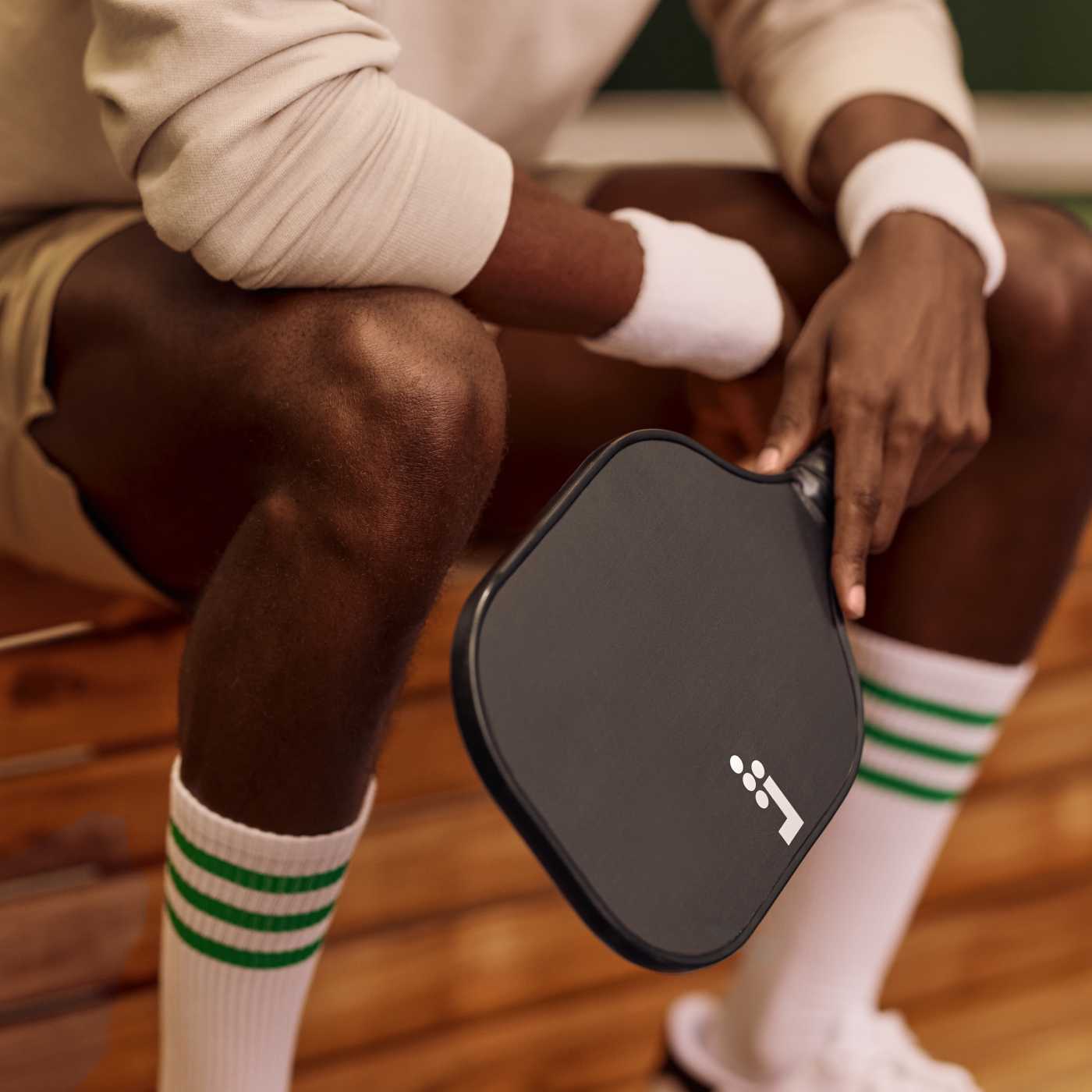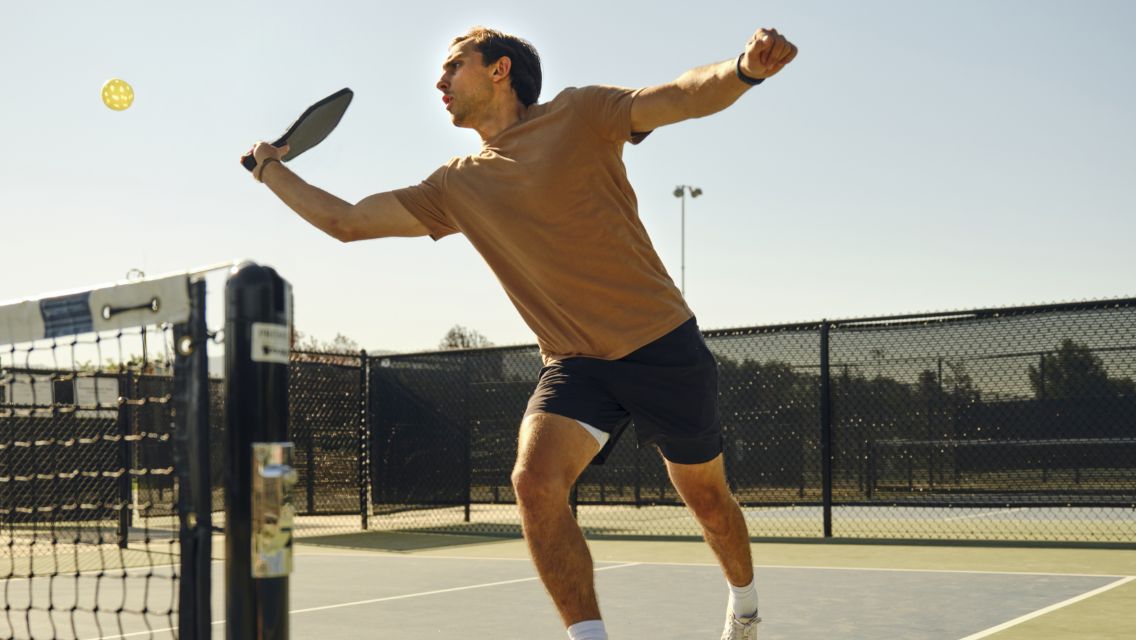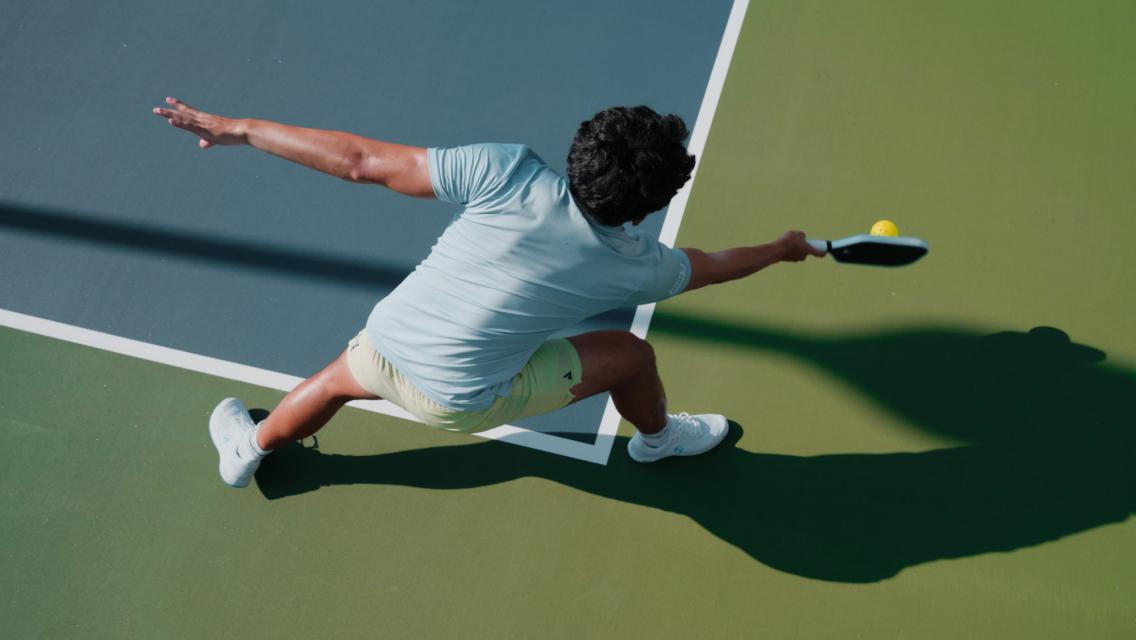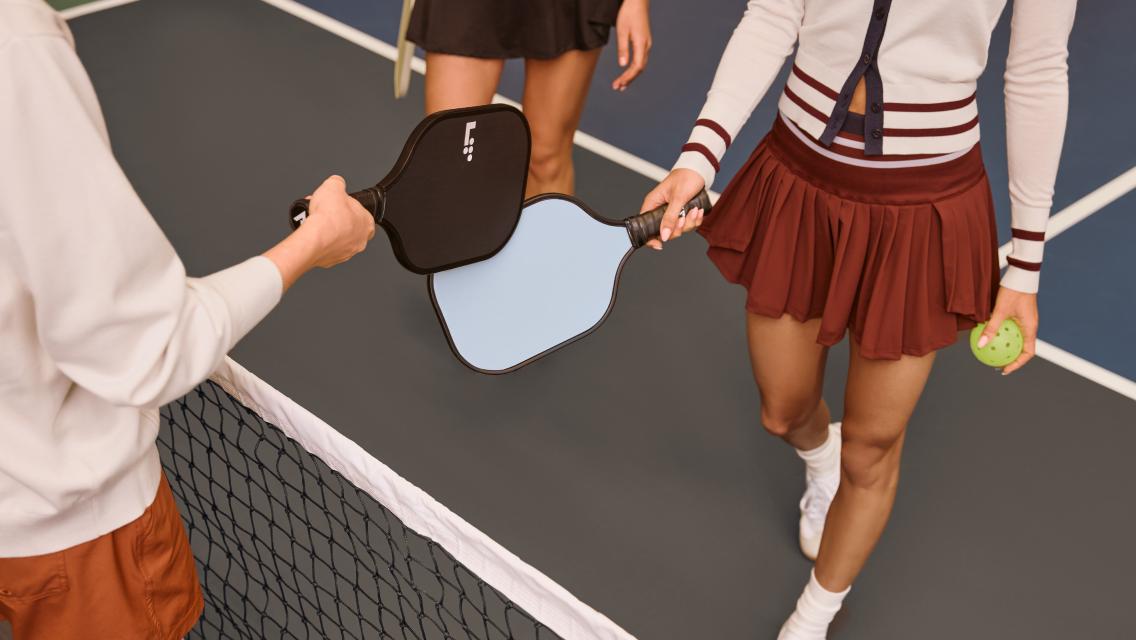



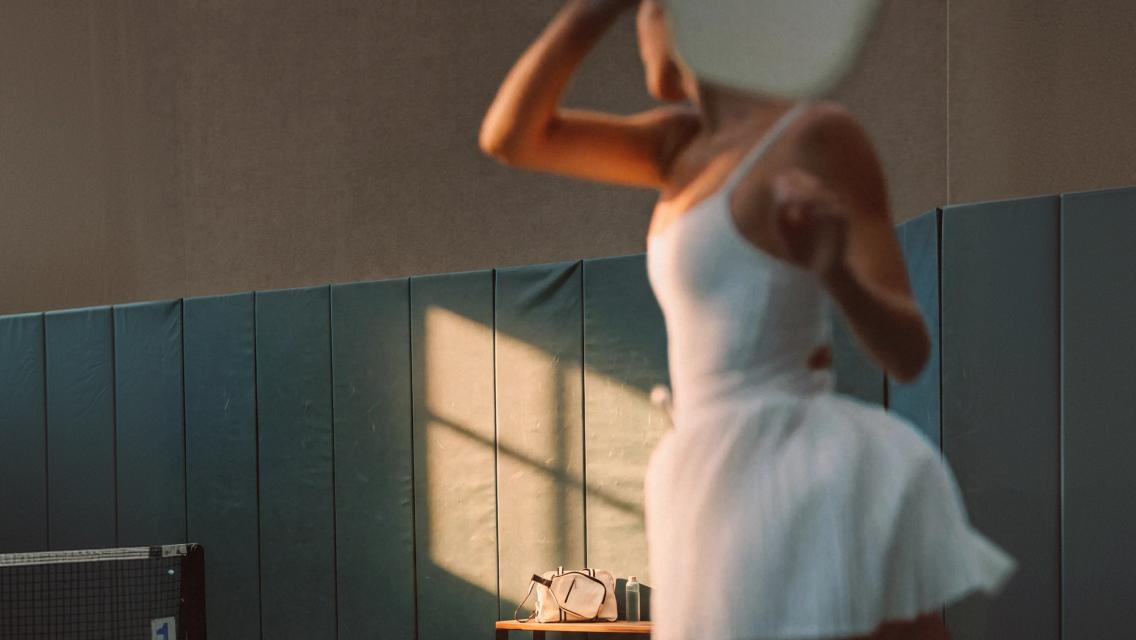
Head to your club’s pickleball courts, and you’re likely to catch a lot of doubles games with pairs of players trading shots across the net. One-on-one matches tend to be fewer and farther between, as singles transforms the game and asks more of the individual player: quicker feet, deeper endurance, sharper shots, and more grit to carry every point on their own.
“Singles pickleball is sometimes overlooked because doubles is more commonly played, but it’s one of the best ways to develop as an all-around player,” says Amber Policare, a professional pickleball player competing on both the APP (Association of Pickleball Players) and PPA (Professional Pickleball Association) tours, and a pickleball pro at Life Time PENN 1 in New York City. “Whether you play singles with a goal to compete in it or because you want to improve your doubles game, incorporating singles into your pickleball training can build better movement, stronger fundamentals, and greater confidence on the court.”
Policare explains more about the advantages of playing singles pickleball below.
Life Time | What’s the difference between singles and doubles pickleball?
Amber Policare | The biggest difference is that singles is an individual sport, played one-on-one, compared to doubles, which is a team sport that’s played two-on-two. In singles, you’re all alone on the court, hitting every shot. You can’t hide from taking the ball or look to your partner to cover more court.
Because you’re covering the entire court, singles tends to become more aggressive, and it also makes serving and returning much more important than in doubles. Players often use deeper serves and returns to create opportunities to attack the next ball.
In doubles, the focus is often on setting up the point and getting to the kitchen line as a team. The rally structure is different, too. Singles points typically involve more movement, passing shots, and open-court strategies. Doubles rallies often center around kitchen exchanges, teamwork, and communication.
LT | What are the benefits of singles pickleball?
AP | Playing singles is one of the best ways to improve your movement on the court, as well as your speed, agility, and endurance. It will also enhance your overall fitness. Because you’re responsible for covering the entire court, every point requires more movement and athleticism.
Singles helps players technically develop stronger serves, returns, passing shots, and groundstrokes. It also teaches better court positioning and shot selection since there’s no partner to help cover mistakes.
Mentally, since you’re playing by yourself, singles challenges players to problem-solve, stay disciplined, and manage momentum shifts on their own. You learn to adapt your strategy throughout a match and to handle pressure.
LT | Why would someone choose to play singles pickleball over doubles?
AP | Singles is a great option for players who enjoy athletic competition and want a challenging workout while they improve their overall game. You may also gravitate toward singles if you enjoy an individual sport more than a team one and appreciate a more physical game.
You’re responsible for every ball, and you rely completely on your own movement, shot selection, and decision-making. This can be especially appealing if you come to pickleball from another sport. For example, I came to pickleball from tennis, and I love having that similar feeling of playing a one-on-one sport.
There’s a lot more open court to work with in singles, which also allows you to be more creative with where you place the ball and how you construct points. It’s definitely more physically demanding than doubles, but that’s part of what makes it fun and rewarding.
LT | Can singles pickleball improve someone’s doubles pickleball game?
AP | Playing singles pickleball can significantly improve your doubles performance. Because singles requires you to cover more ground, players often develop better footwork, balance, and court awareness. These skills translate directly into stronger doubles movement and positioning.
Singles also sharpens serving, returning, and passing-shot skills, which are all beneficial in doubles. Players often become more confident hitting aggressive shots and handling pressure because they learned to handle the pickleball court on their own.
LT | What skills matter most in singles pickleball?
AP | Movement and footwork are probably the key skills because you have so much more court to cover. Serve and return consistency are also really important. A deep serve can make it harder for your opponent to attack, and a deep return can help you start the point on the offense. Both are important in singles pickleball — you don’t want to be on the defense from the beginning.
Court awareness and shot selection are huge, too. You have to recognize when you have an opportunity to attack versus when you should stay patient and keep yourself in the point. Because singles is so physical, stamina matters, especially when you’re playing multiple matches in a tournament.
LT | Why is singles pickleball valuable for competitive players?
AP | Singles pickleball is really valuable for competitive players because everything is on you. Every win is yours, but every loss is yours too. You don’t have a partner to rely on when things aren’t going well — you have to figure out how to problem-solve, make adjustments, and work through difficult moments on your own.
Singles makes you a stronger competitor from a mental standpoint. You learn how to hold yourself accountable, manage your emotions, and find ways to turn a match around without looking to someone else for help. When you win, there’s something really rewarding about knowing you earned it on your own. When you lose, you’re forced to look at your own game, figure out what you could’ve done differently, and learn from it. The individual responsibility that comes from playing singles turns into a confidence that carries into doubles.
LT | What are the biggest mistakes players make in singles pickleball?
AP | One of the biggest mistakes I see players make is rushing to the kitchen too quickly. Getting to the net is important in singles, but you have to earn your way there. If you come in behind the wrong ball, you can leave a lot of open court for your opponent to pass you. I think it’s important to be patient and recognize when you’ve hit a good enough shot to move forward.
Another mistake I see is not being aggressive enough with the serve. In doubles, you might be more focused on simply getting your serve in and starting the point, but in singles, your serve can be a real weapon. Going for more depth, pace, or placement can immediately put pressure on your opponent and set you up to control the point.
LT | How should beginners get started with singles pickleball?
AP | Skinny singles (a variation of one-on-one play where you only use half of the court width) is a great place to start because it lets you learn a lot of the same concepts without having to cover the entire court right away. You can work on your serve, return, movement, positioning, and point construction while playing in a smaller space.
From there, I’d gradually mix in full-court singles. You don’t have to suddenly replace doubles with singles either. Even adding singles or skinny singles into your normal practice routine occasionally can help develop skills that translate to both games.
For someone completely new to singles, I’d focus less on winning points and more on learning how to move efficiently, recover after each shot, keep the ball deep, and recognize when it’s the right time to move forward. Once those fundamentals start to feel natural, the strategy becomes easier.
Tips for Playing Singles Pickleball
Policare shares a few pieces of advice for singles pickleball players.
- Prioritize your serve and return. “Starting the point with depth and consistency is extremely important in singles,” she says.
- Make your opponent move. “Focus on creating angles and hitting to open space rather than trying to hit outright ‘winning shots’ too early,” says Policare.
- Wait for the right shot before going to the kitchen. “Singles points often require several quality shots before an opportunity to go to the kitchen presents itself,” she notes.
- But do try to get to the kitchen whenever possible. “Whoever hits a good approach shot and is in control of the point goes to the kitchen and usually wins the point,” she says.
- Have your off-court training routine support your on-court efforts. “To benefit your singles play, work on quick sprints and footwork off the court,” advises Policare. (Learn more: “7 Drills to Improve Your Singles Pickleball Game.”)