


Getting down on the floor to play with grandchildren, then standing back up again. Carrying a bag of groceries from the car into the house. Climbing a flight of stairs. These seemingly simple tasks require specific skills — strength, mobility, balance, and coordination — that can erode as we age, making everyday movement more challenging.
You may assume you must choose between building strength or improving mobility and balance to help you age well and stay independent. But these two modalities are equally important — and they work together.
What Happens to Strength and Mobility as We Age
Several variables can affect our strength and mobility as we grow older.
“Exercise history, previous injuries, medications, time available for exercise, and other health conditions are all factors,” says Nick Fey, lead metabolic specialist and Dynamic Personal Trainer at Life Time in Des Moines, Iowa. “As we age, we tend to naturally lose muscle mass, bone density, and overall strength as well. However, inactivity is one of the main contributors to these losses. Our bodies typically adapt to what we ask of them, which is why keeping up with resistance training and mobility exercises becomes increasingly important as we age.”
Some older adults simply accept that strength and mobility limitations mean they need to stop exercising or avoid the physical activities they enjoy. But Fey, a doctoral student in kinesiology, emphasizes the benefits of regularly moving your body.
“When we stop practicing certain movements, they can become more difficult over time,” he says. “And once they become more difficult, it’s not uncommon for people to stop doing them altogether. This can create a negative loop that impacts our strength, mobility, and balance — which then affects our everyday lives. It’s crucial to practice functional movements as part of a healthy-aging exercise routine, because if we continue to perform the simple movements we need to live our daily lives then we can continue to do them with confidence and live independently as the years go on.”
How Mobility and Strength Work Together
Mobility and strength are partners: Each one works to help improve the other. With limited mobility, you may lack the range of motion needed to perform certain strength exercises effectively. This can cause you to shorten the movement or compensate through other areas of your body, affecting your technique and how you distribute force. On the flip side, when you strength train through the correct range of motion, you build power and control, which can help you expand your range of motion and improve your mobility.
“Imagine you’re trying to do a workout while wearing a shirt that’s a size too small,” says Fey. “You can still move, but every reach feels restricted. That’s what strength training can feel like when your body lacks the mobility it needs. You may still be able to produce force, but your available range of motion is limited, and your body may compensate to complete the movement. With improved mobility, you have more freedom to move and more opportunities to develop strength throughout a greater range of motion.”
How to Know When to Prioritize Mobility or Strength
It can be difficult to assess on your own whether it’s poor mobility, flexibility, strength, balance, coordination — or simply a lack of confidence — that’s limiting your ability to perform a certain movement. If you’re unsure and looking for support, Fey recommends working with a Dynamic Personal Trainer or other fitness professional.
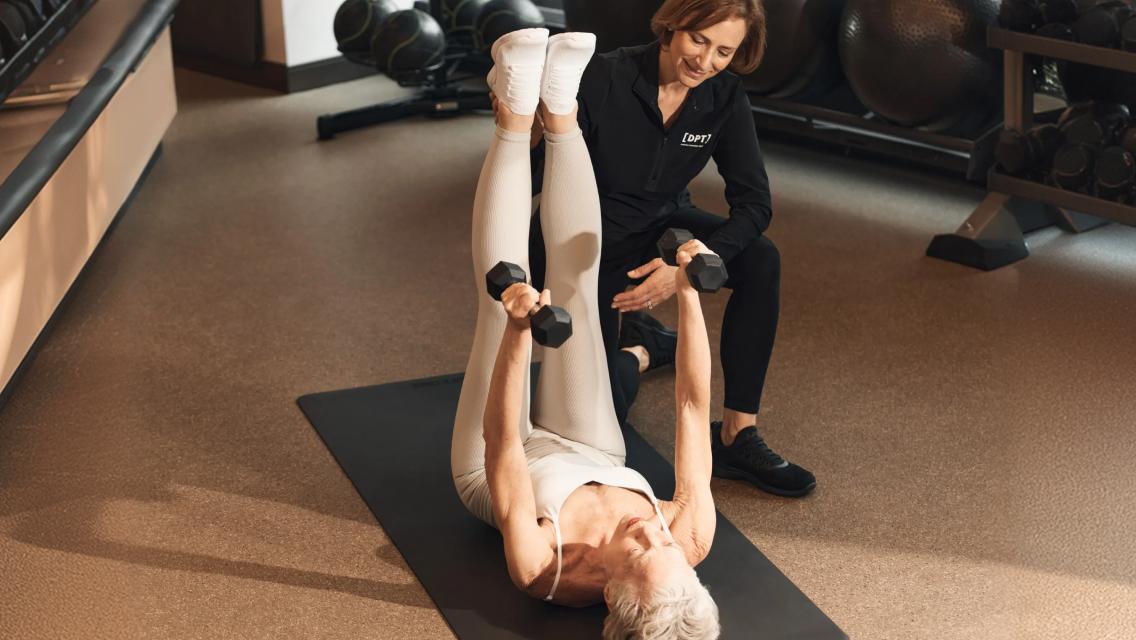
“A great place to start is with a movement assessment with a Dynamic Personal Trainer or with a Dynamic Stretch session,” he says. “Our trainers and stretch specialists are equipped to observe how you move, identify areas of opportunity, demonstrate appropriate exercises, and provide guidance on how to progress over time. Having an objective set of eyes on you can also help identify things you may not notice yourself, such as shortening your range of motion, favoring one side, or compensating through another area of the body. From there, the trainer can help determine whether you would benefit from more mobility work, more strength training, or a better combination of the two. If pain or a significant restriction is present, the trainer may also recommend following up with a physical therapist or medical provider.”
Simply paying attention to how your body feels and moves during everyday tasks can also help you determine where to focus your efforts. Can you comfortably reach overhead, stand up from a chair, climb stairs, pick something up from the floor, or get down on the floor and back up again? “If you struggle to reach a position, mobility may be the limiting factor,” he says. “If you can reach the position but have difficulty controlling it or getting back out of it, you may need more strength. Pain is different from normal stiffness or muscular fatigue. If you’re feeling pain, discuss it with a medical professional.”
As a general guideline, Fey recommends strength training at least two days per week and including mobility work on most days. “This does not have to be a long routine,” he adds. “Even five to 10 minutes as part of your warm-up or daily routine can be beneficial. Yoga, Pilates, tai chi, aquatics, Dynamic Stretch, and strength training through a controlled range of motion are all great options. The right balance will depend on your current abilities, health history, and the activities you want to continue doing.”
Keep Moving in Ways that Challenge You
No matter what routine you choose, Fey simply recommends that you keep your body in motion as you grow older by finding activities you enjoy and movements that challenge you.
“People often overlook the importance of liking exercise and finding fulfillment in it, but that can play a major role in long-term consistency,” he says. “At the same time, it is important to set goals that challenge you, so your body has a reason to continue adapting. Any movement is better than no movement, but our bodies are smart. If we continue doing the same exercises at the same intensity, our progress may eventually slow or plateau. Think about where you want to be one year from now and which exercises will help you get there. You may not enjoy every movement in your routine, but connecting those exercises to something meaningful can make the challenge feel worthwhile. The best routine is one you enjoy enough to continue but that still challenges you enough to improve.”