


Our bodies naturally lose muscle with age, especially after 30, when that mass can decrease by 3 to 5 percent each decade. While this happens throughout the body, maintaining upper-body strength is especially important for staying active, independent, and confident in everyday life. The good news is strength training can slow (and even reverse) muscle loss and help you maintain a strong upper body.
“Age-related muscle loss, known as sarcopenia, is one of the main contributors to mobility issues as we age,” says Rosalind (Roz) Frydberg, group fitness instructor and ARORA lead at Life Time in Woodbridge, Ontario. “Building strength isn’t just about muscles — it’s about preserving your freedom and quality of life. Keeping your upper body (think biceps, triceps, and shoulders) strong helps with so many everyday movements, including carrying groceries or heavy bags, reaching overhead, and doing the activities you love. Strong muscles also support strong bones, better posture, and greater independence. Every curl, press, row, and reach helps you stand taller, move with confidence.”
To help you maintain these important upper-body muscle groups, we asked Frydberg to create a workout you can easily add to your routine. Here, you’ll find a few exercises for each muscle group of focus — biceps, triceps, and shoulders. Mix and match by choosing one exercise from each group to build an upper-body workout that works for you.
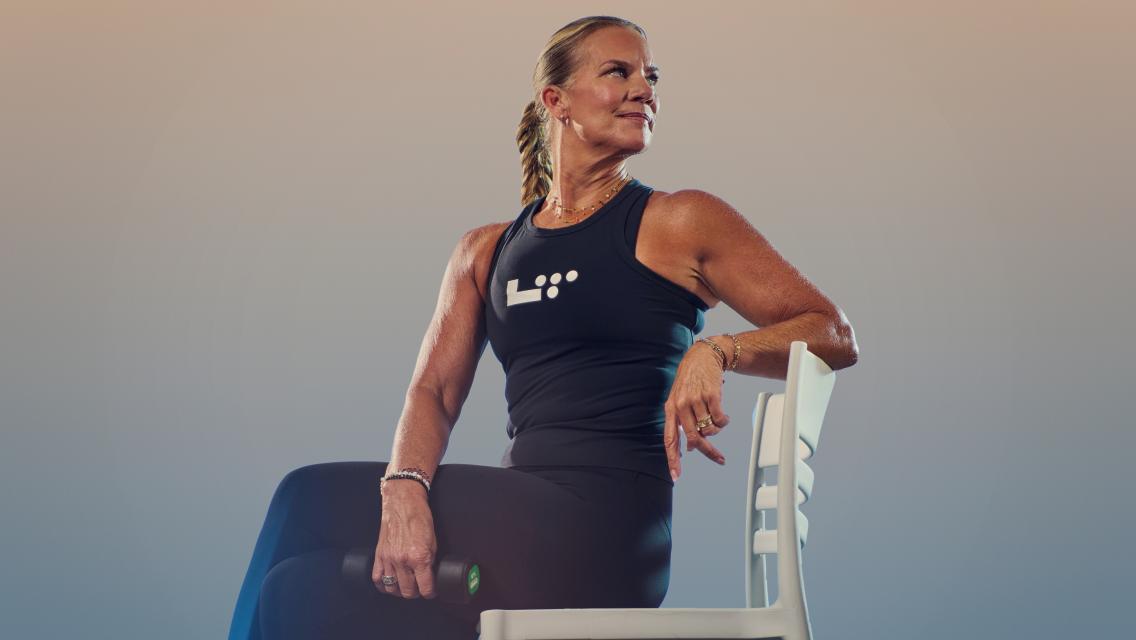
Each movement can be done standing or sitting. All you need is a set of dumbbells at a weight that feels challenging for you. Frydberg recommends adding an upper-body strength workout to your regimen at least twice per week.
Biceps
1. Supported Single-Arm Dumbbell Row
“This is a basic exercise to help build and strengthen the biceps, shoulders, and back,” says Frydberg.
- Stand with your feet about hip width apart, with one foot slightly forward for a stable base, and place one hand flat on a sturdy bench or chair. If you’re seated, keep both feet flat on the floor and rest one forearm on your thigh for balance.
- Keep your back flat and your core gently engaged.
- Hold a dumbbell in your free hand with your palm facing your body. Let your arm hang straight down, fully extended toward the floor.
- Leading with your elbow, pull the dumbbell up toward your waist, guiding your elbow straight back and close to your side. Think about squeezing your shoulder blade toward your spine.
- Hold for a moment when the dumbbell reaches your lower ribs before lowering back to the starting position with control.
- Repeat for three sets of 8 to 15 reps on both sides.
2. Bent-Over Double Row
“This exercise mimics the everyday movement of lifting things up or opening heavy doors with one arm,” says Frydberg.
- Place your feet about hip width apart with a soft bend in your knees. If you’re seated, keep both feet flat on the floor.
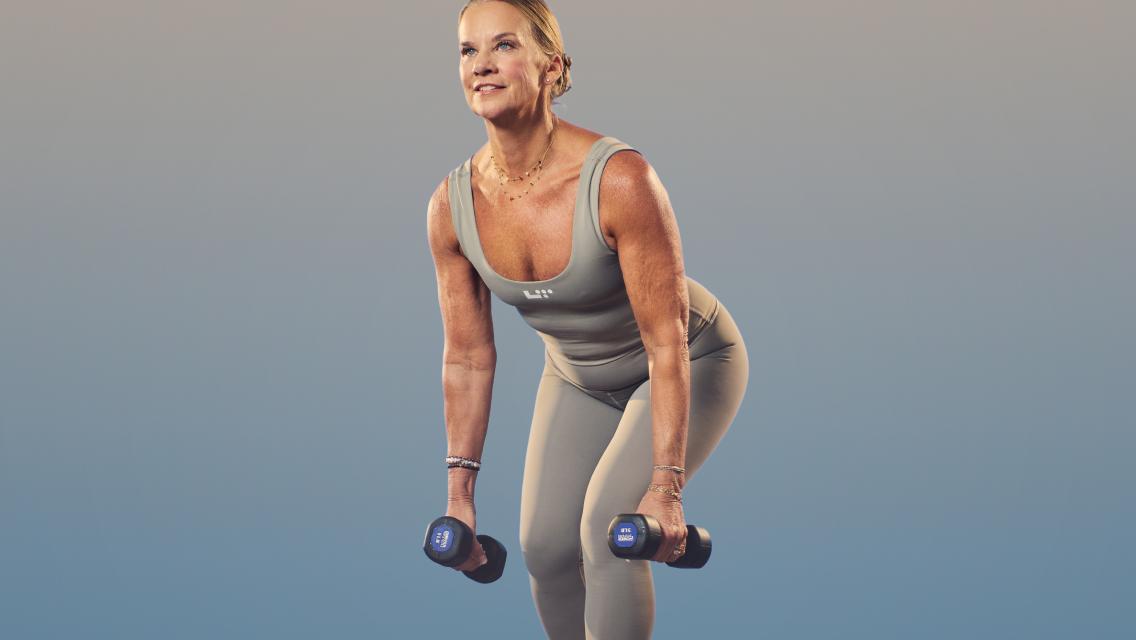
- Hinge at your hips. Push your hips back and lean your upper body forward, keeping your back flat and long. Brace your core to protect your lower back.
- Hold one dumbbell in each hand, with your palms facing each other. Pull both dumbbells up toward your waist at the same time, guiding your elbows straight back and close to your sides. Think about drawing your shoulder blades together.
- Pause at the top, holding for a moment when the dumbbells reach your lower ribs. Feel the muscles across your upper back working.
- Lower with control, slowly returning both dumbbells to the starting position.
- Repeat for three sets of 8 to 15 reps on both sides.
3. Alternating Bent-Over Row
“Working one side of the body at a time can help with balance and body awareness,” says Frydberg. “For this alternating row, one arm is fully extended while the other is pulling. Pay attention to how strong each side feels compared to the other.”
- Stand with your feet hip width apart and bend forward at your hips. If you’re seated, keep both feet flat on the floor.
- Keep your back completely flat, and brace your core to protect your lower back.
- Hold one dumbbell in each hand, with palms facing each other. Pull one dumbbell up toward your hip while keeping your elbow close to your side. Squeeze your shoulder blade at the top. The other arm will hang by your side.
- As you lower that dumbbell, pull the other one up. Alternate back and forth like a seesaw.
- Repeat for three sets of 10 alternating reps (one row on each side per rep).
Triceps
1. Triceps Kickback
“Triceps are a major muscle group in your arms and respond well to weight training,” says Frydberg. “Strengthening the triceps can help with fall risk, as strong triceps can help break a fall safely.”
- Stand with feet hip width apart. Hinge at your hips back and lean your torso forward until it’s nearly parallel to the floor. Keep a soft bend in your knees to stay steady. If you’re seated, keep both feet flat on the floor.
- Engage your core to protect your lower back and keep your chest facing the ground.
- Hold one dumbbell in each hand with your palms facing behind you.
- Bend your elbows to about 90 degrees and pin them at your sides.
- Straighten your arms by driving the dumbbells backward, leading with your forearms. Only your lower arms should move; keep your upper arms locked in place.
- As your arms reach full extension, hold for a moment and squeeze your triceps.
- Slowly bend your elbows to bring the dumbbells back to the starting position.
- Repeat for three sets of 8 to 15 reps.
2. Tate Press
“This exercise requires isolating the triceps muscle group (without using your shoulders or back), which takes a bit of coordination and brain work — both of which are also beneficial for healthy aging,” says Frydberg.
- Lie on your back on a mat or bench with a dumbbell in each hand.
- Press both dumbbells straight up over your chest, with your palms facing forward and the weights touching or close together at the top.
- Keep your wrists straight and your core lightly engaged as you bend your elbows and let them flare outward as you slowly lower the dumbbells down and inward toward the center of your chest. The weights should travel in a curved path, not straight down.
- Drive the dumbbells back to the top by straightening your arms, following that same curved path back to the starting position. Lead with your triceps, not your shoulders.
- Repeat for three sets of 8 to 15 reps.
Shoulders
1. Shoulder Shrugs
“By strengthening the shoulders with this exercise, you can help improve your posture, release tension in the shoulders, and reduce stiffness while being gentle on joints,” says Frydberg.
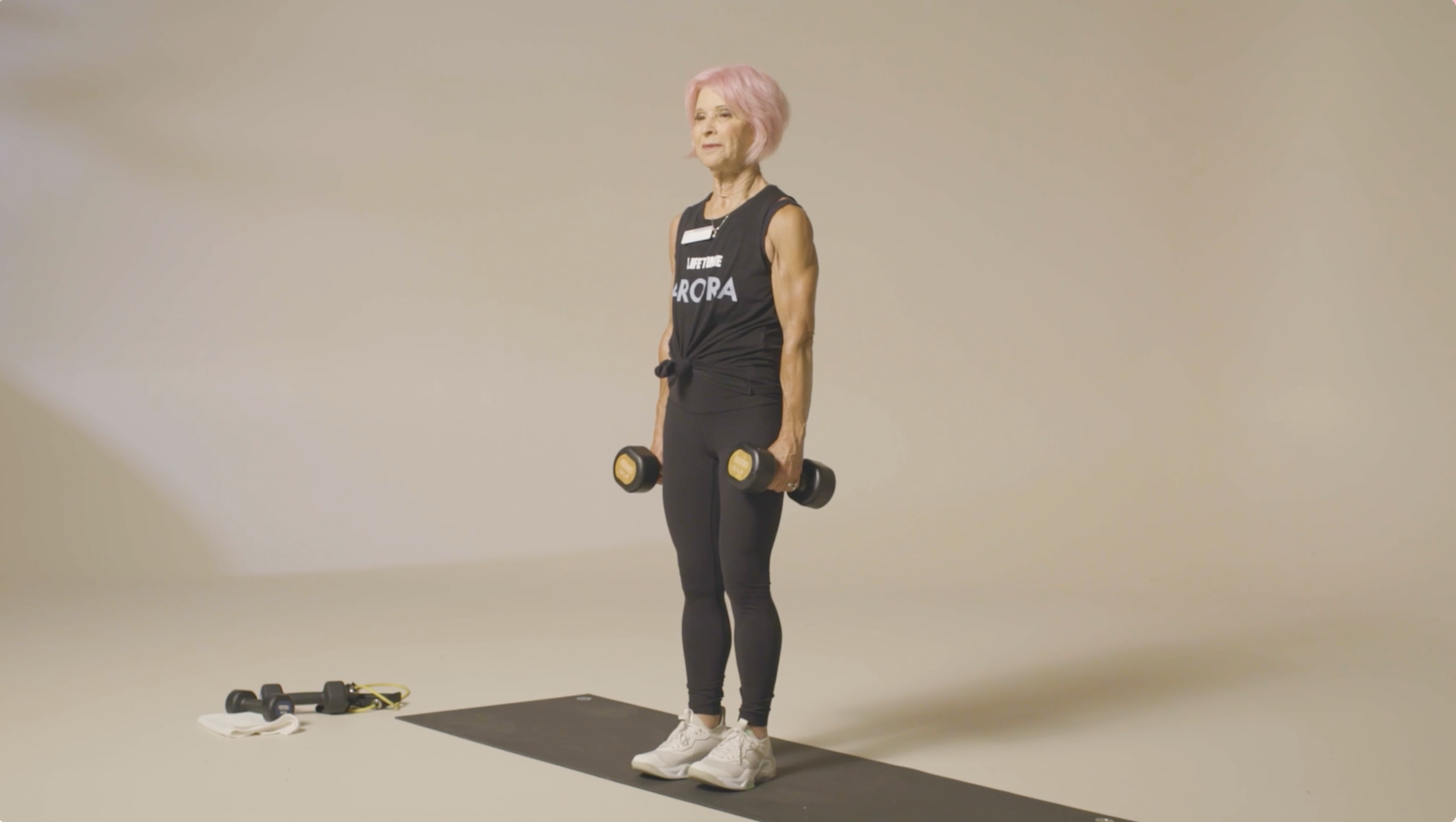
- Stand with your feet about hip width apart, holding a dumbbell in each hand. If you’re seated, keep your feet flat on the floor.
- Let your arms hang naturally at your sides with your palms facing each other. Keep a firm, comfortable grip.
- Lift your chest, keep your shoulders relaxed, and engage your core.
- Lift your shoulders straight up toward your ears, moving in a smooth, vertical line.
- As your shoulders reach their highest point, hold for a moment and squeeze your traps.
- Slowly let your shoulders drop back down to the starting position.
- Repeat for two sets of 12 reps.
2. External Shoulder Rotations
“You’ll need a resistance band or hand towel for this exercise,” says Frydberg. “This is great for injury prevention as it strengthens your rotator cuff muscles.”
- Hold a resistance band or hand towel with both hands.
- With your elbows bent at your sides, pull the band or towel outward, keeping elbows close to your body.
- Repeat for three sets of 10 to 12 reps.
3. Alternating Shoulder Press
“Strengthening your shoulders by lifting weights overhead is important for shoulder mobility,” says Frydberg. “It can also strengthen your shoulders for easier ability to raise your arms and reach up to high places.”
- Stand with your feet shoulder width apart, with a dumbbell in each hand. Begin with the dumbbells just below ear level, with your palms facing forward. If you’re seated, keep your feet flat on the floor.
- Press one dumbbell straight overhead while keeping your feet grounded. Activate your abdominal muscles to maintain neutral posture and lower-spine stability.
- Return to the starting position, then press the other dumbbell overhead.
- Repeat for three sets of 10 alternating reps (one row on each side per rep).