

Skip to content

Get Experience Life delivered to your door

Experience Life
Delivered every two months

Real Health. No Hype.

More than 600,000 subscribers trust us to keep them informed, inspired, and authentically healthy. Join them.

How Protein Affects Dopamine and Mental Health

The neurotransmitter dopamine has a sizable impact on mental health. Here's you to tailor your protein intake to bring it into balance.

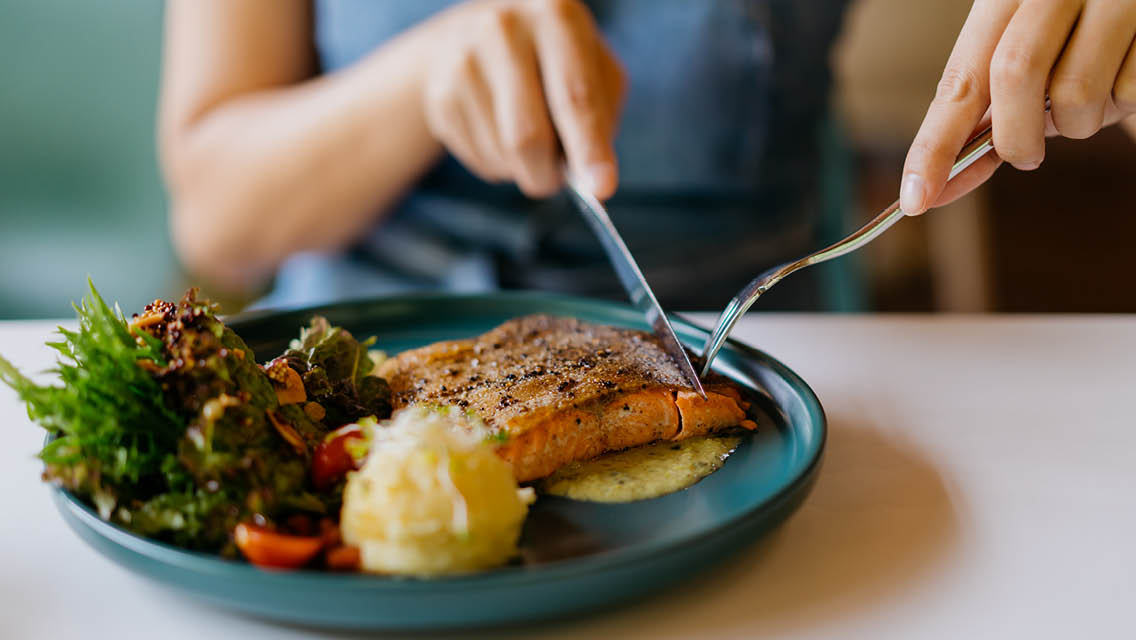
a person cuts into a salmon filet

DOPAMINE:
The Reward Giver

Dopamine boosts energy, motivation, focus, and the ability to enjoy life. Alternatively, dopamine imbalance is associated with ­addiction, memory loss, movement disorders, and mental illnesses involving mania and psychosis.

If your mood is down, if you’re unusually tired or unfocused, or if you’re just lacking enjoyment in life, it may help to focus on increasing your dopamine supply. This one is easy: Just eat more high-quality protein.

Dopamine is built from tyrosine, an amino acid plentiful in high-protein foods like meats, eggs, and fish. Vegetarian sources include cheese, soy, and pea protein. (Discover how to get more powerful plant protein in your diet at “How to Eat More Plant-Based Protein.”)

Any meal or snack in which protein is a primary component can result in a quick tyrosine boost, signaled by a bump in energy and focus. The effect increases if you also eat a moderate amount of healthy complex carbs.

Protein and Mental Health

Key for building muscle, protein is also important for your brain. Learn more at “How Protein Affects Mental Health,” from which this article was excerpted.
Henry Emmonds

Henry Emmons, MD is an integrative psychiatrist and the author of The Chemistry of Joy, The Chemistry of Calm, and Staying Sharp. He is the cofounder of NaturalMentalHealth.com.

Share

More like this

Savoring: The Key to Forgotten Happiness

When we fully notice and appreciate something, we create a pathway to joy.
By Henry Emmons, MD and Aimee Prasek, PhD

8 Key Supplements to Boost Your Mental Health — Naturally

Herbs, supplements, and other natural remedies promote well-being — yet separating help from hype can be challenging. Follow this expert guidance.
By Alexandra Smith, MA, LPCC

Share a thought

0 Comments

Comments (0)

Leave a Reply

Your email address will not be published. Required fields are marked *

Keep the conversation going

Leave a comment, ask a question, or see what others are talking about in the Life Time Health Facebook group.

Facebook Group

Advertisement

Back To Top