


Skip to content

Get Experience Life delivered to your door

Experience Life
Delivered every two months

Real Health. No Hype.

More than 600,000 subscribers trust us to keep them informed, inspired, and authentically healthy. Join them.

How Many Microplastic and Nanoplastic Particles Are in a Bottle of Water?

Higher than previously estimated, according to a recent study. Here's why that matters.

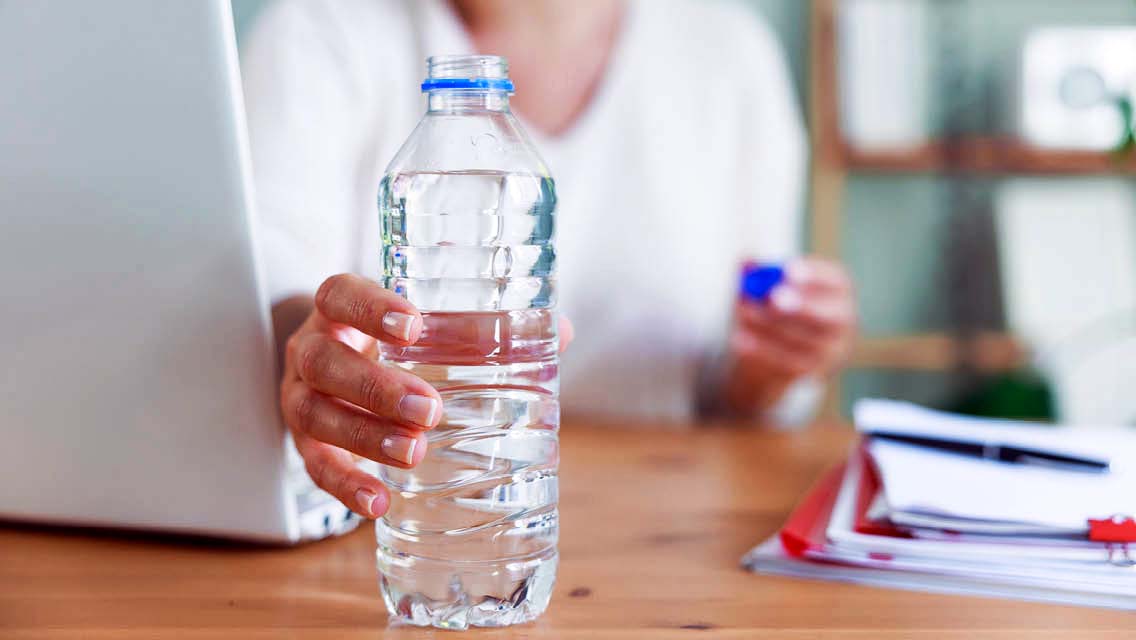
a person holds a bottle of water.

That liter of bottled water that you’re drinking contains an average of 240,000 microscopic pieces of plastic, according to a Columbia University study recently published in the Proceedings of the National Academy of Sciences.

Using a new laser-imaging technique, research­ers discovered that the num­ber of micro- and nanoplastic particles in bottled water is ­between 10 and 100 times higher than previously estimated.

That liter of bottled water that you’re drinking contains an average of 240,000 microscopic pieces of plastic.

Nanoplastic particles are smaller than a micron, or 1/25,000th of an inch — far smaller than the human eye can see.

Where do these particles come from? The authors speculate that they may ­originate from the single-use polyethylene terephthalate (PET) and polyethylene (PE) bottles or from materials, like tubing or filters, used in the production, purification, or bottling process. But they also note that plastic contamination is in our environment at large.

The findings come amid increased warnings about the proliferation and hazards of nanoplastics. Recent studies find that nanoplastics in our system could lead the way to Parkinson’s, ­Alzheimer’s, cancer, and other systematic concerns.

Michael Dregni is an Experience Life deputy editor.

Share

More like this

7 Ways to Help Your Body Manage Microplastics

Learn how to avoid microplastics and reduce your body’s overall microplastic load.
By Michael Dregni

New Study Finds Microplastics Can Cross Blood-Brain Barrier

Our brains may be up to 0.5 percent plastic pollution — which may play a role in dementia — according to new research.
By Michael Dregni

Toward a World With Less Plastic

Read a short overview of the UN Environment Programme's ambitious plan to reduce plastic pollution by 80 percent by 2040.
By Michael Dregni

Share a thought

0 Comments

Keep the conversation going

Leave a comment, ask a question, or see what others are talking about in the Life Time Health Facebook group.

Facebook Group

Advertisement

Back To Top