


Skip to content

Get Experience Life delivered to your door

Sept/Oct 2026 cover of Experience Life with person taking picture in cactus field
Delivered every two months

Real Health. No Hype.

More than 600,000 subscribers trust us to keep them informed, inspired, and authentically healthy. Join them.

Eating by the Rainbow

It is so easy to stick to what you know and choose convenience foods or the same foods every time you go to the store. Get out of that rut by accepting a new challenge; eating by the rainbow.

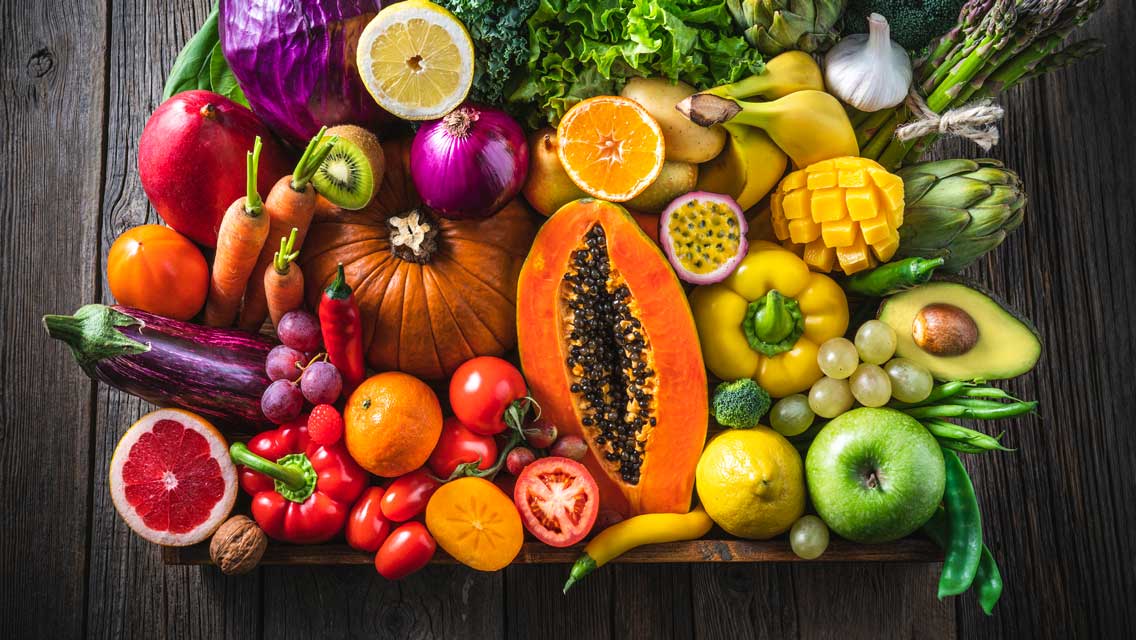
a rainbow of fruits and veggies

The Challenge: Stock your refrigerator with an entire rainbow of produce and reap the benefits that phytochemicals have to offer.

Phytochemicals, also called phytonutrients, are chemicals found naturally in plants that help protect against disease.

Goal: Add at least two different colors every day to your meals.

Green

The natural green pigment is called chlorophyll. Chlorophyll can be powerful in helping to prevent cataracts and macular degeneration. Leafy greens and broccoli are excellent sources of folate, a B vitamin that prevents birth defects.

• Green apples
• Artichokes
• Asparagus
• Avocados
• Green beans
• Broccoli
• Brussels sprouts
• Green cabbage
• Cucumbers
• Green grapes
• Honeydew melon
• Kiwi
• Lettuce
• Limes
• Green onions
• Peas
• Green pepper
• Spinach
• Zucchini


Blue/Purple

Are colored by natural pigments called anthocyanins. Anthocyanins are powerful antioxidants that protect cells from damage. They also may reduce the risk for cancer, stroke, and heart disease. Some studies have suggested that eating more from this group can lead to healthy aging.

• Blackberries
• Blueberries
• Eggplant
• Figs
• Juneberries
• Plums
• Prunes
• Purple grapes
• Raisins


White

The white plants are pigmented by anthoxanthins. Anthoxanthins may contain chemicals, such as allicin, which may help lower cholesterol and blood pressure. Other members of this category are rich in the potassium.

• Bananas
• Cauliflower
• Garlic
• Ginger
• Jicama
• Mushrooms
• Onions
• Parsnips
• Potatoes
• Turnips

As you try to incorporate more color in your diet, preserve those nutrients by:

• Limiting peeling to preserve fiber content.
• Steaming, broiling, microwaving, or cooking in a small amount of water.
• Avoiding boiling. Prolonged exposure to water and heat can break down chemicals unstable to high temperatures.
• Serving foods promptly. The longer they stand, the more nutrients are lost.
Share

More like this

Share a thought

0 Comments

Comments (0)

Leave a Reply

Your email address will not be published. Required fields are marked *

Keep the conversation going

Leave a comment, ask a question, or see what others are talking about in the Life Time Health Facebook group.

Facebook Group

Advertisement

Back To Top