

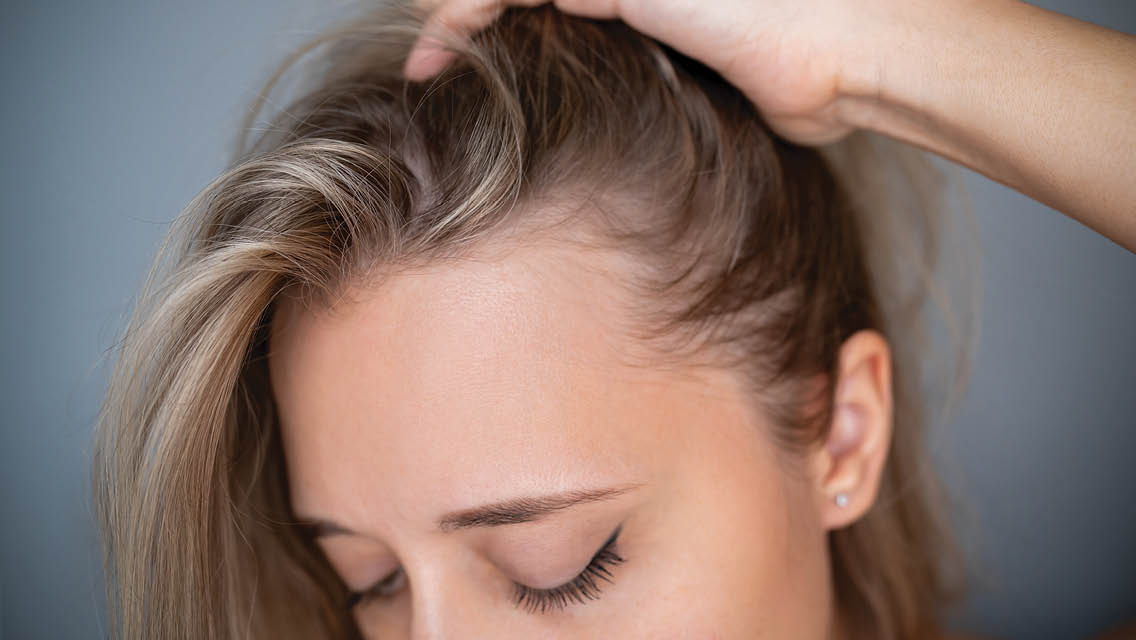
Your body’s 5 million hair follicles have a unique microbiome of their own. And the multitude of bacteria, fungi, and other microorganisms that live within it help protect you from pathogens and harmful environmental factors like UV radiation.
Beyond just growing hair, follicles are home to a vital and dynamic environment with a “range of protective and regulatory functions,” explain the authors of a 2025 review of research published in The Microbe.
The 90,000 to 150,000 follicles on your scalp are key to hair growth, hair loss, and hair health. But they also avert the pathogenic colonization that causes conditions such as dandruff, seborrheic dermatitis, and acne.
Diet, stress, and hormonal changes can all affect the health of the microbiota, for better or worse.
Diet, stress, and hormonal changes can all affect the health of the microbiota, for better or worse. Our personal-care products — including shampoo, conditioner, bleach, and colorings — can upset the balance too.
“Just as the fundamental rule of the Hippocratic oath in modern medicine is to first and foremost do no harm, the products we use to maintain or improve scalp and hair health should at least preserve the microbiome,” the authors of a 2023 study argue in the Journal of Clinical and Aesthetic Dermatology. “As evidence for links between microbiome imbalances and scalp/skin disorders mounts, research turns toward more natural therapies to improve scalp and hair health without causing dysbiosis of the microbiome.” (For more on safer personal-care products, see “How the Ingredients in Personal-Care Products Can Affect Your Health.”)
Recent research on the scalp microbiome might also lead to new therapies for hair issues, the Microbe authors note. “Probiotics, prebiotics, and other microbiome-modulating treatments may hold promise for restoring balance to disintegrated microbial communities and alleviating associated conditions.”



Comments (0)