



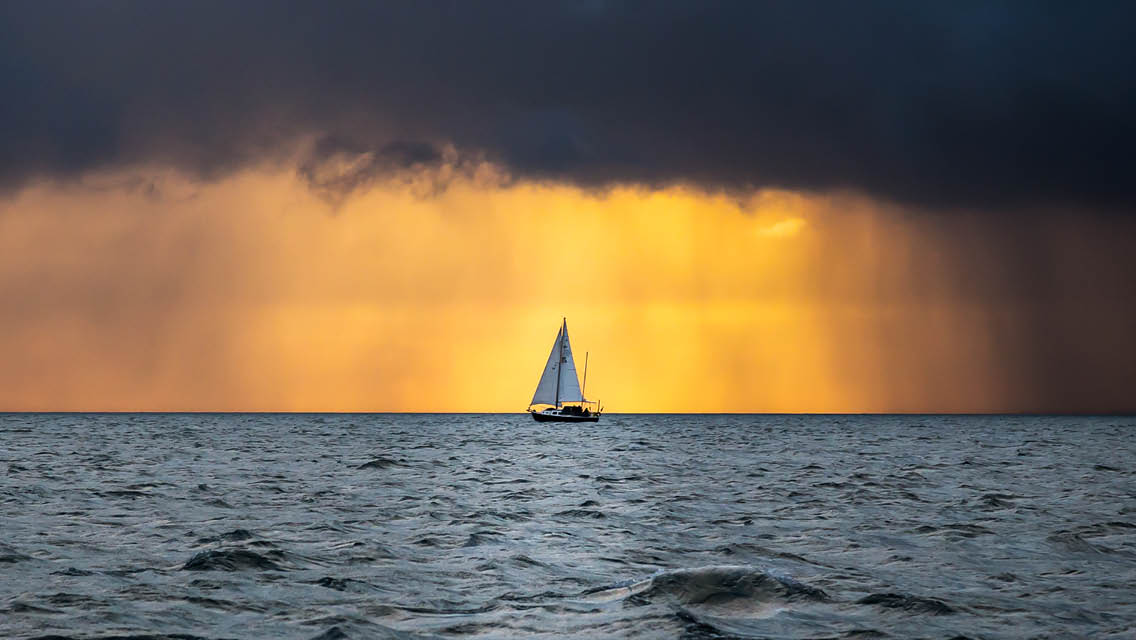
Life-transition counselor and writer Sheryl Paul defines anxiety as “a feeling of dread, agitation, or foreboding associated with a danger that does not exist in the present moment.” I’m guessing you can relate; I certainly can. (Holding this sort of feeling at bay is, I think, the secret motive behind many people’s interest in productivity techniques and personal development.)
Both parts of Paul’s definition are crucial: Anxiety is the feeling that something bad might be about to happen, and it’s combined with the absence or near absence of any real evidence to believe it actually will.
This is extremely bizarre, when you think about it. And it’s worth a closer look, if only because — and I speak from experience — going around all day with a pit in your stomach is no way to live.
Imagine the Worst
In my book The Antidote: Happiness for People Who Can’t Stand Positive Thinking, I explore a Stoic technique for coping with this sort of worry. The Stoics call it “the premeditation of evils” — the practice of soberly envisaging the real worst-case scenario in any given situation.
Suppose you’re anxious about giving a speech. It helps to imagine, in detail, the experience of embarrassing yourself before an audience of hundreds, then shuffling offstage and hiding under the bedcovers.
While that possible outcome is certainly unpleasant, it’s also pretty clearly cope-with-able. And since anxiety is the fear of a danger with which you couldn’t cope, the exercise has the effect of cutting your worries down to size.
I still recommend (and use) that practice today. But I’ve come to see it has a limitation: It risks implying that nothing catastrophically bad could ever really happen. Whereas the anxious person knows, if only subconsciously, that it could.
Public humiliation won’t kill you, but it’s always the case that your next hour or week or month could contain a bereavement, a terrible accident, or a shattering medical diagnosis. So the attempt to reassure yourself that nothing too appalling is coming down the pike will always run up against the gnawing realization that you can’t be sure of that.
Anxiety Isn’t Always Wrong
I think this is part of what Sheryl Paul means in calling her (excellent) book The Wisdom of Anxiety, echoing the title of Alan Watts’s great book The Wisdom of Insecurity. Anxiety isn’t a silly mistake about how bad things could get. It’s a logical response to what’s entailed by the human situation.
We are thrown into the river of time, unable to know what’s coming, let alone to control it, condemned to the condition the author Robert Saltzman calls “total vulnerability to events.” Yet we’re obliged to try to build a meaningful and enjoyable life anyway.
My partner has vividly described the teenage epiphany that occurred when she realized, after a childhood steeped in moviegoing, that if something devastating were to happen to her, it wouldn’t be foreshadowed by sinister music so she could at least mentally prepare. Nope. It would just happen. Anything always could.
In this predicament, you won’t find the deepest solace in compulsive planning, or in visualizing worst-case scenarios. You’ll find it from seeing, first, that there’s nothing you could ever do to change this state of affairs, so you might as well relax into it if you can. And, second, that literally everyone is in the exact same boat. So at least you needn’t worry that, existentially speaking, anyone else is more in command of their lives than you are.
The solace you can find, in my experience, is not through any kind of mental insight or cognitive exercise, but in actions: when you’re inching forward into the future, doing tiny bits of the things that may cause you anxiety, committing a little more to tentative relationships. It’s at these times that you’re discovering, in each moment, further concrete evidence that you can actually cope with what reality tosses your way.
It’s easier to act yourself into new ways of thinking than to think yourself into new ways of acting, as they say.
My own life, so far at least, provides zero reason to believe I’ll ever attain the degree of control over the future I always thought I needed. But, then again, my track record of having not yet been entirely overwhelmed by existence suggests that maybe — just maybe — I never needed that control at all.







Comments (0)