



Perhaps you know the feeling: You climb into bed exhausted, but your mind keeps running. Or you fall asleep fine, only to wake up at 3 a.m. and stare at the ceiling for hours. Roughly one-third of adults in the United States don’t get enough sleep each night, according to the CDC — and that can feel especially frustrating when sleep is so essential to overall health.
“There is no such thing as optimal health without optimal sleep,” says Samantha McKinney, RD, CPT, director of LTH at Life Time. “You can be completely dialed in health-wise with your nutrition habits and exercise, but if you’re not sleeping well, it’s all going to fall apart.” (Learn more: “Why Sleep Matters for Your Health.”)
While there are many strategies you can try to increase your chances of a good night’s rest — improving your sleep hygiene, optimizing your bedtime routine, and keeping a consistent sleep-wake schedule, to name a few — McKinney also suggests exploring supplementation. These are her top supplement recommendations to support falling asleep, staying asleep, and improving sleep quality.
1. Magnesium
Magnesium is crucial for physiological relaxation. It helps relax your muscles and nerves and regulate and unwind the body.
It’s also one of the most common nutrient deficiencies among American adults. “Oftentimes, adding a magnesium supplement alone is the ticket to sleeping better,” says McKinney. “Repleting magnesium is my No. 1 recommendation, but the form of the mineral you take is important. The most absorbable forms are chelated, meaning they’re wrapped in amino acids, and these can be significantly more beneficial for sleep than some of the cheaper forms of magnesium.”
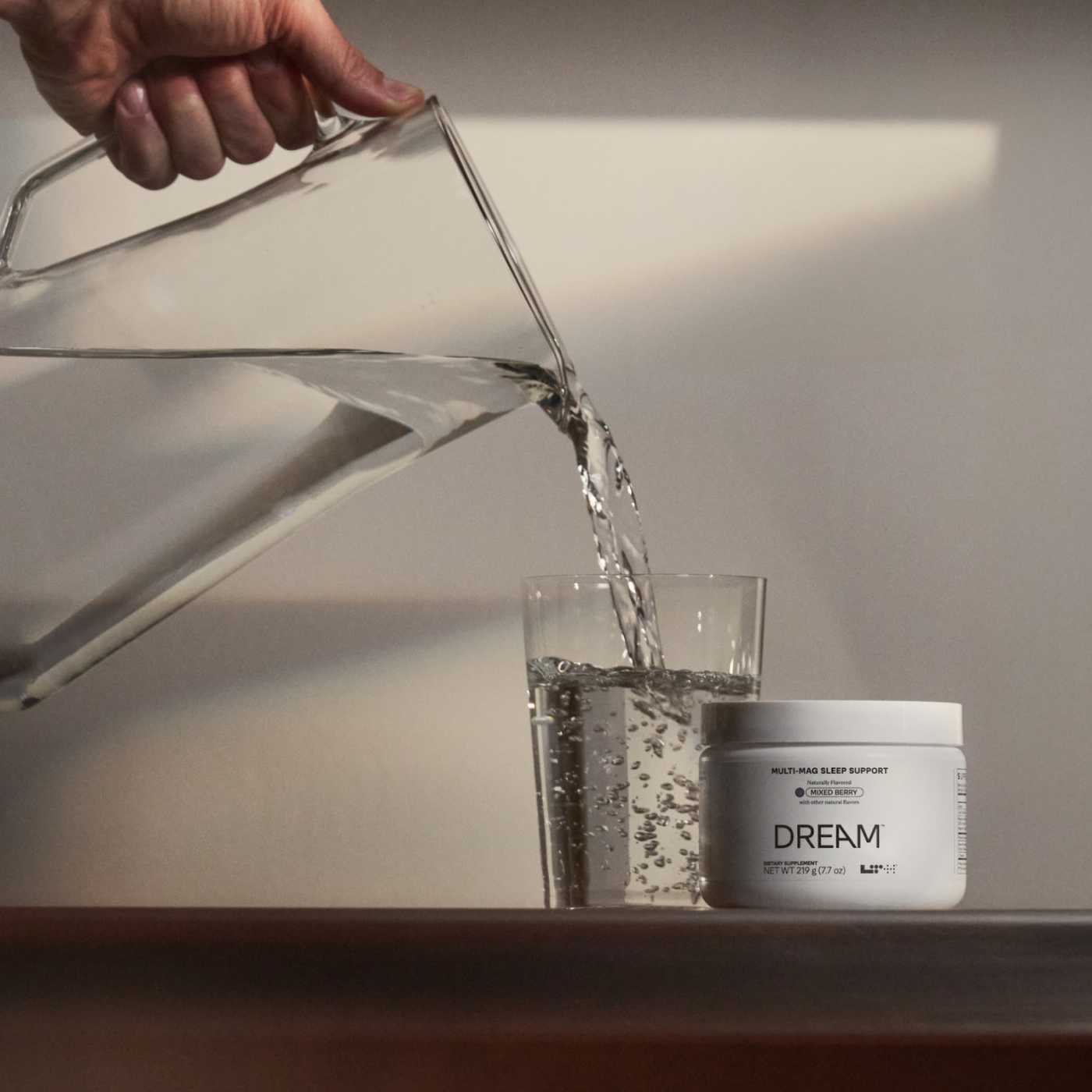
If you’re looking to supplement with magnesium, McKinney recommends considering LTH Dream, a multi-magnesium supplement that contains three kinds of chelated magnesium, along with other sleep-supportive ingredients.
If you prefer a magnesium-only supplement, LTH Chill Magnesium delivers a gentle, highly absorbable form of magnesium to support muscle function, relaxation, energy metabolism, and overall wellness.
2. L-Theanine
L-theanine is an amino acid known for promoting relaxation; studies suggest it can help temper acute stress.
“Although L-theanine often is derived from green tea, it’s caffeine-free and can be very relaxing before bed, especially if you’re feeling wired,” says McKinney. “In our LTH line, we offer LTH Relax, which contains L-theanine, and as coaches we often refer to it as a ‘sleep primer.’ It’s formulated with vitamin B6, 5-HTP, GABA, and botanical extracts, and the combination of these ingredients may help ease mental tension, promote relaxation, and encourage natural sleep cycles without next-day grogginess that can happen with some sleep aids or melatonin use.”
LTH Dream also contains L-theanine (in addition to the three forms of magnesium). “L-theanine can work synergistically with magnesium to help reduce mental chatter, ease tension, and support better focus and stress resilience the next day.” (Learn more: “What Are the Benefits of L-Theanine?”)
3. Ashwagandha
Ashwagandha is an adaptogenic herb that helps the body both rein in stress and build resistance to stress, which can support sleep onset and quality.
“Ashwagandha is in a category of supplements called adaptogens, and it essentially helps your body more appropriately respond to stress hormonally,” McKinney says. “If your stressors are keeping your body in a fight-or-flight state, it’s going to be very difficult to fall or stay asleep.”
LTH Dream contains Sensoril® ashwagandha, a form that is known to be both tested and trusted for quality. “Sensoril® ashwagandha has been studied and may help control cortisol, improve sleep quality, and support emotional well-being, making it a worthy option to consider for managing stress,” McKinney adds. (Learn more: “Should I Consider an Ashwagandha Supplement?”)
4. Melatonin
Melatonin is a hormone that signals to your body and brain that it’s time to go to sleep. It can also be taken as a supplement.
Although McKinney does not recommend relying on melatonin long-term if you have trouble falling asleep, she notes that supplementing with it short-term can be helpful, especially if your schedule is changing or you’re traveling across time zones.
“When taken as a supplement in the evening, melatonin can help restore a more normal pattern of your biological clock,” she says. “It also has some temperature-lowering effects in the body, and cooler temperatures are associated with improved sleep. Research suggests that melatonin’s greatest impact on sleep comes from reducing the amount of time it takes to fall asleep, with mixed results on actual sleep quality and duration.” (Learn more: “Expert Answers: Should I Supplement With Melatonin?”)
5. Glycine
Glycine is an amino acid that’s often used to promote relaxation, and for some, can potentially support deeper sleep. It is sometimes available as a standalone option, but glycine can also be found in collagen peptide supplements.
“Glycine can be really calming,” says McKinney. “It’s been shown to potentially help lower core body temperature and quiet neural activity to get the body ready for sleep. I often recommend people mix LTH Prime Collagen Peptides into an herbal tea and drink it before bed. It has almost 3 grams of glycine per scoop and dissolves easily in hot liquid.”