



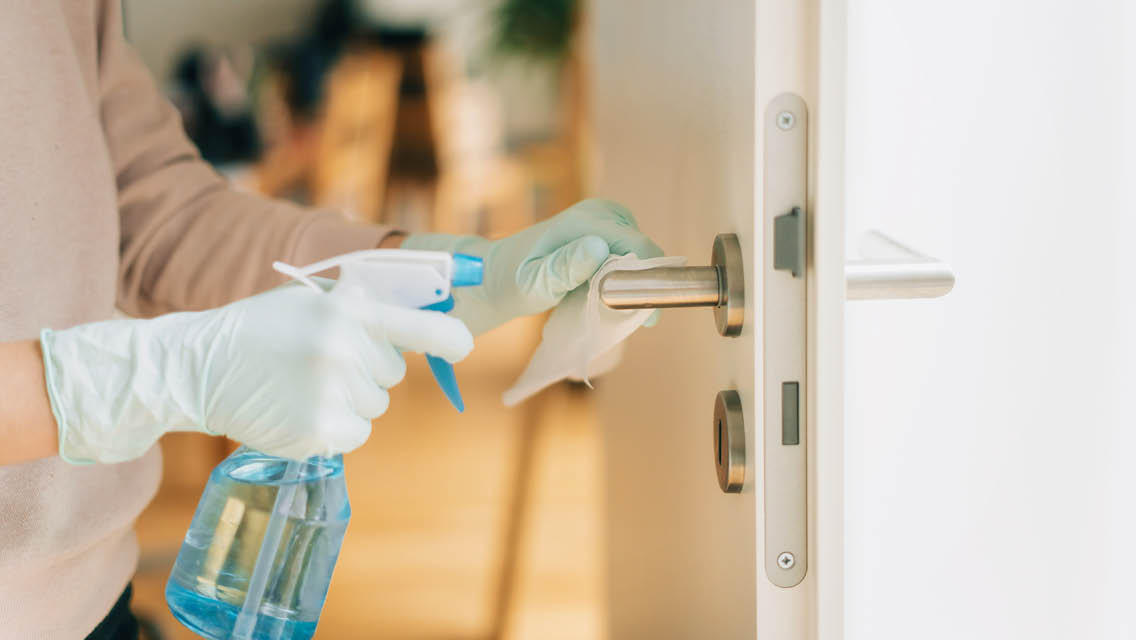
Most marketing campaigns for cleaning products want you to believe that the surfaces in your environments are teeming with terrifying bacteria and viruses, waiting to leap onto your skin and food and make you ill. You need the company’s arsenal of sprays, solutions, and wipes to keep them at bay.
Not so fast. It’s true that some viruses, such as influenza and respiratory syncytial virus, can transmit via droplets and surfaces — and you really don’t want to share a spoon with an actively sick person. But the risk of catching COVID-19 from surfaces has been overblown.
Research now suggests that COVID spreads primarily through airborne transmission — that is, we breathe it in more than we touch it in. Surface transmission of COVID is rare.
“Research is clear that all the sanitizing we’ve been doing to prevent COVID-19, like endlessly cleaning surfaces, hasn’t been worth the tradeoff. We need to back off of that,” says functional-medicine physician Kara Fitzgerald, ND, IFMCP.
While it might seem like a harmless exercise in caution, disinfecting surfaces does have consequences. Antimicrobial cleaning products don’t discriminate between harmless or beneficial bugs and bad ones. Ridding your environment of good bugs can create more openings for unwanted ones. Wipes may serve to spread germs around rather than destroy them, and each discarded sheet winds up in a landfill.
“I’m not too worried about surfaces,” says immunology expert Mary Ruebush, PhD. “But I do worry about how many chemicals we introduce in our desire for cleanliness, especially around kids.” Not only do many cleaning products contain antimicrobials, but they often also host hormone-disrupting ingredients, like phthalates.
Ruebush notes that pathogens we ingest orally are less likely to cause disease than those we breathe, because they have to live through the acid bath of the stomach. “I’m more cautious with things I’m breathing,” she says. “I try not to touch my face too much, but I’ve gotten rid of chemicals in my home, and I clean with soap and water.”
This was excerpted from “Making Peace with Microbes” in the April 2022 issue of Experience Life.



Comments (0)