


Why Generic Diets Fall Short and How to Build a Nutrition Plan That Fits You
Learn what “personalized nutrition” really looks like and why building a plan around who you are and what your body needs is so important.


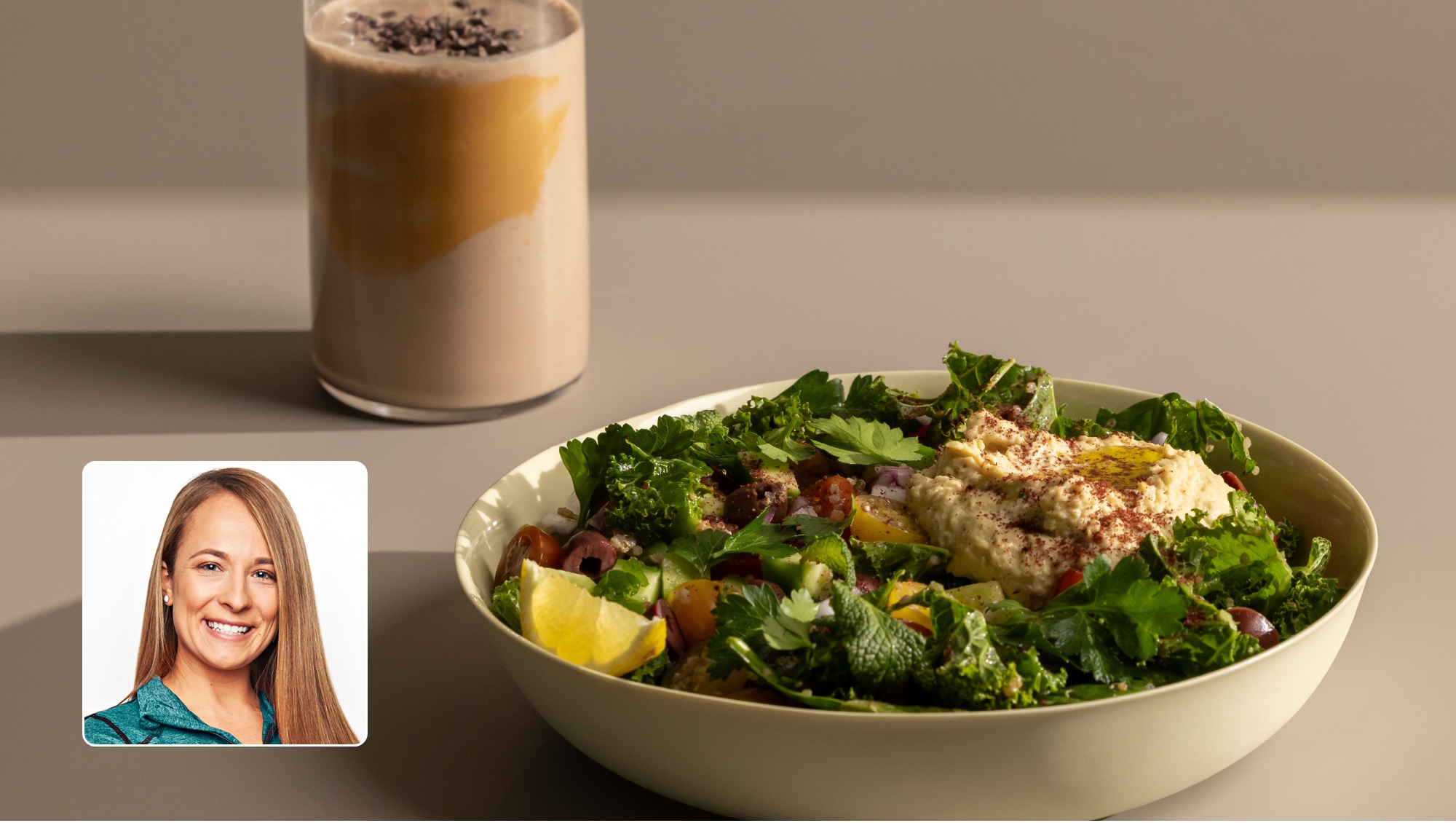


Many of us try to fit our unique nutrition needs into generic, one-size-fits-all diet plans: We follow the rules, hoping the habits stick, but eventually, the momentum fades. Too often, we’re left wondering, Why doesn’t this work for me?
But what if you approached your nutrition differently, building a plan around who you are and what your body needs right now? In this episode, Samantha McKinney, RD, dives into what “personalized nutrition” really looks like, and why factors like your biology, mindset, and daily habits matter so much.
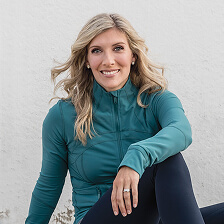
Samantha McKinney is a registered dietitian and trainer who has been with Life Time for 15 years in various roles supporting members and team members with wellness programming. She’s currently a director within Life Time Health and Dynamic Nutrition, where she helps oversee the education, training, and activation of wellness solutions involving nutrition and metabolism.
In this episode, McKinney explores why a personalized approach to nutrition matters. Insights include the following:
- There’s no such thing as a one-size-fits-all nutrition plan. Many people get stuck in cookie-cutter approaches that overlook factors like biology, mindset, lifestyle, and daily habits. What works well for one person may not work well for another, and that’s completely normal.
- When a nutrition plan isn’t working, the problem may not be you. Often, the issue is that the approach is too generic, too rigid, or not aligned with your body, goals, or the season of life you’re in.
- The foundation of any strong plan is universal: Roughly 70 to 80 percent comes from core habits like eating enough protein, prioritizing colorful produce, consuming healthy fats, and staying hydrated. The remaining 20 to 30 percent is where personalization comes into play.
- Advanced tactics only matter once the basics are in place. Strategies like meal timing or macro cycling, for example, are unlikely to help if foundational habits are inconsistent.
- Mindset is an underrated part of success. Long-term progress is more likely when nutrition changes are approached with curiosity and flexibility rather than all-or-nothing thinking.
- Pay attention to symptoms. Issues like bloating, skin concerns, fatigue, and sinus problems may be common, but they are not normal. In many cases, they may be connected to nutrition and are worth investigating further.
- Be cautious of rigid nutrition philosophies. Coaches or online voices who promote a single strict approach as the answer for everyone often miss the bigger picture. Effective nutrition is built around the individual.
- A good coach can provide perspectives that can be hard to see on your own. They can help identify normalized symptoms, keep goals realistic, add variety to meals, and track meaningful progress over time.
- Consistency matters more than intensity. Small habits practiced regularly may not feel dramatic, but they are often what lead to lasting results.
- The ultimate test of any nutrition plan is sustainability. If an approach feels miserable or impossible to maintain, it’s worth rethinking. The best plan is one that works for you and that you can stick with over time.
Transcript: Why Generic Diets Fall Short and How to Build a Nutrition Plan That Fits You
David Freeman
Welcome back to another episode of Life Time Talks. I’m David Freeman.
Jamie Martin
And I’m Jamie Martin.
David Freeman
In today’s episode, we’re going to talk about how to actually personalize your diet.
So many of us are trying to fit unique lives into generic one-size-fits-all diet plans. We follow the rules, hoping that the habits stick, but eventually the momentum fades. Too often we’re left wondering, why doesn’t this work for me?
But what if you approached your nutrition differently?
Building a plan around who you are and what your body needs right now.
In this episode, our guests will be diving into personalized nutrition, what it really looks like, and why factors like your specific biology, your mindset, and daily habits matter so much.
Who do we got with us today, Jamie?
Jamie Martin
Ooh, back with us again. One of our most regular guests is Samantha McKinney. She is a registered dietitian and trainer who has been with Life Time for fifteen years in various roles supporting members and team members with wellness programming.
She’s currently a director with Life Time Health and Dynamic Nutrition, where she helps oversee the education, training, and activation of wellness solutions involving nutrition and metabolism.
Hey Sam, how are you?
Samantha McKinney
Hey, how’s it going guys? I love being here, you know that.
Jamie Martin
We love having you. We love these conversations.
Samantha McKinney
So fun.
David Freeman
You know, we’re gonna get right into it. So why do you often think people get stuck in the one-size-fits-all approach when it comes to nutrition?
Samantha McKinney
Nutrition is tricky, and everyone has an opinion on nutrition, right? Everybody eats, so everybody has an opinion on what works and what doesn’t.
And I’ll say that when it comes to the one-size-fits-all approach, oftentimes people really just start following who they trust. Oftentimes this could be a social media influencer, this could be a friend, this could be just anybody that has influence in your life.
If something works for somebody as an individual, they’re not trying to steer people wrong, but they get really loud because they’re true evangelists in trying to help others and doing what worked for them, not realizing that there’s a lot of nuance in individuality with nutrition.
So what ends up happening is most of us start to develop over time, due to these influences, this thought process or this kind of mental framework of what we think healthy eating is. And to us, that’s just the: this is what I’m supposed to be doing, right? And this is how I’m supposed to eat.
We can see this pretty prevalently in people, because how many times, even ourselves, have we thought, wow, I’m really on the wagon, or I’m off the wagon, or I’m really dialed in, or I’m not dialed in?
And think of what that means. What does dialed in mean for you? That’s probably whatever your one-size-fits-all mentality might be.
Yeah, absolutely.
Jamie Martin
Well, I think it’s so interesting because we think about one-size-fits-all, but then there are certain nutrition recommendations, like we talk about at Life Time, like 30 grams of protein per meal. That’s kind of a broad recommendation that we make.
So are there certain nutritional recommendations that are appropriate for everybody? And how are those unique or different from one-size-fits-all?
Samantha McKinney
Yes. Okay, so really good point there.
When it comes to overall health, there are foundational principles that we all need. And when I say we all, I always need to preface this with a little asterisk and say, think of a bell curve, right? It’s the majority under that bell curve. There’s always going to be fringe medical issues or fringe unique issues that these might not apply to.
But for the vast, vast, vast majority of people, the general population, obviously we need to be eating a lot of colorful produce, right? Lots of veggies and fruits every day.
You want to be getting enough protein to help support your overall muscle mass, especially as we age. And so that’s where that 30 grams of protein per meal recommendation generally comes from. Obviously, we need to tweak that for activity, total skeletal muscle mass, et cetera.
You want to be getting healthy fats in, so you need enough omega-3s. There are certain foundational priorities that do apply to all people.
And I kind of look at that as, I hate to use pyramid because I don’t want to confuse it with the food pyramid or anything from the past, but think of that as the base of a pyramid. That’s a foundation that you have to build from.
And then what you’re building on top of, that’s where the individualization really comes in. Because that foundation will probably cover, for most people, 70 to 80 percent of what they should be doing.
But sometimes the results happen from that 20 to 30 percent of personalization that you’ve got to implement. And that would be different for David versus Jamie versus myself versus everybody.
Jamie Martin
Love that, just the visualization of that though, to say, okay, 80 percent is kind of here, like 70 to 80 percent, of these foundational things that if we can do them on a regular, pretty consistent basis, they’re covering things pretty well.
But then again, here’s this part that I can do. It’s a great way to think about it and see, okay, this is where I need to maybe get a little bit more specific for myself.
Samantha McKinney
And what I find is that a lot of those foundational habits we’ve heard before. Yes, right? We’ve heard before, if you work with any dynamic personal trainer at Life Time or any coach at Life Time, if you’ve worked with a dynamic nutrition coach, you’ve heard this over and over and over and over again.
It almost becomes like a, yeah, yeah, yeah, but then what else should I do?
And it’s like, no, no. There’s no actual shortcut through those. You have to be hydrated, you have to be sleeping, you have to be getting protein.
For a lot of people on average, whenever I was working with clients one-on-one, even somebody that was really health-conscious, that wasn’t coming in eating junk every day, but somebody that actually was coming in with a decent approach to nutrition, to get them really consistently doing all of those foundations often would take four to six months alone.
And then we start to get into personalization as well.
Occasionally I would get somebody coming in and I’m like, wow, you’re really doing everything and you’re not seeing results. Let’s dig right in to that upper part of that pyramid visual in order to be able to test, figure out what’s going on, and tweak things.
But what I find is that because people hear about protein and vegetables and fiber and hydration, it almost becomes background noise for a lot of people. And they’re like, yeah, but what about my meal timing? Or what about my macro cycling?
And I’m just like, okay, that’s when we’re starting to get into those upper-level strategies that can be powerful if you need them, but they’re not going to do anything for you unless the foundation is built.
Jamie Martin
Both-and. You need that foundation, and then, right? Versus but-then.
Samantha McKinney
You can’t skip the foundation, but that doesn’t diminish the power and the importance of the personalization piece and things that you’ll need to tweak on top of having that foundation built.
David Freeman
I feel like it’s in the same vein of what we talk about with a one-size-fits-all workout plan. Then you factor in all the different things when it comes to lifestyle.
So coming back to this, when it comes to an individual’s lifestyle and what it is that they’re doing inside and outside of the four walls of Life Time, or wherever they’re working out, when it comes back to the personalization of each individual, why is that so key for people to understand?
Because to the point of me using the reference of a workout, what might be working for me from a workout standpoint might not be working the same for Jamie. So why is the personalized approach so important and key here?
Samantha McKinney
Yeah. Well, I love the workout example because it’s actually a really great analogy, right?
So if you think of somebody maybe swiping into the club for the first time, I think we all know that if, let’s say, it’s somebody that was sedentary and they’re like, I am going to take control of my health, and I’m going to join Life Time, and I’m going to get on a workout plan, they should not swipe into the club the first time and look at David Freeman’s workout and be like, I’m going to go do that today.
What’s gonna happen? They’re gonna fall apart, right? They just can’t do it.
And nutrition, again, it’s a little bit trickier compared to exercise or other healthy lifestyle things because everybody eats. So everybody thinks that they can do X, right? Like, you kind of project it as, yeah, I could go do that.
Not realizing that there’s so much habit and routine built into what we’re eating. What we want to do and what we do are usually very different things.
And it’s a lot trickier than we think.
So why is personalization needed, and what can cause that?
Well, a few things.
Number one is obviously your underlying genetics. That’s going to be really important. People tend to overemphasize that a little bit whenever it comes to risk of chronic health conditions and all that. It’s important to consider, but you can influence how genetics are expressed oftentimes.
There’s also your overall activity level. So what is your activity level right now? Are you kind of a leisurely exerciser, which maybe that’s okay, or are you somebody that really hits it for 60 to 90 minutes every day and you barely miss a day? That really matters.
Your overall time does as well. I think back to whenever I was a trainer in my early twenties, and now I think, okay, I just turned 40. I’m a mother of two. And I couldn’t appreciate then how much time can be constrained right now.
I remember hearing that in my twenties and being offended, like, I’m busy. Yes, you can be busy. You can have a crazy schedule in your twenties. I’m not saying that you can’t. But it’s what other responsibilities do you have outside of taking care of yourself and outside of taking care of your job that really you can’t pause? You cannot pause childcare, right?
That’s just an example. There’s a thousand different ways that can come to life, whether or not somebody has a family. It could be how demanding someone’s job is versus how easy someone’s job is. There’s a lot there.
But there is a very real reality that you have responsibilities outside of meal prepping and how you’re eating every day.
A couple other things I would say are chronic stress. Stress is an absolute factor here. If you are managing your stress or not managing your stress, that can pretty dramatically change what you need to be doing with your nutrition.
As well as just, what is the history of how you grew up and what your food routines are and how you ate? Do you look at healthy eating as a punishment? Or do you look at it as lacking some of the processed foods you grew up with? There’s that mindset piece of what’s going on underneath the surface.
And I could name 20 other things that influence how to personalize your diet, but I would say your underlying metabolism is really important. What’s going on with your health right now? What is your activity level? What does your stress and sleep look like? And then what’s your overall mindset, relationship with food, and even history with eating or food traditions?
Jamie Martin
So we want to dive kind of specifically into a bunch of those. So as we talk about these specific variables and what we should be considering, are there other physical or metabolic factors that could be influencing how someone fuels themselves?
And then how do you know? Do you test for them? How do you understand them better?
Samantha McKinney
I’ll tell you, your body almost always talks. If there’s something going on underlying with your metabolism, your body talks to you before tests show anything, right? But testing is the way to confirm it.
So for example, we’re really passionate at Life Time. We have dynamic nutrition coaches, and part of the dynamic nutrition coaching approach is always: listen to what somebody is feeling, and then, if you can, confirm it through lab work or some sort of assessment or test. That’s important.
So it’s like: listen and confirm.
You can make a little bit of leeway personalizing your diet just based off of how you’re feeling. If you make a nutrition change and you feel crappy, it’s probably not great for you, as an example.
But for underlying factors, you’ve got to listen to your body and realize that if you’re having symptoms that are uncomfortable, they’re common, but they’re not normal.
So no, you shouldn’t be bloated every day. Yes, you should have a normal bowel movement every day. You shouldn’t be having skin issues, rashes, psoriasis, eczema, all those types of things. You ideally shouldn’t be struggling with an autoimmune condition. You shouldn’t have chronic sinus issues.
All of those things I just mentioned would point me, if I was working with a client, to gut health and having to really address gut health for that person.
So the personalization for that example and those symptoms would be: okay, we’ve got to figure out, are you sensitive to foods right now? How do we support the diversity in your microbiome and your probiotics? What probiotics are you taking? Are you getting enough prebiotic fiber to feed them?
So you can start to see them getting into that upper-level stuff. Because that’s a gut-health case, but that doesn’t change the fact that they need to be eating their protein and resting and getting that foundation there.
And then on the flip side, let’s say somebody doesn’t have any of those symptoms, but they’re like, wow, I’m really experiencing hair loss. My skin is super dry. I feel like I don’t eat very much, but I keep putting on weight. My mood is a little bit lower than I’d like. I want to work out, but I have trouble getting enough energy to do it.
I’m immediately thinking thyroid.
So let’s talk about figuring out how to support your thyroid health. Do you have enough iron? Do you have enough zinc? Do you have enough of the key nutrients for your body to produce thyroid hormone?
And so we start to personalize with what foods you’re eating.
Yeah, there’s so many different things to look out for. But always, to answer your question, it starts with listening to the symptoms that are popping up in your body and then trying to confirm it with some sort of lab testing.
David Freeman
Yep. When you have all this data now in front of you and now it is objective and now you know that this is the thing that I need to implement, how much of a role does the mindset play into bringing this to life?
Because to your point, we can have the perfect game plan. We can have all the resources, again, that are in front of us that we now know are what’s best for us. But if we’ve been doing so many reps of the wrong, how do we now come back to the mindset playing into the implementation of all this?
Samantha McKinney
I mean, I will say that mindset is probably one of the most underappreciated aspects of nutrition. Addressing your mindset around food is so incredibly powerful.
If you think about it, if somebody needs to dramatically change their nutrition approach based off of data in order to see the results they want compared to what they’ve been doing, sometimes you almost have to rethink the time commitment that you’ve already put in that hasn’t worked.
You might be attached to something. You’re like, yes, but…
You’re not at your goal yet, and you’re not even progressing toward your goal at the speed that you want to be. So if nothing changes, nothing changes.
That’s really important to think of it that way.
And sometimes, if people are really tightly gripping onto some sort of strategy, you’ve got to figure out why. If it’s something that is really deeply personal to them, or obviously if somebody has a history of disordered eating, for example, you’ve got to then recruit support from their healthcare team.
Let’s say that’s not what’s going on. If it’s just the mindset that they’re almost stuck there, what I would encourage everybody to do is, if you are getting professional guidance and you are changing your nutrition based off of data, approach it with a spirit of curiosity. Always approach it with a spirit of curiosity.
We see this all the time in our Life Time detox plan. When people hear detox, they immediately think, I don’t want to detox. I feel like this is going to be hard. This is going to be restrictive.
Not realizing that our approach to detox is really based off of a bunch of whole foods. It’s based off of real protein, real veggies, real whole grains that are anti-inflammatory, gluten-free. It’s a whole packaged diet together.
Jamie Martin
But it’s just that word. People immediately associate it with deprivation versus nourishment.
Samantha McKinney
They do.
I even just heard somebody yesterday say, the Life Time detox is like a short-term fix. I’m like, no, no, no, it’s not. It’s actually a catalyst to what you should be doing ongoing.
And so when people do detox, because we have thousands of people go through detox every couple of months, it’s so dramatic to see the outcome differences between people who are like, I can’t wait to do this. I want to feel better. I can’t wait to see what my body feels like on real food for two straight weeks…
versus the people that go in and, quite frankly, are like, wah, I can’t have coffee, I can’t have this, I can’t…
I’ve had clients in the past where I really think physiologically it’s perfect for them to do a 14-day catalyst, like a detox. Like, let’s get everything set to get you feeling better quickly. And they start complaining about everything they can’t do. And I go, you know what, never mind.
And it’s a genuine never mind, not a mad never mind. It’s like, you’re actually not in the place where I think this will even benefit you right now.
You have to really want to see how a new nutrition approach impacts you in order for it to be successful. And that’s outside of the science of it, and that’s outside the physiology of it. Because again, if you’re executing a nutrition strategy that you hate, it’s never gonna work.
Jamie Martin
Yeah. Well, you’re not gonna be able to keep doing it. It’s just constantly gonna be fighting against it.
Samantha McKinney
So your preferences are just as important with your nutrition as the physiological, underlying metabolism personalization.
And it’s tricky to kind of bring this all together, which is why we so often recommend working with an expert to do this. There’s a way to simplify this whole thing with the right guidance.
But again, it’s how much data do you have? How urgently do you want to get to your goal? Is there something very specific on a timeline you’re working on? Are you just kind of looking at overall health?
It varies so much from person to person.
But I want to encourage everybody out there who’s listening to this to just remember: your nutrition needs that foundation. But the more information you have, the more you can personalize. And you have to decide whether or not you’re ready for that level of personalization.
David Freeman
And you just said it, as far as being able to enlist help. A coach is a sign of wisdom, not weakness. So what’s the power of having a coach in your corner on this?
Samantha McKinney
Well, first and foremost, I’d say in every aspect of life, having an external perspective is always good. We all have our own biases, right?
But sometimes if you have a coach and you have somebody external, there’s the accountability factor of, I have somebody else checking in on me. And this goal is important to me. Maybe I’m going to stay a little bit more consistent with choices that serve me just because I know someone else is checking in on it.
But from the expert mentality, when you’re working with somebody that knows what they’re doing, like a dynamic nutrition coach, they can actually start to see some of these signs and symptoms that you’ve normalized because maybe you’ve been normalizing something for 20 years and you don’t even realize it.
So, you know, it’s just me. I need an afternoon nap. That’s just how I am.
Whoa, whoa, whoa. I’m immediately like, wait a second, rewind. What’d you just say? I actually think you probably have a blood sugar issue.
And they’re like, wait, what? But my blood sugars are fine.
And then you get somebody to almost jar you into being like, wait a minute. I should look closer at that. So that’s one aspect.
The second one is really having a partner to figure out how to put together a plan that you actually enjoy because we are so in ourselves and our own habits, it’s hard to get creative sometimes and present yourself with new ideas.
It’s the same thing with working out, right? Whenever you’re working with a dynamic personal trainer, they can think of a fun way to create some sort of exercise stimulus that you would have never wanted to do before.
So it’s like, hey, I hate doing barbell squats.
Great. A great personal trainer can give you five other variations of how to get that same thing.
It’s the same thing with nutrition. Like, gosh, let’s use this as an example: I just don’t want to go low carb.
Okay. Well, look at these three different potential sample days of low carb. Do any of those look unenjoyable to you?
And they’re like, wow, I would have never thought to eat that way.
So it just depends on what’s going on.
So for an expert to help you not only hold you accountable, but to notice signs and symptoms that something needs to change and also help you track your progress, that can be incredibly valuable.
I can’t tell you how many clients I’ve had that have been really dialed in. They’re really serious about their plan, and they’ll have this perception of, like, things aren’t working.
And I’m like, wait a minute.
I will pull out the regular symptoms questionnaires that we did every four weeks and I will show them their body-fat track. And they’re like, I don’t even remember feeling that way. I’ve lost 12 negative symptoms I complained to you about, and I’m down 3 percent body fat.
And it’s so motivating to have that reminder because I think we’re hardest on ourselves, right? We think our transformations and our progress and our results should be quick and dramatic.
And a really good coach can help get you there in a way that you can sustain and actually prove to you that you’re seeing success.
Jamie Martin
And I think they help keep it realistic for you. What’s actually doable?
Instead of these big ideas that we get into our head because maybe we’re influenced by social media or whatever, like, I have to go this route. I’ve heard you say this about your lifestyle. I’ve heard you say this. Here’s what I think we should do to make this work.
Samantha McKinney
That human aspect is so important too because working with a coach is not a sign of weakness. It’s not a sign of missing information.
We live in an era of information. You can find out whatever information you want. We’re on information overload. That’s part of the problem. It’s like the Netflix effect, right? Too much information and you don’t make any decisions and you do nothing, similar to how you can scroll and scroll and scroll and never start a movie.
So this human aspect is so important because I will tell you that some of the smartest registered dietitians I’ve known have worked with nutrition coaches.
And it’s like, well, wait a minute. But they know.
It’s not just about knowing. It’s about doing and having that external perspective.
Some of the best personal trainers I know hire a personal trainer and a coach. And that is a sign that you know, hey, I’m going to take this seriously and I’m going to put together a plan outside of my own biases, my own thoughts. I need somebody outside to look at this and get me to where I want to go more efficiently.
Jamie Martin
Let’s talk for a second. I just alluded to social media a little bit. And like you said, we’re in this information-overload age.
With so much out there, how do you differentiate between what’s actually helpful versus what’s harmful? Because there’s a lot going on. Is it identifying this person actually has credentials versus this, or…?
Samantha McKinney
Yeah. So credentials are important, but they’re not the all-encompassing barometer of whether or not somebody is a good coach. You obviously want somebody that knows what they’re talking about.
My red flags that I see on social media oftentimes are if someone’s bio or someone’s approach is always… I don’t want to accidentally call out somebody’s handle, but let’s say everything they’re doing is getting everybody on a vegan diet, or getting everybody on a carnivore diet, or hey, macro counting, that’s all I do.
If it’s myopic, it’s not going to work.
That’s what you have to remember. If it’s myopic, it’s not going to work. You have to look at the bell curve of people and customize by person.
So, so important.
Macro counting can be super powerful for some people. For others, it can be detrimental. It gets them obsessed. It gets them spiraling. It gets them stressed out about food. So that’s not a macro-counting type of person, right?
For some people, a vegan diet is powerful. For a lot of people, it can create massive nutrient deficiencies, blood sugar issues, et cetera.
Same thing for some people: a carnivore diet, or going a little bit more meat-based, might be temporarily helpful. For a lot of people, it might destroy their gut health or wreck their cholesterol levels.
So it’s just this: anytime somebody assigns their way of coaching or supporting people to one nutrition philosophy, run. Go the other direction.
Jamie Martin
Jumping back to it, we talked about physiological and metabolic factors, but what about some of the other lifestyle factors that could be having an influence or that we should be thinking about when personalizing nutrition?
Samantha McKinney
Yeah. So, I mean, a couple of things.
I don’t know if we want to talk a little bit about body composition, but where you’re at body-comp-wise does matter.
So most people start to think about, okay, protein, fat, carbohydrate, right? How do I break down my food? And there’s always a different macronutrient that’s demonized every couple of decades, right? It was fat in the 80s. It was carbs for a while. I think there are some anti-protein people coming up now.
So again, it depends on the person.
But what I will say is, if you start to think about body composition, my recommendation is anchor it on your protein needs. Your body cannot manufacture protein. You need to have enough essential amino acids. Muscle loss threatens all of us, right? So important.
You have to anchor on getting enough protein.
The rest of your calories come from fat and carbohydrates, and you have to adjust those higher, lower, or moderate. If one goes up, the other goes down with fat and carbs.
Does that make sense?
So generally speaking, the more muscle you have, the more carbohydrate you can tolerate.
And I’m not saying this is all about body composition, but if you aren’t tolerating carbohydrate well and you’re eating too many carbs, I’m very concerned about your blood sugar, your hemoglobin A1C, what that might do to your joint health, what that might do to your eye health, your cognition, your aging, all of it.
Jamie Martin
Multiple health factors.
Samantha McKinney
So it’s more than aesthetics. Body composition does matter for your health, right? It’s not the only thing that matters. It’s not something to have shame or even pride in. It’s just another data point that I think you can’t ignore.
Okay, so sleep.
Sleep is another one.
If you are not sleeping well, you’ve got to put in strategies in order to stay consistent with nutrition. Because if you’re not sleeping, your blood sugar does get wonky, your appetite-regulating hormones get wild. So you end up hungrier and you are less satiated.
So you have an increase in something called ghrelin. Makes you hungry. Your leptin goes down, and that’s your satiating hormone. And it’s all related to your sleep.
So what are one of the signs of blood sugar issues? Cravings.
So it really stinks because if you think of somebody that’s taking their health really seriously, but let’s say there are factors impacting their sleep, what happens? They’re having cravings, right? They’re hungry and they can’t get full, right?
So it becomes really important for somebody in that scenario to have the right supplement plan and the right environmental setup to help them win at nutrition.
So those are the cases where I would say, hey, for social events, could you maybe connect with your friends instead of doing happy hour? Could you find some other way to connect with them and some other thing to do? Because it’s going to be really hard for you, and harder for you to make the right decisions around food, versus the same version of you that’s well slept.
Does that make sense?
So you have to think of all these other things to set yourself up to win.
And I think most people don’t really realize that. They think mind over matter. I just gotta do it. We try to muscle through, like, I just gotta do it. Why am I so weak?
I’m like, no, there’s actual real physiology that impacts how you’re doing.
And in those scenarios, somebody that’s really well slept versus somebody that isn’t — I’ll just use an example — if they put a plate of brownies down right here, there’s an actual physiological draw to them that’s stronger for the underslept person versus the person that is really well rested.
Yeah, I think everybody’s going to say, yeah, brownies are gonna taste great.
For somebody whose blood sugar is off and who is hungry and can’t get full, there’s a stronger…
Jamie Martin
Yeah.
David Freeman
When it comes to the process, I think a lot of individuals get defeated because of what you said earlier, the time frame of not accomplishing something right now. I want it right now.
So, and once again, I know there are a lot of variables that go into this and it’s not a one-size-fits-all in this space as well. But when should a person start to see some of these results? And you kind of mentioned some of those wins, whether it is maybe they’re getting better sleep or maybe it’s some of the symptoms that they no longer have.
Those are super objective. But when it comes to, all right, give yourself thirty days before maybe stepping back onto that InBody, what’s a realistic time frame for individuals to start looking for these things to change?
Samantha McKinney
I’ll answer that question after I give a little bit of an “it depends.” It really does depend on the person, right? How imbalanced is your physiology versus how healthy you are internally? Those types of things.
But when people have trouble with the time frame, and maybe they’ve come to a nutrition coach and they’ve tried 15 different strategies that work temporarily and then unravel, I always say, zoom back for a little bit and let’s look at this over the course of a year.
Would you rather, over the course of a 12-month period — let’s use weight as an example — have five times that you gain and lose the same eight pounds, but at the end of that timeline you’re exactly where you started because you wanted something shorter? Or would you rather really lose it slowly and get to your goal and then just maintain it forever?
Because I love the quote, whether you do it or don’t do it, the time will pass anyway. That is probably one of the most powerful quotes, at least for me, that I have used with clients. If you do this or don’t do this, the long game — this time’s gonna pass anyway.
So do you wanna be exactly where you were, having won and lost 18 times, a year from now? Or do you wanna be in a spot where you’re like, no, my new habits are just my new habits. I don’t even think about them anymore, and this is so much easier to maintain?
So, David, to your point, I would say patience is important. This is why having more data can be motivating to keep going in a program where you don’t feel motivated anymore. Because we’re all — even trainers, dietitians — we all lose motivation at times, right? It’s the decision to keep going. It’s discipline, you know?
But I will say that to see results, it depends on how you define it. And the more data you have, the more results you can see.
So if you are tracking your symptoms, let’s say once a month, like you have a symptom questionnaire, you’re filling it out once a month, you’re filing it away, that’s motivating to see. My gosh, I have so many fewer circles on this questionnaire now.
Or if you’re tracking your body fat — I like my clients to track their body fat every week. Every single week I did it on the InBody, not because I expected a change every week, but because I wanted a data plot to get the trend.
The trend matters so much more than an individual weigh-in. It really does. I didn’t ever want to do, let’s say, a weigh-in every one or two months. What if that morning, because they were stressed out the day before, their body is retaining water, or they’re a woman on her cycle, and it looks like she’s made no progress? But had we trended it, we would have seen that she was progressing the whole time.
So, more data, more data, more data. But there is a time where data can be paralyzing too. So it totally depends on the person. It really does. Because sometimes with more data, what I find is people want to skip the foundations to be like, well, how do I address this one data point? And I’m like, okay, calm down a little bit. We gotta rewind a bit.
Jamie Martin
Get into that a little bit, because you did say there is such a thing as a wrong time for information.
Samantha McKinney
Yes.
Jamie Martin
What do you mean by that?
Samantha McKinney
So there are certain people that get, let’s say it’s lab work, for example. Lab work is so, so powerful for personalizing your nutrition, right? And at Life Time, we have a lot of different avenues where you can get assessments done to figure out exactly what to do.
Some people do those really early in their plan, which can be okay. Sometimes you need it early in your plan to set a framework and set a baseline to track your results over time. But for some people, they get so overwhelmed, so scared, that they end up doing nothing.
Jamie Martin
So it paralyzes them.
Samantha McKinney
It’s paralyzing. Or, like I said, they hone in on one specific lab metric. And I’m like, wait, okay, these basic things that we’ve been talking about for a month, those will help that one thing. But they’re going down this Google, ChatGPT rabbit hole of what to do about that one thing, and they’re getting led astray. And I’m like, that actually was too much information for you at one time.
So sometimes, if you take in too much information and you do too much assessment, there are people where you have to pepper that into their plan versus give them it all at once.
I’m one of those people that is not like that. I want all the data. I want it all up front, and I want to do it every 30 days if I can. As much as you can. Because people are just wired differently.
I was just helping out a friend with nutrition too, and she decided to do some comprehensive lab work. And afterwards I almost had to talk her off a ledge, because she was so scared of the result and she made these sweeping changes. I was like, whoa, whoa, whoa, whoa. Let’s go back to these foundational things you should have been doing regardless of what your lab said.
Jamie Martin
Yeah. So it’s interesting. I’m kind of the opposite of you. What do they say for when you’re moderating your meds, like titrate up or down? I have to kind of do that with data, like how much can I take at a given time? And go from that.
Samantha McKinney
Yeah. So let’s say you started a plan with me. I wouldn’t be doing the hundred-lab-marker assessment with an active metabolic assessment and your resting metabolism and all of that in the first two weeks. I’d probably be able to quickly assess with you, as our dynamic nutrition coaches can do. Like, that’s not the person for that.
But then if I walk into somebody’s office, I’m gonna be like, give me all of it. I want all data-driven stuff. You know what I mean? Let me track it with a heart rate tracker. Let me just track everything too.
And again, you can start to see, for some people, it can almost trigger this maniacal obsession with data. And for other people, it can serve as a guidepost. So you have to assess each person’s personality and readiness.
David Freeman
Let’s go down the storytelling side, as far as something that you’ve experienced. If you could share one of those success stories within this space — and you shared a few already in between, saying how you saw certain data points of the symptoms no longer being there after a short period of time.
But is there any success story that you can share that really stands out to you?
Samantha McKinney
Like past clients, you mean? Oh my gosh. Okay. Where do I start? And that’s for my clients, right? I’m not saying that about me at all. This is just the work that they’ve put into it.
Okay, so I can think of a couple. I had a gentleman that I worked with that was in his thirties. He was doing Alpha. And he’s like, I just want to see more muscle building, right? I feel like my stamina is getting better, but I’m not really seeing the body-comp changes. And I wanna get going.
Jamie Martin
He wants to see the result.
Samantha McKinney
So we started working together. Obviously, there were some changes we needed to make with his caloric intake, some strategic supplementation that we had to do. He started with me in like January of a given year. And I remember him coming to me in April for a session.
And he walked in and he was floating. I’m like, what is going on? And he goes, this is the first time in 30 years that I am not massively struggling with seasonal allergies. Normally he’s like, I am puffy every spring. My nose is a faucet. I’m literally miserable.
Yes, he was putting on muscle. But I identified early on that he was one of those gut-health cases. So yes, we worked with supplements, yes, we worked with that. People think muscle, testosterone, all that type of stuff too. Your testosterone has no chance if your gut is off. So we worked on an elimination diet.
Part of his plan involved a detox early on, and he figured out, wow, I really don’t tolerate dairy very well, and I’m kind of iffy with eggs. When you think initially, step back, generic one-size-fits-all thinking, who would think, well, this guy wants to put on muscle, we should detox him?
Jamie Martin
That’s not —
Samantha McKinney
It sounds opposite.
Jamie Martin
My mind immediately went to what’s his testosterone.
Samantha McKinney
Yes, total opposite. But for him, because we addressed his underlying gut health, we set a platform up for his body to function well. And what’s downstream to gut health is nutrient sufficiency and hormones.
So because he had stuck with it consistently, not only did he start building muscle and he saw that in a meaningful way on the InBody, but he also rid himself of seasonal allergies, which was life-changing too.
Yeah, but you can see how, if you hire — not to knock Instagram coaches — but if you hire an Instagram coach that is an “if it fits your macros” kind of person, and all they did was macro counting, get this guy’s protein up, get him on more of a hypertrophy-friendly type of macro approach, you might have seen some results, but he probably would have had slow progress because he would have had the inflammation going on from foods that don’t work for him.
Jamie Martin
Right.
Samantha McKinney
Yeah. That’s an example.
So I’ve seen other ones too. I can’t tell you how many countless people I have worked with. Oftentimes women that come to me and they’re so dramatically under-eating, but their goal is weight loss, right? They’re trying to lose body fat.
And I’m like, gosh, okay, we’re gonna have to hold on your weight loss goal for a minute because I’ve got to get your calories up to the point where I can cut them.
And what we find with some further digging is, in a lot of those cases, their thyroids were sluggish. So we had to feed them and nourish them in a way with more food. Sometimes a little bit more carbohydrate — and they’re very carb-averse, right? — and strategic nutrients that help support your thyroid health.
Think of your thyroid as like a thermostat. We had to turn up the thermostat of their metabolism. And while that’s turning up, you increase their calories, and then you get to a point where now you can safely actually cut them.
But they would have been stuck at their twelve-hundred-calorie diet for who knows how long.
David Freeman
I mean, I’m glad you just said that, because it is something that we’ve seen and heard for so long: calories in versus calories out. If I’m only eating this much, this should associate me to now bring down my weight.
So can you go a little bit deeper there, as far as the importance of actually eating and fueling your body properly for you to be able to get your body in a place to lose?
Samantha McKinney
Yes. I have used the phrase so many times with clients: for weight loss clients that come to me with that goal, you almost have to earn the right to lose weight.
And they’re like, what are you talking about? I’m like, you’ve got to be so healthy and so nourished that whenever you do a strategic calorie adjustment to get to weight loss, that it’s healthy for you, versus depriving you and tanking your nourishment. That’s not what we want to do. That’s not healthy, it’s not sustainable. And if you do it that way, you’re gonna gain it all back.
So calories in versus calories out absolutely matters for your body composition. I think what most people don’t realize is that your calorie needs are dynamic, right? They don’t realize that’s not a static number. There’s no calculation that’s gonna give you the exact calories.
Our resting metabolic assessment is an amazing tool, but I always say the one assessment that’s more important than your resting metabolic assessment for calories is your resting metabolic reassessment.
What is your trend doing? You want to get yourself to the point where your body is firing on all cylinders.
And so sometimes people say, I’ve been in a caloric deficit and I’m not losing weight. I’m like, then you weren’t in a caloric deficit. So if we look at what your body is doing calorie-wise, it’s probably underburning what it should be burning. And that’s the root issue. We have to fix that for this to be long-term success.
Jamie Martin
Right. Which I think is — you keep talking about the reassessment thing. You have to kind of see the patterns and the trends to know what’s happening, or if something’s working or not working, right?
Samantha McKinney
Trends are everything. And again, I’m trying to use an analogy of even your bank account, right? What’s the trend of your bank account, your 401k? Your one deposit, it doesn’t really matter. What happens over the course of years matters.
And so the calories in, calories out is so important. But I think there are two problems with it. People don’t realize that whatever calories your body is burning right now, it’s not set in stone and might not be optimal. So that’s the root thing to fix.
And then secondly, calorie counting is really a restricted view of how to approach nutrition. There absolutely is a time and place to be counting calories. It’s an important data point, but you have to realize too that just counting calories, your calorie intake is probably going to be inaccurate for what you want.
You have to figure out how to put the right habits in place for you where your caloric balance of what you eat and what you burn work out.
And that’s actually another area where an expert can really help you. Because I’m like, calories matter, but counting calories — are you gonna do that forever? Or do you wanna figure out the calories so that your calories balance out?
And again, it changes as you build muscle, changes as you lose fat, it changes over the lifespan, it changes with perimenopause, it changes with your workout plan. There’s so many different things that impact it. It’s an important factor, but people look at that as the go-to. And I’m so glad, David, that you brought that up.
It’s so complicated, actually. But what you need to go do might not be complicated.
Jamie Martin
And then the plan for how to do it, right?
David Freeman
You said it, and now the listeners are like, all right, I want to go get that RMA, that resting metabolic assessment. Now, implementation of whatever the game plan is that I got from these data points — I now apply them. What should be that time frame before you get it reassessed?
Samantha McKinney
I like to see it probably every twelve to sixteen weeks or so. And again, it depends on someone’s consistency too. Another great reason for working with a coach — if someone’s kind of dilly-dallying in their plan, I’m like, this is gonna take a little bit longer to see change, versus someone that’s like, hey, I’m eighty to ninety percent on with this thing, then you’ll see changes a lot faster.
But what’s really cool about that resting metabolic assessment is the goal is always to get your resting metabolic assessment to be close to what the predicted one is based off of the calculation. If it’s too high, that’s usually a problem. And if it’s too low, it’s actually usually a problem too.
So there are strategic things you could do with your nutrition, lifestyle, and exercise in order to help bring that back into balance.
But the other data point is it looks at, at rest, what percentage of calories is your body pulling right now from carbohydrate versus fat? And people think, I need to be a hundred percent fat burner. I’m like, no, you don’t have to be a hundred percent fat burner. But think of even the most elite athlete probably has 15,000, 20,000-ish calories stored as fat on their body.
It’s a lot less stressful metabolically for your body to be a fat burner than a carb burner, because our carb storage at any given time, it’s in glycogen. So it’s a limited supply in our liver and in our muscles. And if you’re really dependent on carbohydrates and that percentage of your carbohydrate burn is too high, you’re draining and refilling and draining and refilling all day.
And so what does that show up as? Energy crashes, moodiness, cravings, all that type of stuff. So if you can be a fat burner — it’s like pulling from a savings account versus a checking account.
And so if you think of it that way, yes, people want to jump to body composition aesthetics, but just generally for the stress of your body, you wanna get yourself to the point where you’re a better fat burner. And there are very strategic things that can be done personally with nutrition based off of what percentage of fat versus carbohydrate your body is burning at any given time.
David Freeman
What would you say is optimal, like a sixty-forty, seventy-thirty, fat-carb?
Samantha McKinney
Probably like an eighty-twenty. Yeah, you could go a little higher, and again, it depends.
David Freeman
It depends.
Samantha McKinney
It depends so much. It’s true, it depends. That would be really disheartening for somebody that just got their test done and they’re burning eighty percent carb. They’re like, my gosh, I gotta go the complete opposite. But that’s why you wanna see progress. If next time you retest you’re at fifty-fifty, hey, it’s not optimal, but that’s great progress.
Jamie Martin
Making your way there. And again, none of these things are gonna happen overnight. And if we’re expecting them to happen overnight, I think we’re setting ourselves up for disappointment. These changes take time.
Samantha McKinney
And I really have a heart for people that are trying to address their nutrition, because it’s wild out there. There’s so much information. People get so heated on opinions around what is healthy eating, all that type of stuff. And you have to personalize it for you.
The people that are really very much into fasting, I have seen that do wonders for people when it comes to their overall metabolic health, anti-aging, et cetera. I have seen, for example, a couple of thyroid clients where it has completely tanked them. Terrible.
Or maybe adrenal health issues, somebody that’s been really stressed out — it worsens underlying blood sugar control, or they can’t stick with their workouts. So again, is fasting good or bad? This is why I say it depends. No wonder this is my episode. It’s like the “it depends” episode. It’s all about personalization, right?
Or high carb versus low carb. I’ve had weight loss clients that need to eat a high-carb diet. And people are like, what did you just say? I’m like, yes, they absolutely do, because I have seen it. With their activity level and what’s going on with their blood work, they actually need to spike their insulin a little bit more often. And it’s the opposite of what most people think.
Jamie Martin
Counterintuitive.
Samantha McKinney
But the majority of people that need to lose weight probably do need to go lower carb. This is why it’s so important to have somebody that knows what they’re doing and guides you, in order to figure out your own “it depends.”
Jamie Martin
Right. Okay, we’ve covered a lot of ground in this episode. What did we miss? Is there any final thing you want to make sure to let our listeners know?
Samantha McKinney
I’d say, when it comes to nutrition, it doesn’t have to be overwhelming. And small things done consistently really do add up.
Your nutrition plan is the right one for you, and you’re working with the right professional for nutrition, if they are simplifying your life instead of making it more complicated. I’m really passionate about that.
Nutrition is hard because it’s easy to sit in an office and work with somebody and come up with a plan. But guess what? They go out into their real life. I know everybody listening — you go out to your real life, you got real responsibilities, real jobs, real stressors, right?
If you’re working with a coach or you’re working to personalize your plan, it should be a breath of fresh air and a relief, versus like an “I have to do this,” or stressing out about it. If you have stress with your nutrition plan, it’s a sign something needs to change. It’s not the right plan for you.
And that doesn’t mean you’re gonna like every single thing, right? But it should not feel chronically stressful to do. And if you find that you have some sort of nutrition target or habit that you’re supposed to implement and you don’t know how, that’s literally your coach’s job to help figure it out.
Jamie Martin
Help them work on a strategy.
Samantha McKinney
Exactly. So think of it that way. A good nutrition plan should feel simple. It shouldn’t feel overcomplicated. It should not feel overwhelming. And that’s why having a plan and having an expert can be really helpful. There are some people that can do this on their own, for sure.
But whatever your approach is, it should feel good. And if you can’t stick with it for the rest of your life, don’t do it.
David Freeman
I like it. Mic drop moment, right?
Okay, you just said simplification. I feel like we have so many resources and tools that live within the app. And then we’ve got probably innovation coming down the pipeline. So what are your favorite ones that you would say, hey listeners, go do this now, this would help you out? And then if you know of any innovation coming through for the app or anything, what do you have to share with us?
Samantha McKinney
First and foremost, if you are a Life Time access member and you have not taken advantage of a dynamic nutrition consultation, start with that. A consultation, it’s like no strings attached, it’s included in your membership. That is your opportunity to sit down and have a skilled nutrition coach assess you and figure out, hey, from point A to point B, here’s a level of intensity in a program you might need.
For some people, it might be really intense. For some people, you just might need a couple resources, kind of pointed in the right direction. I would say that.
And then secondly, if you’re not yet in community at your club, go find a community. Small group training is a really great way to do that — Alpha, GTX, et cetera. Get connected with some sort of class that you can try and do regularly.
Because getting healthy — we live in a world that pulls us in every direction other than healthy. It’s actually really hard to be healthy in this day and age because everything’s all about convenience. We can be sedentary, we can order in, it’s just so difficult.
But if you are in connection with other humans that are on a similar mission, that’s powerful. It’s something AI can never touch, right? AI is kind of taking over the world. So you have to be in connection and relationship with other people, and doing that in the community at the club.
When we talked about the power of mindset with nutrition and healthy eating, that community, that coach, being in relationship with people that are thinking the same way, is gonna move the needle way further than anything else you could possibly do.
David Freeman
Love it. Love it.
Jamie Martin
All right, Sam. People can follow you at coachsam.rd on Instagram. You also have lots of articles at experiencelife.com. You have podcast episodes. We should just create like a roundup of all your episodes on one page, so you could just put that in your bio. This is a new idea for you.
Samantha McKinney
That’d be a whole lot of Sam.
Jamie Martin
It’d be a lot of Sam, but hey, put it all together. Anyway.
David Freeman
And we’ll label it “It Depends.”
Jamie Martin
It depends.
Samantha McKinney
I’d be down with that.
Jamie Martin
Yeah. I love it. Sam, thanks for coming on.
Samantha McKinney
Thanks for having me, you guys.

More like this



We’d Love to Hear From You
Have thoughts you’d like to share or topic ideas for future episodes? Email us at lttalks@lt.life.
The information in this podcast is intended to provide broad understanding and knowledge of healthcare topics. This information is for educational purposes only and should not be considered complete and should not be used in place of advice from your physician or healthcare provider. We recommend you consult your physician or healthcare professional before beginning or altering your personal exercise, diet or supplementation program.
Life Time provides administrative, non-clinical support to MIORA as well as services and amenities related to general wellness and fitness; Life Time does not provide medical advice, diagnosis, treatment or care.
Advertisement