


The Case for Cardio Training
Learn why building your cardiovascular capacity matters for your overall health and longevity.



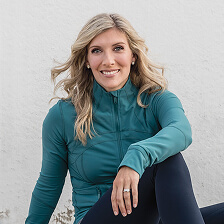
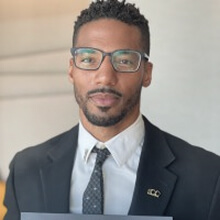
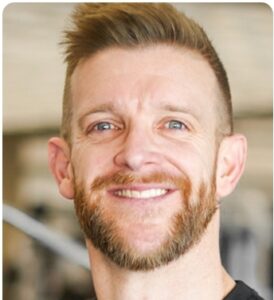
Endurance training isn’t just for runners. In this episode, trainer and strength coach Mike Thomson discusses why building your cardiovascular capacity matters for your overall health and longevity.
He shares why balancing strength training and endurance work makes you a better, more resilient mover; the reasons the combination of those two modalities — known as hybrid training — is a trend that’s here to stay; how to use your heart-rate zones to train smarter; and how simple recovery habits lay the groundwork for real progress. He also emphasizes the importance of setting benchmarks personalized to you to ensure you’re progressing toward your goals.
Whatever your pace, there’s a way to train for better endurance.
Mike Thomson is a Dynamic Personal Trainer, certified strength and conditioning specialist (CSCS), and a USATF-certified run coach based at Life Time in Overland Park, Kan. He has a degree in kinesiology from Michigan State University, where he also played soccer.
In this episode, Thomson speaks to the importance of endurance training and the many ways you can incorporate it into your routine, regardless of your fitness level, training preferences, and overall goals. His insights include the following:
- Endurance training is for everyone, not just runners and cyclists.
- Strength training often gets the spotlight, but endurance is equally necessary to keep you moving well for decades. Your aerobic base fuels everyday function — think climbing stairs or hauling luggage — and it supports longevity in ways heavy lifting alone can’t.
- Hybrid training — or pairing strength and endurance simultaneously — is a trend that’s here to stay. It’s practical, effective, and maps directly to real-world physical demands.
- Set benchmarks you can chase. For example, do a 20-minute FTP (Functional Threshold Power) bike test or a 2K row time trial, and then train to beat those numbers. Performance milestones give you a clear target and a way to measure progress.
- Focus most of your endurance work in zone 2. This lower-intensity volume develops the engine that supports hard sessions later. How frequently you spend time in other zones depends on your goals.
- Generic heart-rate formulas can leave too much to chance. Metabolic testing via an Active Metabolic Assessment (AMA) can establish your true training zones, so you can train at the right intensity every session.
- Small, consistent progress beats aggressive jumps. Thomson refers to this as respecting the “dose response.” Piling on too much work too soon is a fast track to injury. A good coach should act as a “stress manager,” giving you enough load to grow without breaking down your tissues.
- Prioritizing sleep, hydration, protein, and recovery (with tools and techniques like stretching, sauna, or compression therapy) is fundamental and can make a difference in your progress.
- A coach, training partner, or group can be the difference between showing up or hitting snooze. As Thomson puts it, “Great coaches teach you to want to do the things that you need to do.”
Transcript: The Case for Cardio Training
Jamie Martin
Welcome to Life Time Talks. I’m Jamie Martin.
David Freeman
And I’m David Freeman.
Jamie Martin
And in this episode, we are talking all about endurance training. If you’ve tuned into anything health and wellness-wise lately, you’ve heard a lot about strength training. But we want to make sure that people are not forgetting about the importance of endurance and what it does for our health and well-being. So in this episode, we’re sitting down with a special guest from Life Time to talk about why endurance matters for our health and the many ways to train for it, including paths that go beyond running or cycling or some of the traditional forms of cardio. So with that, David, over to you.
David Freeman
Yes, we have a special guest on. His name is Mike Thomson. I call him Magic Mike for other reasons around the track. He is a dynamic personal trainer, a certified strength and conditioning specialist, and a USATF Certified Run Coach, which stands for USA Track and Field. And he’s based out of Life Time in the Overland Park, Kansas, area. What is up, Mike?
Mike Thomson
What’s up, guys?
Jamie Martin
So good to have you here.
Mike Thomson
Yeah, it’s good to see your faces. It always makes me happy. I see David everywhere in Life Time, and I see Jamie in the magazine. But it’s actually good to talk to you guys.
Jamie Martin
It’s good to talk to you too. And just in full disclosure, Mike, you helped coach me — was it last year for the 10K program, or the 10 Miler that I ran? So it was fun to be able to work through your programming, and it inspired some of the programs that are now in the Life Time app and some other things that we’re doing as well. So thanks for all of that.
Mike Thomson
Yeah, now you know how I work.
Jamie Martin
I do know how you work. Yes. And I know how good you are at checking in and making sure I’m staying accountable — and we’re gonna get to that. So for anyone who is maybe meeting you via this podcast for the first time, how would you introduce yourself both as a coach and an athlete? What do you want people to know about you?
Mike Thomson
I’m both. I’m 100% athlete. I’m 100% coach. I’ve been coaching as a career coach for twenty-one years, and I’ve been doing online coaching for eighteen of those twenty-one years. So I’m OG — or, David, what the kids are saying, “unk,” these days. Is that okay? I just learned that yesterday. I’ve got eleven-year-old twin boys, so we could definitely throw dad in there too.
But I’m a coach through and through. Once I went all the way through my schooling, I was doing kinesiology. I thought I was gonna be a physical therapist. I did not like that. Then I did another internship with a personal trainer who was managing a massive facility, and I said, 100%, I want to do what he’s doing. He was doing these corporate lectures and changing people’s lives — stadium seating, people would come up afterwards crying, hugging him because he changed their life.
So when I do so much on social media, it’s partially inspired by him. He was my original influencer before Facebook and Instagram. That’s why I’m so verbal on Instagram. Just give, give, give.
Jamie Martin
It sounds like somebody else I know. David. You both have that very much in common.
David Freeman
A lot of parallels for sure. And that’s the beautiful thing about the space that we’re in, as far as what we’ll call health and fitness coaches and putting both of those items together, because they run parallel too. You can’t really be fit without health, and you can’t really be too healthy without being fit. And putting those pieces together when it comes to strength — for so many people who hear strength training, it’s something that’s been around for the longest, but it’s something that is having one of those moments right now.
And when we talk about healthy aging and longevity, we also know that’s a specialty. I know that you live in both areas as far as strength, but when it comes to endurance, this is where a lot of things thrive within your background. We know that it deserves a place at the table. We want our listeners to know, from your point of view: why does endurance-style training matter for everyone, no matter where they’re starting or what their goals are?
Mike Thomson
Value of life, I would say. If you want to go down to the lowest spectrum, in order for an older individual to be able to get up the stairs, they not only need muscle strength, but they also need cardiovascular strength. So there is a minimum VO2 max you should be able to have — and I probably should know that number — in order to do your daily physical activity.
Conversely, on the other end of the spectrum, I’ve done some things that are pretty remarkable just rolling out of bed and doing them. For example, I paced people the last 40 miles of the Leadville 100-mile run, without training. I kind of just woke up and did it, and went up to 10,000 feet. I’ve also been gifted, twice — four weeks and six weeks out — an entry to the Leadville 100-mile mountain bike race. And that is the hardest bike race, probably in the world. Ten thousand feet, and you’re climbing up over twelve thousand feet.
I was capable of doing that because I have this very high work capacity. And it’s not just because I was biking. I was also running and rowing and doing all the things. So they all contribute, and that’s allowed me to do some pretty sweet things on the other end of the spectrum.
David Freeman
I just want to follow up to what you just said, because we were having a passionate conversation yesterday with some of our brand specialists within our SGT suite. And for our listeners, SGT — we have the portfolio of Alpha, GTX, the new cousin to the family, Hybrid, and Ultra Fit. And Lisa — I’ll give her a shout-out on this. Lisa Stoner actually sent a statistic that has changed the narrative around strength training. It says the numbers don’t lie.
According to a 2026 Life Time Consumer Survey of thousands of adults, 42.3% named getting physically stronger as their number one health goal for the year. And, like we just spoke about when it comes to longevity, 33.2% named longevity as a primary driver. And get this: weight loss, for the first time in decades, dropped out of the top spot.
Mike Thomson
Right.
David Freeman
So we can see how the narrative is changing. Just hearing those data stats, it’s amazing to hear how they complement one another.
Mike Thomson
Yeah. I think about my style of training, and what I always encourage people: if I get an athlete sitting across the table from me and they’re looking for weight loss goals, I always encourage them to set physical feat goals. Because rarely — well, I’ve never not looked good and been lean when I’ve performed at a high level physically. So it just kind of comes along with the territory.
So I always encourage my people to try to set physical strength feats as well as cardiovascular feats. And that’s not just coming from the run coach. You could do a 2K row time trial and see if you improve. You could do a 20-minute FTP test on the bike. I recommend that you do whatever resonates with you and that you enjoy. So if you’re a swimmer, we can do three times 300 with a one-minute rest to find an appropriate time trial that resonates with your heart. And then the aesthetics and body composition will come along with it.
David Freeman
Let’s see real quick, just ’cause you said “your heart.” Are you familiar with the song “Listen to Your Heart”? And if you are, name the artist. Who’s the artist?
Mike Thomson
“Listen to Your Heart.” Yeah, yeah, yeah.
David Freeman
Name the artist.
Mike Thomson
I don’t know if they’re the original, but I wanna say DHT — but I don’t know if they’re the original.
Jamie Martin
I think it’s Roxette. Is that “Listen to Your Heart”? I feel like I saw this the other day. So I’m gonna throw — look at me. What’s my prize today? Yes!
Mike Thomson
Yeah.
Jamie Martin
What did I—
David Freeman
You’re going to win a ticket to the Miami Marathon.
Mike Thomson
Yay.
Jamie Martin
Plenty of time to train.
Mike Thomson
Put it back in your mouth.
Jamie Martin
Take it back. I’ll do the half. I’ll do the half.
David Freeman
Options. Good options.
Jamie Martin
Well, hey, there we go. Look at that. Won a prize today. I always get the music wrong, just for the record. David always knows the music, and I never do. So I’m impressed with myself.
Okay. So Mike, back to you. I gotta ask you. Of all the areas that you’ve focused on, running club endurance is very much a specialty of yours. What pulled you into that area in particular? You’re an athlete yourself, correct? So what has led you to focus in that area and make it such a priority for you and your clients too?
Mike Thomson
Yeah, I’ve always been an athlete. I was a soccer player before I was an endurance athlete. One Ironman — no, two Leadville mountain bike races, four or five Ironmans, I forget now, twenty-four-plus marathons, fifty-plus half marathons, eight HYROX now. And what led me to that? I think I’ve just never stopped. I grew up an athlete and have always kept the ball rolling. And I think that’s what’s kept me who I am — I’ve always kept the ball rolling. The ball that is rolling is a ball that has momentum.
I think about when I got COVID, and I remember pulling my spin bike up into the spare bedroom. Even when I had COVID — and I’m not recommending this to many people — I was riding the spin bike up in my bedroom, away from the family. That’s just who I am. I’m wired that way. I was a busy bee, a mover. It’s just who I am.
Jamie Martin
Well, it kind of leads into the next question. Something you’ve said before is that consistent, small progress beats big aggressive jumps, right? And I think what you’re speaking to here is that this is just a part of your lifestyle. You’re consistent, you show up day after day. So how does that idea show up with the people that you’re training?
Mike Thomson
Yeah, consistency is very important. And what you don’t want to do — well, first off, you can’t binge fitness. You can’t say, I have a marathon, I need to train and do more in four weeks. David and I are coaches, and a coach is ultimately a stress manager. So when we provide reps and sets and intensity, we provide a dose of what that athlete should be capable of handling.
So Jamie, when we started, I asked you a bunch of questions. How many times a week are you running? What is your current mileage? How many days a week are you lifting? That tells me where you’re at. I’m going to either meet you there or make the dose a little bit more. If I make the dose too much, I break you. So giving you the appropriate dose is very important — and not giving you too much.
Also, as a run coach, there are a lot of injuries in the sport. So it’s very important for me to make sure that the athlete is running the appropriate speeds. Because once that athlete starts running very, very fast, forces go up exponentially. It’s almost like a baseball pitcher. A young baseball pitcher might only get 40 or 50 pitches — I’m just making up numbers here. You get up into high school, maybe college, they might get 50 or 60. You get up into the pros, you might get 70, 80, 90.
It’s kind of the same thing for reps as a runner. And it takes time to build those reps up and get yourself calloused — making sure your tissues are capable of handling the load and the doses. So a middle school runner might be running, say, 10 or 15 miles. You get into high school, you’re running 20, 40, 50. Get into college, you’re running 50, 60, 70. You become a pro, you’re running 80 to 120 miles. And it doesn’t happen overnight. So that’s where the slow progress comes in. Getting somebody who knows what they’re doing and dosing you appropriately is where the magic happens.
David Freeman
I’m gonna come right in, because there was a lot to unpack there. The part that I speak to daily with a lot of our SGT coaches is the proper dose response when it comes to the metabolic call-out for the day. And we speak to zones a lot, Mike, as you know. So the majority of our days — four days out of the week — are more of a focus around zones two and three. And then we have the anaerobic threshold builders, the burners, right? The ones that make you question life, the threes and fours, three days out of the week.
So proper dose response. I want us to unpack that a little bit more, then I’ve got a follow-up question. When you speak to proper dose response — the benefit of understanding, you might be able to go there for one round, but if that now compromises the other three to four rounds within the training session, then you see where I’m going. So can you talk about the purpose of the proper dose response within training?
Mike Thomson
Well, I’ll use an example. If people have heard of double threshold workouts, the Norwegians have popularized it. Why it’s so popular is you can do a lot of good work without overcooking the athlete. My belief is that zone three is the intensity where you can do a lot of pretty good work without all the stresses on the body.
So a Norwegian double threshold would be something in the morning where you’re doing, call it, six to eight times one kilometer with a one-minute rest at your 10K pace. And then in the afternoon, you might be doing eight times 800 meters at your 10K pace again, giving yourself four to six hours in between so you can get some food and recover.
But what I think is important to understand is that it doesn’t have to happen with running. If we talk about the sport of HYROX, you could do an a.m. threshold workout that’s zone three, and then an afternoon erg session that is zone three. And that’s how I’m coaching my athletes these days, because that’s where a lot of the magic is — being able to do those activities and, like you said, be able to bounce back, David. Let’s say what I just described was a Monday or a Tuesday. To be able to bounce back, recover, and do something similar on Thursday — that’s very important.
David Freeman
I want to keep going there. And Jamie, sorry, I don’t want to hog, but I want to make sure our listeners get it. So now let’s go on to the value of understanding your true zones versus the estimated portion. So now for those workouts to be one, objective, but also so you can start to get what you need from the workout. Can you talk about the benefit of understanding your true heart rate zones from a metabolic test? I know you have your background and you’ve done that as well — and how those true zones correlate to how they show up on game day for you.
Mike Thomson
Yeah, that’s where I think, because I’ve done things for so long, I have a good understanding of my perceived effort and where I need to be. God love the new athlete — they might not know the intensity. They might have gears one and two, where David, you and I might have five or six zones.
I like to talk about an area where I’m very unfit currently, and that’s in the pool. If I get in the pool, I’ve got fast and I’ve got slow. On the run right now, I’ve got recovery pace, easy pace, marathon pace, half marathon pace, 10K pace, 5K pace, mile pace, and then full-on sprint pace. I’ve got like seven different gears there, and I know what those feel like.
But for the individual who is newer — or even the individual who wants to fine-tune things — I’m super excited. We don’t have VO2 max testing currently at our gym, but come on, give it to me, because I want to use it so bad. I know the value of it. God love that person who’s new to the game. If they’re looking at their watch, respecting the zone and where they’re at, they will not overcook themselves.
So I think of the mom who’s 40, who’s not getting the sleep she needs. She’s super stressed, and — God love her — she’s trying hard. But she doesn’t need to try that hard. She’s slipping up into zone three when she should be in zone two. And so that’s when she starts getting even more thyroid issues, and she starts getting adrenal issues. If she’s gotten that metabolic test, she can ensure that she’s doing what she needs to improve her cardiovascular health without overcooking herself. And then she can pop into your Alpha class and do some lifting with some zone four and zone five stuff.
If you think about Dr. Gabrielle Lyon, she likes to talk about working on the ends of the spectrum. And if things get really spicy for those individuals, there’s that zone three where you’re kind of sucking for a long time — that’s when things get kind of dangerous. So unless you’re an athlete, unless you’ve earned the ability to do the activity and to recover, you shouldn’t be doing it.
I had a girl — and I can see my athletes’ sleep. This girl, God love her, she’d been sleeping four, five, six hours. And I told her, I’m gonna restrict you from doing any speed unless you get seven hours of sleep. If you don’t get more than six hours of sleep, you cannot do speed with me. We had to have that conversation. Sometimes the bad coach — or the bad policeman — has to come on and slap the wrist a little bit. But I’m trying to keep my athletes safe.
David Freeman
Last one, Jamie. Last one. I know you’re ready.
Jamie Martin
I’m not ready.
David Freeman
And this is where I knew where I was going with this. I like to say good or great coach, Mike. So you’re not the bad coach. They might look at you as a bad coach, but you’re good in that space — and, obviously, great, because you’re holding them accountable to what they asked of you.
Now, you sat down with your athletes this morning. Jamie, I don’t know if you got that tag, but you ended up sharing with them what a past coach shared with you. I don’t want to take the shine away, because the way you were positioned — you had your leg crossed and everything, you were in philosophical mode. So if you can, share what that past coach shared with you. We talk about experience being your best teacher, and you say you kind of know at this point in your life, because you’ve got so many reps at it, where you’re at when it comes to pace and how you can switch gears whenever you need to.
So if you can, share with our listeners what that past coach enlightened you with when it came to understanding certain levels of fitness and the time frames. I don’t want to take the shine away. Go ahead.
Mike Thomson
Yeah, you guys came up with some really good questions today, because this really resonates with me. And I hope these words get driven through the headphones and the car speakers and go to the hearts of our listeners, because this is something that’s very important to me.
My coach, when I was training for triathlon — I took a couple of years and tried to train to go pro in triathlon. He was out at the Olympic Training Center. He was an educator for USA Triathlon. That’s why I hired him. He’s from New Zealand, and I was like, man, whoo, that accent gets me going. But he was a great educator and a mentor, and he told me that after seven years of consistent training for a thing, for a sport, for a particular distance, you can see your potential. And after ten years, you can reach that potential.
So I think of the little gymnastics girl who’s four or five. When she’s 10, 11, 12, you can see — holy crap, this girl’s got Olympic-caliber potential. And that girl is in middle school, right? By the time she hits high school, she’s in the Olympics, ten years later. Or the kid who’s in middle school, who started running when he was seven or eight — he’s 13, 14, and you go, wow, this kid’s got some serious talent.
A lot of times when I say these things, David, it’s like therapy for me, because I’ve been talented enough to dabble in some things and be pretty good at them. But when I get laser-focused on a thing, that’s when great things happen. And right now I’m trying to get laser-focused on a particular goal, and that is the marathon. I signed up for the Chicago Marathon. I’m doing it for a charity. I hired a coach, because it means that much to me.
And so what does that mean? It means, yeah, I can get on the bike, but it is not a focus. Yes, I can do HYROX, but it is not a focus. My goal is running. Do the one thing and really lean into it. And yes, I’m doing my lifting, because that supports it. And yeah, I’m doing some biking, because that supports it. But no, I’m not going out for the three-, four-, or five-hour bike rides with my friends like I used to. They’re like, Mike, come on, we’re going out for a Saturday bike ride. Nope. I’m keeping my eye on the prize and really leaning into that one goal.
Jamie Martin
I wanna keep building on that, because it was interesting as I was reading through these questions and thinking about this. I was thinking about myself. I’m very much a recreational runner, right? But I’ve done a marathon, I did the 10 Miler last year, I’ve done things. It’s funny, because I love this idea that it takes a certain amount of years to see your potential, then reach your potential. And part of me is like, have I even reached my potential there yet? So now I’ve switched from running to more strength training, and I’m questioning that for myself as an athlete, going, should I keep going in that area?
Mike Thomson
Yeah, that’s for somebody who is training for a twelve-week program — you’re just getting started with your little baby giraffe legs. You’re just barely finding your legs, just scratching the surface. I think of a girl I started training about two and a half years ago. She started as a 3:40 marathoner. We got her down to a 2:46 marathoner in about two and a half years. And she never would have thought this, but we’re talking about getting her ready to qualify for the Olympic trials.
She was the girl in high school who hardly made the cross-country team. Well, not hardly made the team, but hardly made the top seven. And so now she’s like, Coach, what we’re doing is absolutely bonkers. But guess what? She freaking stuck with it. You know what I mean?
And this is not saying you have to specialize. David’s got young kids. I’ve got young kids. That’s a whole other can of worms. I like my kids playing multiple sports — basketball, soccer, track, lifting, a little bit of everything. But eventually you need to start specializing if you’re gonna be great.
Jamie Martin
Yeah, absolutely. I wanna get into some of the training modalities you use, because a lot of times when people hear the word endurance, they think of long, steady-state runs, right? But there are other ways to train endurance. I would love for you to talk through what some of those strategies are and how things like interval training contribute to it.
Mike Thomson
Man. So there are many different tools to create the athlete. When I think about writing a program, I think about a pie chart. And I think about what — like David was recommending — that zone two should be the majority of that pie chart. Then, where I fill in the other zone three, zone four, and zone five, I don’t believe you should abandon any of the energy systems in the year.
I believe the pie chart should change depending on where you’re at in your season. The majority of your pie chart should always be zone two if you’re some sort of endurance athlete or training for longevity. Then the pie chart changes depending on where you are. For example, if you’re a miler, you might be working in more zone five as you get close to the last six weeks of training. If you’re a marathoner, you might be doing a lot more zone three.
So that piece of the pie changes depending on where you’re at in your season. Far away from competition, I like to work on the weaknesses of the athlete. As I get close to competition, that’s where I start using more of the energy system of the sport we’re doing. For example, the sport of HYROX ends up being like an upper zone three, low zone four competition. And that’s what we need to do as we get close to competition. But we don’t do that all year. Otherwise, you could cook the athlete.
Jamie Martin
Makes sense. Absolutely. And when you’re saying something like zone five, I just want to be clear for listeners, because that’s going to be really high intensity for a short period of time, right? And then zone three — can you explain the difference between those, just so people understand? I know we have other episodes on this, but I think it’s really important.
Mike Thomson
I think one of the easiest ways to describe the intensities is that we have something at Life Time called the Silver method. That’s where we use the talk test. Zone one is where you could have a conversation with your mom on the phone and she would hardly know that you’re doing your thing — you’re barely working on your walk, your run, or your bike. Zone two, your mom would know that you’re out on a run. Zone three, you could only get out small sentences. Zone four, you start getting really verbal.
So your ventilatory threshold and your lactate threshold are almost one to one. Ventilatory threshold is where you start hearing your breathing. With that Silver test, what you do is get somebody on a treadmill or a bike and hold their pace constant for three minutes. Then you take that pace up appropriately, kind of stair-step it, and I try to identify where that lactate threshold is.
Jamie Martin
Mm-hmm. Between zones three and four, typically.
Mike Thomson
That would be four. Yep. And then zone five is kind of that “can’t talk, can’t hold it very long” effort. A lot of times when I program zone five, or anything above zone four, I actually don’t program it based on heart rate. I program it based on pace. So, for example, you could do a zone two row or a zone three row.
But once you start to get up into zone four or zone five, that’s where I say, hey, I want you to hold 145 to 148 per 500 meters, or hold 130 to 140, and you’re gonna do this for 30 seconds, or for 250 meters. So when I get above that, I tend to pace more based off pace and intensity. For example, if you’re on a bike, it would be based off watts. But for the lower intensities, I use a lot more heart rate.
Jamie Martin
Makes sense. That’s super helpful, thank you. Because I know it’s one of those questions people have — what does this feel like in my body?
Mike Thomson
Yeah, it’s one of those things I’m super passionate about. If you don’t know, you’re just kind of winging it. That’s where the VO2 max and the metabolic testing are so beneficial for that person who’s trying. And I know a lot of people out there are trying. That’s hopefully who’s listening to this right now — maybe I do need to get a metabolic test so I can get a little bit more dialed in. Even myself, I want to do it, because I want that 1%, that 2%. I know the value of it.
Jamie Martin
I know. I remember when I started at Life Time — I’ve probably shared this story on this podcast three or four times at this point, so I hope you aren’t getting tired of it, listeners. But one of the first programs I did at Life Time was a heart rate-based training program, which required me to do the active metabolic assessment. And I remember being absolutely blown away by the results.
One of the tests early on, I think you ran between zone two and zone three for four miles and timed yourself at each mile. You couldn’t go out of zone three. This was years ago — like 2005, twenty-one years ago. But six weeks later, you retested, and it was incredible. I had never had results like that. It was such an interesting thing — when I actually followed the program, sometimes it was that idea of work smarter, not harder. And I saw how much more endurance I had as a result.
Mike Thomson
There’s actually a test called the Maffetone test. What you do is take 180 minus your age, and he calls that your maximum aerobic heart rate. I think it’s very conservative. For me, that would be about 135, but my max aerobic heart rate is almost 160. So let’s say you find your max aerobic heart rate — and listen to this. If you’re listening, write this down, because this is a gem and there’s a lot of value to it.
You get your heart rate up to, let’s call it 150 for the listeners. Your plus or minus is two, so it could go as low as 148 and as high as 152. You get your heart rate up to that and hold it constant for 20 or 30 minutes, and you see how far you get, like what you were talking about, Jamie. Maybe in week one, over 20 minutes, you’re getting two miles. Then in six weeks, maybe you’re getting 2.4 or 2.5 miles.
What happened? Your efficiency improved. Your left ventricle and your plumbing system out to those limbs improved. My belief is that your left ventricle gets larger in size, but your capillaries and arteries, one, increase in number, and two, their diameter increases, so they can distribute oxygen better. That’s what we’re trying to do. Mark Allen was another big proponent of improving his metabolic aerobic zone, and that made him an absolute specimen when it came to the Ironman.
Jamie Martin
That’s awesome. I love that. It seems like a pretty simple way to monitor yourself, right? If you use that 150 for 20 minutes, would you do it once a week, or how often?
Mike Thomson
You could. The nice thing is it’s super low intensity, so you could do it every week. You don’t have to do that exact test — if you’re on a treadmill, you could lock it in. But no, I’d probably do it about every four weeks, maybe every six weeks.
Jamie Martin
Okay. Great. David.
David Freeman
One for you, Mike. If I say peanut butter, what do you say?
Mike Thomson
Jelly.
David Freeman
There it is. So if the endurance portion is peanut butter, we gotta have the strength as the jelly. For our listeners — and we talked about this earlier today — when it comes to how you integrate strength and how it complements the endurance-style pieces, whether it’s a bike, running, or a swim, how do you incorporate strength training into the routine, and how does it complement what they’re doing in that cardio space?
Mike Thomson
Depends on the athlete, right? So if the athlete wants a juicy booty and some nice-looking arms, they do a lot of zone two, and, like we’re talking about, they might do some sprints to stimulate their muscle, which can actually help build muscle if you’re doing sprints appropriately hard. If you want to get literal, the stronger you are, the more force you can put into the ground, so your stride length actually increases. Strength training will actually make you faster.
Strength training, when done correctly with appropriate eccentrics, can toughen up your tendons. Slow eccentrics are something I program differently depending on where you are in the season. Far away from competition, slow eccentrics are extremely beneficial. As you get close to competition, those slow eccentrics aren’t as beneficial. That’s why we should do them early in the season.
They’ll toughen up your tendons. For example, a single-leg deadlift is really good for upper hamstring tendinopathy or tendinitis. Two-footed calf raises up and one foot eccentrically down, with a very slow eccentric, will help prevent Achilles tendinitis. So it helps with injury prevention. And if you’re lifting with big compound movements at the appropriate reps, that can actually boost growth hormone, so you get a hormone response.
There are a lot of benefits to strength training. Depending on your goal, you gotta lift — it could be four or five times a week, or it could be two times a week if you’re more performance-based for the sport of running. But if you’re hybrid and want to look good for the beach and be able to go the distance, that’s where you could be lifting four or five times a week and dosing in some running, like Jamie does, to keep that cardiovascular fitness.
Jamie Martin
Yeah. Mine is kind of the opposite. If I was focused on running again, it’s like — what would you say — 75/25 versus 25/75, right? Kind of loosely. I want to talk about recovery, because it’s so critical. You’ve mentioned it a couple of times in passing, but why is recovery so important as part of an endurance program? And what do you have your athletes do for recovery?
Mike Thomson
I’ve changed my philosophy on that. I don’t have my athletes recover at all. No.
Jamie Martin
Come on, tell me more.
Mike Thomson
Golly, where do I start? Recovery starts the moment you’re done. I had my aminos after my workout. And if you want to talk about it, even the carbohydrates you’re consuming during your workout matter. So make sure you’re properly hydrated, make sure you’ve got your electrolytes.
Sleep is one of those big cornerstones. And make sure you’re getting a sufficient amount of protein — one gram of protein per pound of desired body weight. It’s almost such an elementary question that I’m like, are you throwing me a curveball?
Jamie Martin
It’s the stuff that we overlook. Those are the things that sometimes seem so elementary, like I don’t have to think about them as much, but they’re really important as part of a program.
Mike Thomson
Yeah. David probably has these conversations all the time — it’s the conversation we have twenty times a day. But we have to keep having them, because athletes just overlook the small things. Like, “Yeah, I did have 80 grams of protein today, look at me.” And it’s like, no wonder you’re not recovering. Or, “It’s three o’clock in the afternoon and I’ve only had 20 ounces of water.” That water will help you think better and help prevent you from cramping. So those are some of the simpler things.
Jamie Martin
Right. Are you having them use the recovery spaces at Life Time? Using some of the different tools — I think about the Normatec boots, the hydrotherapy chairs, cryotherapy, those types of things.
Mike Thomson
Yeah, those are the super sexy things. The Normatec boots are super important. You can take phone calls, you can do your emails — I call it a twofer. You can do your emails and recover.
Jamie Martin
Right.
Mike Thomson
The hot tubs, the cold plunges, the saunas are absolutely a gem. Though when people talk about cold plunging and then you really hear what they’re doing, they’re maybe not cold plunging as much as they think — they’ve just done it a little bit.
But the ones I keep going back to are the oldies, like the foam roller. I love the Theraguns and the Hyperices, but get on a foam roller, man. That’s where some good work is. And you don’t have to roll. You could just lay on it and do some really good breathing. That’s where I think they shouldn’t have called it a foam roller — they should call it a foam masher. Because you should just lay on it and let your body relax over it.
David Freeman
I got one for you, Mike. Just because you have the resume and the experience in this space. You spoke to how you did triathlons. We know that you’ve done HYROX a few times now, and you’ve done LT Games as well. And what we keep hearing is this word — and it’s been around for a while. I’d even say pairing two things together to challenge energy systems and strength has been around for a while.
When it comes to hybrid training — and I gave you those three examples you’ve experienced — when you’re pairing endurance with strength, why do you think there’s so much excitement now? What do you think is driving this momentum? We’ve seen this for some time. You’ve done triathlons, and they’ve been around for a while. LT Games is new on the scene. HYROX is relatively new but has been around for a little bit. So just talk to us — why do you think there’s so much momentum around hybrid-style training?
Mike Thomson
I think it just makes sense. It’s here to stay. We’ve seen, back in the ’70s, those runners just ran. They did pretty good. But look at the runners these days, man. Some of our endurance runners have some booties on them now. That’s a good thing.
So it’s awesome to see some size on our endurance athletes these days. One, you can have your cake and eat it too. But two, I think it just makes sense. That’s why it’s sticking around, David — people like to have the aesthetics, and people like to be able to go out and say, hey, I’ve been lifting, but I’m going to Colorado to climb a fourteener because I can. I think that’s really cool. Or, I’m gonna go for a bike ride, and not just a bike ride, I’m gonna do a 40- or 50-miler because I can now, because I’ve created this engine. So to me, it actually makes sense.
Jamie Martin
Yeah. Sticking with hybrid becoming more popular — we’re hearing a lot in the cycling space about gravel racing. And I know you’ve done some work with some of the gravel races at Life Time. Thinking about Unbound, you’ve been an ambassador or a Life Time rep at some of these events, right? What are you seeing with people being more drawn to that style of cycling? Because those are big endurance events as well. You’ve mentioned Leadville too. Those are the kinds of things I’m thinking of.
Mike Thomson
Yeah. I remember hearing Lance Armstrong, since he’s been on the gravel bike these days, talk about why he likes it, and it just made sense once again. He said you’re less likely to get hit.
Jamie Martin
It’s so true. You’re not on a road.
Mike Thomson
When you’re on the road, I am scared. That’s why these companies like Garmin have cameras in the brake lights — so if you do get hit, they can catch that person. Which is kind of scary.
But I think there’s an added value of being out in nature, going out into these farmlands. You take deep breaths, your shoulders relax a little bit more, you get this beautiful air. It’s almost like trail running for cyclists. It just changes your soul. So I think it’s a beautiful form of cycling. There are fewer crashes. And yeah, there are some bumps, but that’s why we have these bigger wheels.
I’ve done Unbound, I’ve done the Bentonville Big Sugar, been out to Colorado for a bunch of gravel riding and Leadville — and it gets you out there. It gets you out in nature.
Jamie Martin
Yeah, absolutely. I want to talk for a second, because when we talk about road running, the marathon is kind of the big goal for a lot of people, right? That’s a stretch. It’s not necessarily an ultra-endurance run. But when we’re thinking about somebody who’s a beginner in cycling and wants to get out and do a race, how would you encourage them to get started for that first 40-mile or 70-mile ride? What would you say to them?
Mike Thomson
Yeah, the conversation is the same regardless of the sport, and that’s that frequency comes first. Get on the bike, and get on the bike frequently. The intensity doesn’t need to be there — well, the intensity should at least start with zone two. That’s where, once again, we talked about that pie chart. That should be the majority of your training. Then you drizzle in some higher-intensity efforts, and as you get close to competition, you work whatever energy system you’re going to be in.
For a 40-mile race, you’re probably going to be mainly in zone three. Maybe a little bit of zone four. I’ve written some programs for a race that’s going to be in Trinidad, and there’s going to be some climbing. So that’s where you have to do the specific training for the race you’re entering. Some low-cadence work for that climb is very important.
For example, when I did Leadville, the Columbine climb was at least an hour at about 60 RPMs. If you’re not used to that, you’re gonna cramp. So that 55 to 75 RPMs on the bike — if you’re doing a spin class, it’s that low-cadence gear where you’re able to push and pull, stimulating all the muscle fibers of the leg. That’s very beneficial.
Whereas a race like Unbound is a little more poppy, a little more rolling hills. That’s where something like over-unders comes in. You’re in zone four for two minutes, then zone three for two minutes, then zone four again — you might do that for ten minutes, then get a two-minute zone two or zone one recovery. Does that make sense? So it’s almost like five rounds of two minutes at zone four, two minutes at zone three.
You’re doing a ten-minute block, but you’re going both over and under your lactate threshold. That teaches you to clear lactate as well as produce it. Once you get down to that zone three, it teaches you to clear it. Then you get that two-minute reprieve at the end of the ten minutes and you do it again.
Jamie Martin
Start again.
Mike Thomson
Yeah. So that would be a very appropriate workout for something like Unbound. Versus something like the race out in Colorado, where you might do four sets of eight minutes at a particular FTP or watts, with 55 to 75 RPMs — a low-cadence grind.
Jamie Martin
Right. So you’re just having to dig in there, right? When you’re pushing and pulling, like you said. Okay. Cool.
David Freeman
All right, Mike, here we go. For the listeners right now who are on the fence about starting a program or signing up for their first event — go into Magic Mike, aka Coach Mike, Fast Mike, Fast and Fit Mike, every type of Mike. And then we’ll get to dropping the mic here in a few minutes. What’s the one piece of encouragement you would give them? Again, this is for the listener on the fence about starting a program or signing up for their first event. What do you got for them, coach?
Mike Thomson
Well, I’m a coach, and I’m very passionate about what I do. I think you need to find somebody who can help you — somebody who can give you direction. Find a mentor like I did early in my career, and like I’m still doing currently, as a 44-year-old guy trying to run my fastest marathon ever. When we get people we look up to and can bounce ideas off of, people we respect, that’s when great things happen.
We, as athletes, often do the things we like, but a coach gets us to do the things we need to do. I have a quote — let me think about how it’s said. Introductory coaches get you to sweat. Good coaches get you to do the things you need to do. Great coaches teach you to want to do the things you need to do.
So getting somebody in your corner who knows what’s best for you, who can see through what you’ve been doing and understand your profile as an athlete, and say, “Yeah, cool, you’re doing A, B, and C, but you’re not doing any of this, and your goal is that, so you need to do more of that” — that’s important.
Jamie Martin
Yeah.
Mike Thomson
So I think getting a coach or a mentor is very important. Second would be getting in a community or having a training buddy to support you. I led the track workout this morning, David, and I said the reason I started the track group in Overland Park was selfishly for me. I’m not Superman. I often organize these workouts so that I’m waking up, because guess what? I hit snooze too.
I know if I organize people to come out there with me, I’m more likely to be there. So for the person listening — “Hey, Susie, you’re gonna be there, right?” You get that person who’s going to be there, and you’re less likely to hit snooze. Community is very important. Or if you’re showing up for that Alpha class and you tell a couple of people you’re gonna be there, you better be there.
Jamie Martin
Right. It really does matter. And I think that’s one of the important things we’re doing at Life Time overall — having a place where people can show up and find their community of like-minded people. Whether it’s through a run club, a track club, or showing up for my SGT class on a regular basis, those things are so important for us.
So Mike, before we get into that mic drop moment David alluded to, is there anything you want to add? Any final thought you want to leave our listeners with when it comes to endurance training and your philosophy?
Mike Thomson
Mic drop: follow me on Instagram. I give out a lot of information. Fast and Fit Mike is my handle. Getting a coach is certainly one of those things I’m very passionate about. If you’re trying to improve your business, you get a business coach, right? If you’re trying to improve your finances, you get somebody to help you with your finances. It’s going to expedite your time and get you to your goal.
Know your zones. That’s very important. I have a good idea of what my perceived efforts are, but I still want to get my metabolic testing done. I’ve been doing this basically my whole life — twenty-one years after college — and the other thing is, your zones do change. So you gotta know your zones and you need to test.
And if you don’t have the capability of doing that, if you have a goal to improve your fitness, you need to show that you’re improving. For example, if you want to be stronger, do a bench press test, a hex bar deadlift test, a pull-up test. Don’t just say, “I think I’m getting stronger.” Quantify it. How many pull-ups can you do on day one? Then retest in week six.
So not just know your zones, but also test to make sure you’re moving in the right direction — whether that’s doing the InBody to show that you’re improving your body composition, testing your VO2 max, or doing a 5K. Also, have a laser focus for the thing you’re trying to improve. We talked about how it could take seven years to see your potential.
I’ve dabbled in a lot of things. I did Leadville over the last couple of years. I’ve done Unbound. I’ve done some lifting competitions. But right now, my goal is running. And after that, it’s HYROX. So they all line up really well. And then I’d say the last thing is that community is so important. Super duper important. And if you don’t have it, you gotta create it. Make it happen.
Jamie Martin
I love that.
David Freeman
You want to drop for our listeners, if they don’t know, when that marathon is taking place in Chicago, so they can be on the lookout?
Mike Thomson
What is it? The second week in October. So that’s like October 13th, I think it is.
Jamie Martin
I think so. David’s right, it’s like between our birthdays or something right there, I believe.
David Freeman
Okay. What I want from you, Magic Mike — what is your go-to pump-up song when it’s game time?
Mike Thomson
Ooh, dang, you’re gonna throw me on the spot like that?
David Freeman
Come on, you’re supposed to have that in the back pocket, ready.
Mike Thomson
Man, it’s funny, we just went to a concert, so we’ve been all in on the music and I’ve been liking a lot of new stuff. But I’ll go back to what I was listening to senior year in high school, and that was Papa Roach.
David Freeman
Oh, yeah.
Mike Thomson
Yeah. I’d probably run through the wall. I’d probably flip the table over.
Jamie Martin
I love that.
Mike Thomson
I love it.
Jamie Martin
David, what’s yours?
David Freeman
Forever — like “Forever” by Drake. It’s like, I want this thing forever. Eminem’s on it. It’s a whole collaboration with so many different individuals, but it’s called “Forever.”
Jamie Martin
Got it. I love it. If listeners want to follow Mike, he mentioned his Instagram — it’s at Fast and Fit Mike. You might think it’s Magic Mike because of David’s reference here, but it is Fast and Fit Mike. And I also want to point people to your other work, Mike. You’ve helped us create content. You have programs in the Life Time app, which is complimentary. You’re a source for many articles. You’ve created workouts on eccentric training for Experience Life. So we’ll make sure to link to all of those things in the show notes. But Mike, thank you for being a great coach to me personally, and also for our audience today. So thank you.
Mike Thomson
You’re welcome.
Jamie Martin
Talk to you soon.
Mike Thomson
Thanks, guys.
David Freeman
Be good, brother.
More like this

Talks — S5, EP10 / All About Heart-Rate Training: How to Use it to Maximize Your Fitness Efforts
Heart rate can be a powerful tool for building fitness and seeing results from your exercise regimen. Danny King, Master Trainer, shares what to know about heart-rate training, including what it is, how to use it in your workouts, and the ways you can identify the key metrics needed for yourself.


We’d Love to Hear From You
Have thoughts you’d like to share or topic ideas for future episodes? Email us at lttalks@lt.life.
The information in this podcast is intended to provide broad understanding and knowledge of healthcare topics. This information is for educational purposes only and should not be considered complete and should not be used in place of advice from your physician or healthcare provider. We recommend you consult your physician or healthcare professional before beginning or altering your personal exercise, diet or supplementation program.
Life Time provides administrative, non-clinical support to MIORA as well as services and amenities related to general wellness and fitness; Life Time does not provide medical advice, diagnosis, treatment or care.
Advertisement