



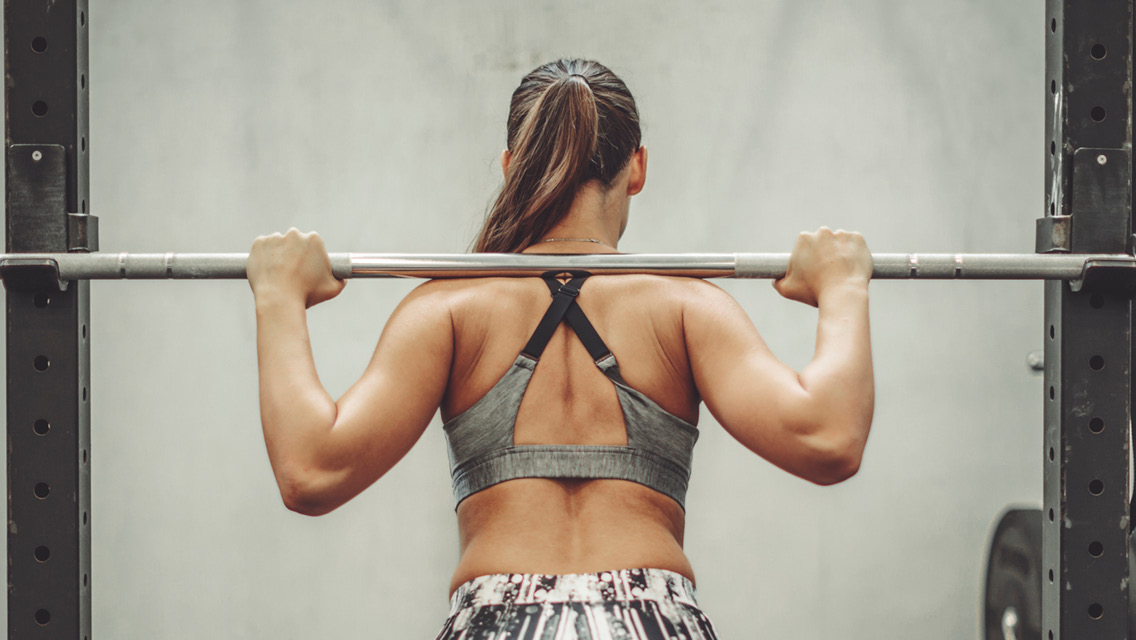
Q: Which is the better spine stabilizer for weightlifting: pulling in your belly button or bracing your abs?
A: Most experts say bracing is the way to go. (To figure out how to brace, pretend someone is about to punch you in the gut. Your reaction? That’s bracing.)
So, why is it better? “You can’t create the stability to safely move much weight by sucking in your stomach,” explains Charlie Weingroff, PT, creator of the Training=Rehab, Rehab=Training DVD series.
Weingroff traces the popular instruction to “draw your belly button back toward your spine” to a misinterpretation of some research done at the University of Queensland in the late ’80s. The study demonstrated that the transversus abdominis (TVA) — an important muscle for spinal stabilization — activates a bit belatedly in those with lower-back injuries. Complementary research suggested that the draw-in technique could reliably activate the TVA; thus, the recommendation to “suck it in” caught on.
The problem is, sucking it in sorta sucks, for several reasons: (1) The TVA activates automatically when it needs to, whether you draw in or not; (2) there’s no reason to think those without back injuries experience delayed TVA activation; and (3) activating the TVA in isolation changes the pull and alignment of the diaphragm, throwing off your ability to create intra-abdominal pressure (a key element of spinal stabilization).
In short, says Weingroff: “The brace is a better choice because it activates the entire core.”




Comments (0)