

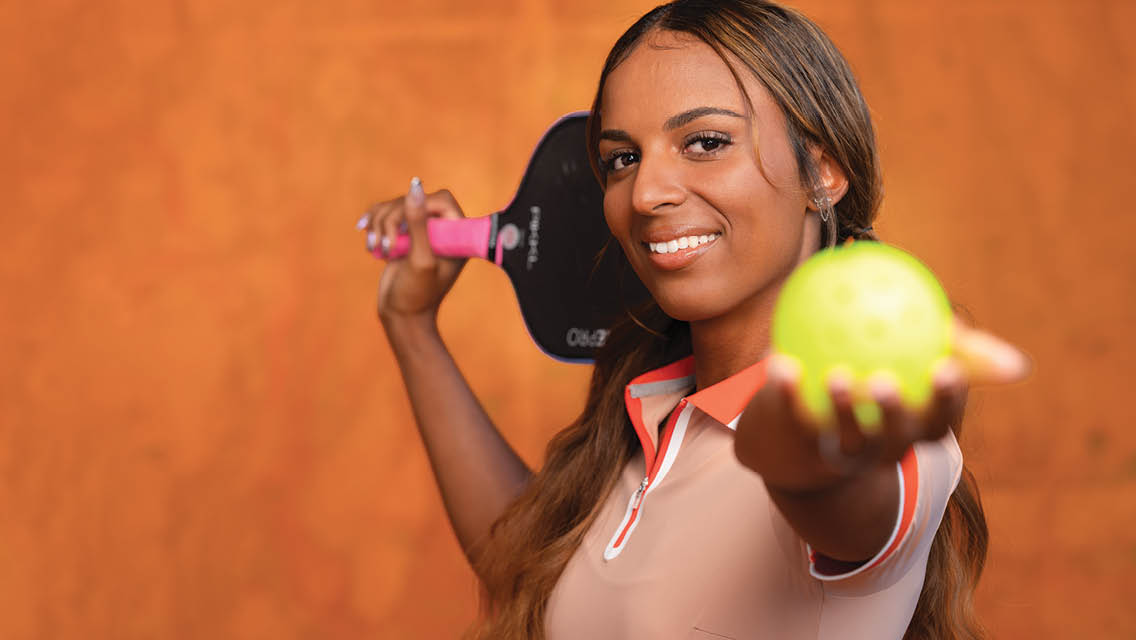
Tyra Hurricane Black was in Turkey in February 2023 when two powerful earthquakes jolted the country. Though the quakes’ epicenters were hundreds of miles away, Black recalls the aftershocks and her panic as she watched news of the mounting death toll, which ultimately exceeded 56,000 people.
Black was competing in the International Tennis Federation Women’s World Tennis Tour, where she had won two titles the previous year. She was safe from the quakes, but the tremors triggered an important wake-up call: She wasn’t where she wanted to be.
“I realized that if something had happened to me there, I was not doing what made me happy,” the 25-year-old recalls. “I had not fully enjoyed my life.”
Born Into Tennis
Black’s middle name is Hurricane, inspired by the nickname given to her older sister, Alicia: Tornado. Their names were a marketing play by parents who were intent on seeing their daughters grow into tennis champions.
Their father is a coach who trained top tennis players, including Sloane Stephens and Victoria Duval. Black’s earliest memories are of being on a tennis court in Boca Raton, Fla., watching her sister train.
As a child, Black was ambivalent about becoming a tennis star. She would run away from practice, more interested in rescuing animals than playing the sport. “We lived by the Everglades,” she says. “I would bring home turtles, crawfish, even a baby alligator once.”
Black’s parents “had kind of given up” on her as a tennis player, she recalls, but she surprised them by winning important tournaments at ages 11 and 12. Black was 13 when her mother signed her to a professional sponsorship contract with tennis-equipment brand Head. Black began touring full-time, traveling by herself to international tournaments.
As Black’s years on the road extended through her teens, life at home became unstable and stressful. Black’s parents divorced. Alicia, then a top-ranked junior, suffered career-ending injuries. Black’s mother became ill, and the family faced financial hardships.
Isolated and depressed, Black felt immense pressure to compete and win, but her performance and focus were inconsistent, and she struggled.
The Other Side of the Net
Before she’d left for Turkey, a friend suggested Black try pickleball. “It’s so much fun — and you can make money!” he’d told her. Black wasn’t convinced initially, but after the earthquakes, she was ready to try something new.
“I decided I wanted to be happy,” she says. “I’d spent 22 years not being happy playing tennis, and it was time to go down a different route.”
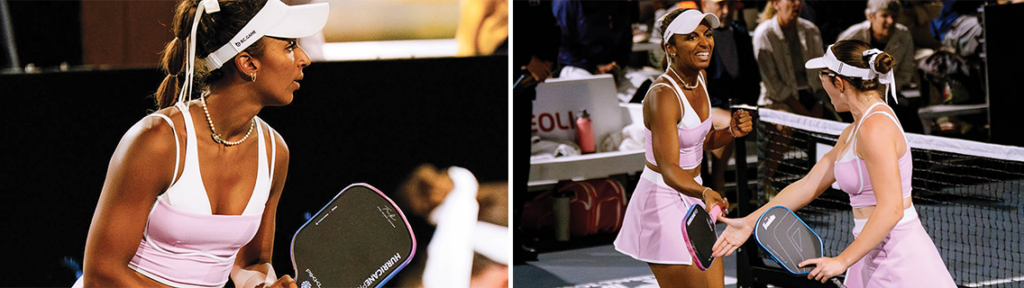
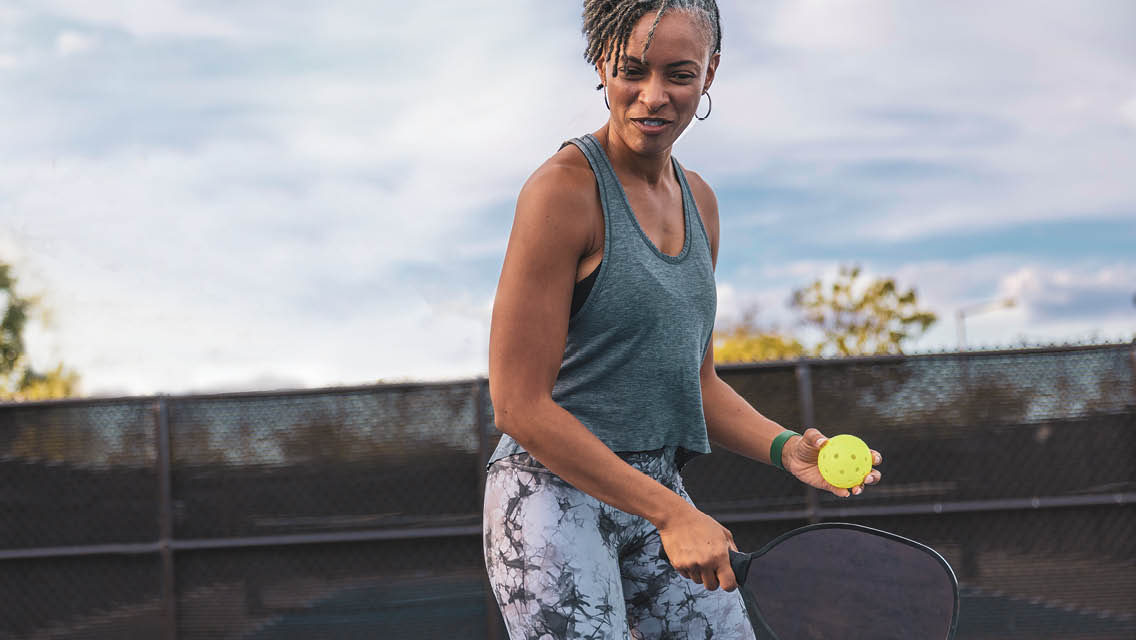
Now in her fourth season on the pro pickleball circuit, Black is top-ranked and plays nearly year-round with Major League Pickleball and the Professional Pickleball Association. We chatted with her about how her life has changed for the better.
Q&A
With Tyra Black
Experience Life | What happened when you got home from Turkey?
Tyra Black | I started playing pickleball every day. I was having so much fun — I’d be on court anywhere from six to 12 hours a day. I’d tell my mom I was going to tennis.
I still had tennis sponsors, and there was a tournament that April [2023] in Boca. I played two games and got off the court. I told my coach, “I can’t do this. I’m not playing anymore.”
EL | What did you bring to your pickleball game from tennis — and what did you leave behind?
TB | I brought some shots from tennis. At first, a lot of people told me, “That’s not a pickleball shot — you can’t hit the slice volleys or the angled overhead shots.”
Now I see players doing these shots, or they’re working on them. I understand people were trying to help me play the more conventional way, but I think everyone in pickleball has their own style and brings their own flair to the game.
What I left behind? My old mentality. When I was playing tennis, I had a bad attitude, just because I was upset about so many things going on in my life. I would break racquets. I’d scream.
There was a point when I was 17 or 18 when I told myself, OK, you should not be acting like that. I learned some meditation and breathing exercises, and I learned how to calm down.
Now when people from tennis see me laughing and smiling on the pickleball court, they say, “That does not seem like the same person!”
EL | Why did you make the decision to primarily play doubles, rather than singles, in pickleball?
TB | Doubles is just more fun. It’s nice having a partner next to you, someone who’s supportive and who you can talk to. If I’m ever feeling stressed on the court, we can crack jokes or just make things lighthearted again. I love how social it is. I really want to focus on doubles, keeping a good attitude, and being positive for myself and for my partners.
EL | As you look back over your tennis career, what are you most proud of?
TB | I think every tough thing you go through can teach you. My parents weren’t always happy with my playing, and I didn’t have a lot of self-confidence. I would cry myself to sleep at those international tournaments when I was younger. It was awful being there by myself, not really knowing anyone and being the youngest player there.
But I’m thankful I got to travel. I loved learning about new cultures and sightseeing. I should not have been sightseeing alone at that age, but I was doing it! When I look back, I wonder, How did I do that? How did anyone even let me walk outside at that age by myself? I feel proud of myself for pushing through, and for fighting for myself.
EL | What are your professional and personal goals moving forward?
TB | I try not to set performance-based goals in pickleball. That’s something I did in tennis, and whenever I did not reach them, I was upset. I just want to make sure I’m still having fun and I’m happy on the court.
Lifewise, I’ve been taking everything one step at a time. I want to encourage other people to play. I want to give back to all the people in the community, if I can. I don’t have too many goals for myself outside of that. I feel happy with what I’m doing and with my life, so, from here, I think it’s just helping others and making them happy, too.
EL | What advice do you have for pursuing your dreams in a healthy way?
TB | Obviously, you want to stay as healthy and active as possible, but there needs to be a balance in life. Find things that make you happy and that you want to do each day. I love to try new things. I go to Pilates and I’ve tried aerial yoga, including the silks splits! I try not to take everything too seriously. That’s why I love pickleball. It’s a super-active sport where you can still have fun.
This article originally appeared as “Hurricane on the Court” in the July/August 2026 issue of Experience Life.



Comments (0)