



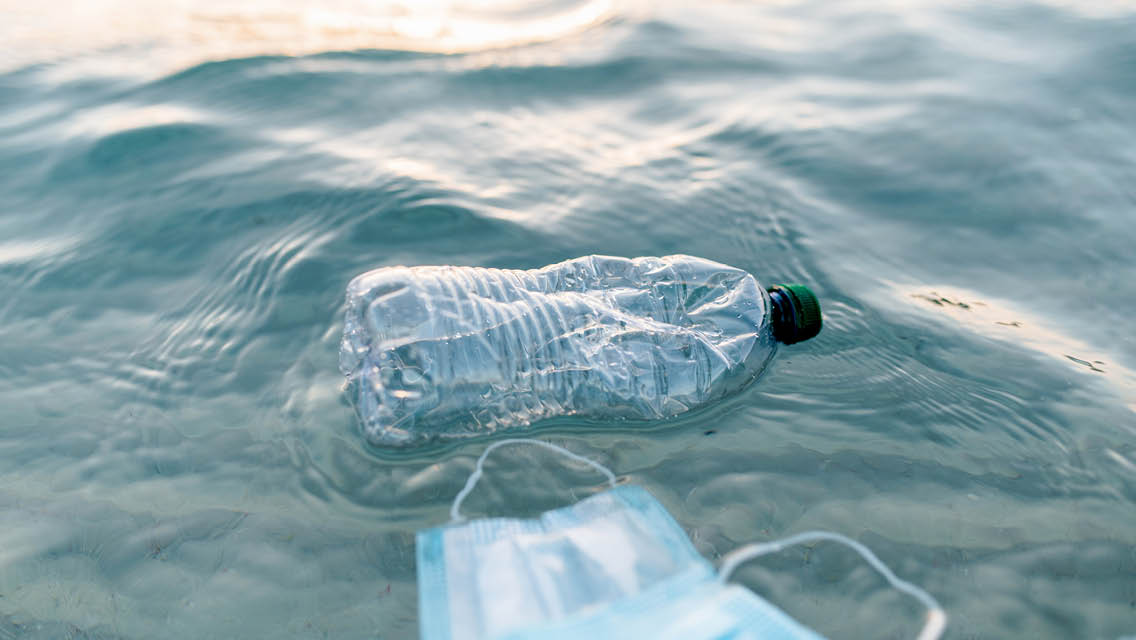
It’s a sign of the times: a discarded face mask or two whenever you run an errand or go for a walk. N95 masks contain polypropylene and polyethylene terephthalate plastics. Those used as PPE at hospitals are typically incinerated, which can produce toxic ash; those we toss into the garbage will likely degrade into the microplastic pieces that are causing pollution woes around the globe.
Additionally, oil prices plummeted during 2020, and it was far cheaper for manufacturers to produce new plastic than recycle old material. This resulted in an estimated 60 percent drop in recycling in the United States alone. So plastic-containing masks are a source of both protection and pollution. Below are some key indicators of the plastic pandemic.
4.3 Billion
Estimated number of plastic face masks used daily worldwide during the pandemic, according to a 2020 Environmental Science & Technology report. In addition, 2.2 billion pairs of plastic gloves are used every day.
200 Tons
Amount of medical waste produced in a single day during 2020 by the 11 million inhabitants of Wuhan, China, believed to be ground zero of the pandemic. This waste is four times more than the city’s dedicated medical incinerator could handle, according to a 2020 report in Science of the Total Environment.
2.5 – 3x
Estimated increase in consumption of all single-use plastic in the United States since the arrival of COVID-19, according to the International Solid Waste Association. This includes PPE; restaurant takeout containers (year-over-year sales at Uber Eats rose by 54 percent in early 2020); and mail-order packaging (Amazon saw a 65 percent jump in customer visits in March 2020 compared with March 2019).


Comments (1)
This is a dangerous and biased article. You imply that the only kind of masks available actually cause more harm than good. You also decide to include statistics on a city in China – why do this? Why actually focus on a city in China and thereby promote anti-asian hate? You don’t offer any good advice about perhaps using cotton or washable face masks, hand washing, using hand sanitizers, isolating if infected or even getting vaccinated. This is irresponsible writing.