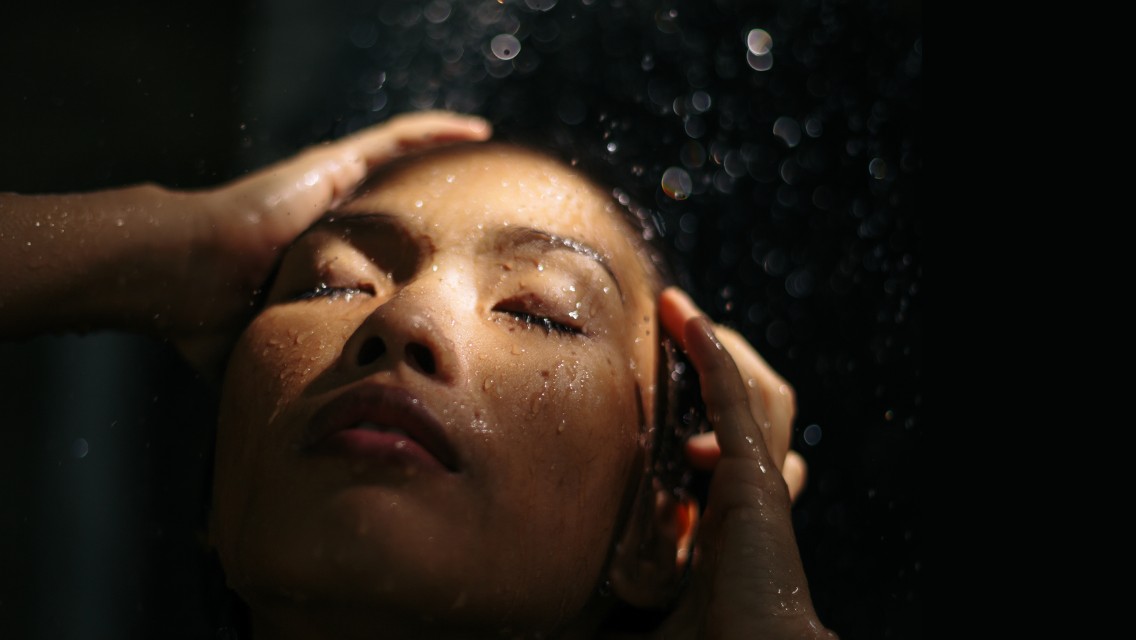



Arguably one of the best parts of a salon visit is the scalp massage that often comes during a shampoo. Though it only lasts a few minutes, that soothing moment can ease tension and help you relax. And according to Amy Hitchcock, master hairstylist at LifeSpa Green Valley in Las Vegas, Nev., that feeling doesn’t have to be reserved for the salon chair. With a few simple techniques, a scalp massage can become a regular part of your at-home routine.
“Many of us are doing multi-step skin-care routines for our faces but ignoring the skin our hair grows out of,” Hitchcock says. “While scalp massage is often thought of as a relaxation technique, it can also support scalp health and help create better conditions for healthy hair growth. The scalp has blood vessels and nerve endings and needs the same care we give the skin on our bodies and faces. When the scalp is well-taken care of, it can be its healthiest, which contributes to better hair growth.”
One important step in a scalp-care routine is scalp massage, and Hitchcock says it’s easy to incorporate into your day. “An at-home scalp massage is a five-minute daily habit you can do in your own bathroom or in the shower,” she says. “Close your eyes and imagine easing tension, calming your nervous system, and giving your hair a better environment to grow.”
3 Benefits of Scalp Massage
1. Improved Circulation for Stronger, Healthier Hair
Hair follicles are living structures that depend on healthy blood flow. The movement that happens during a scalp massage helps stimulate blood flow to the skin on your head and roots of your hair. This improved circulation helps deliver fresh oxygen and nutrients to the skin and hair follicles, creating an environment to produce stronger, healthier hair.
“Through scalp massage, you’re working with your living hair follicles to optimize their environment and make sure they have the blood flow and nutrients to do their job,” Hitchcock says.
2. A Cleaner Scalp
Massaging your scalp can help loosen layers of dead skin and other debris, like oil and built-up dry shampoo, clearing the way for healthier skin and hair growth.
“Scalp massage can act as gentle manual exfoliation with your fingers, which makes it easier for your shampoo to effectively clean the scalp,” says Hitchcock. “A cleaner scalp is the prime environment for healthy roots that lead to beautiful hair.”
3. Relaxation and Reduced Stress
A scalp massage can help the muscles across your forehead and the base of your skull release tension and feel more relaxed. “Your scalp and forehead often hold more tension than you realize,” says Hitchcock. “It’s the reason your time at the shampoo bowl can feel more life-changing than the haircut that follows it. I’ve had clients nearly fall asleep mid-rinse during their scalp massage. They usually don’t realize how tense they are until I start massaging. You see people’s shoulders drop in real time.”
How to Do an At-Home Scalp Massage
A self-guided scalp massage begins with two foundational techniques, followed by optional techniques you can incorporate throughout.
For the full benefits, Hitchcock recommends practicing the two foundational techniques at least once a day, then incorporating the other techniques as often as you like. “You can alternate techniques from day to day or combine several in a single session,” she says. “The key is finding what feels best for you.”
Start With These 2 Foundational Techniques
Step 1: The Warm-Up Sweep
“This first step really sets the tone for a relaxing scalp massage,” says Hitchcock. “This is your warm-up, not the main event.”
- Warm up your fingertips by rubbing them together for a few seconds.
- Spread your fingers and bring them to your hairline.
- Using your fingertips — though not your nails — make slow, circular strokes over your scalp, working toward the crown of your head and eventually moving down to the back of your head. Be sure your fingertips have enough pressure to touch your scalp and are not just rubbing over your hair.
- Repeat for about a minute as you start to relax into the massage.
Step 2: Temple-to-Crown Circles
“This part of the massage will really give you the benefit of better blood flow to deliver those key nutrients and oxygen to the scalp,” says Hitchcock.
- Spread your fingers wide and place them on the crown of your head.
- Apply a little more pressure than you did in step 1 and move your fingertips in slightly larger circles.
- Work your fingers down to your temples slowly, then return to your crown.
- Keep the pressure comfortable and the movement controlled.
- Repeat for three to five rounds.
Then Add These Optional Techniques
Step 3: The Scalp Rake Technique
“This is an optimal technique to use after applying a scalp oil or scalp serum such as Kérastase Chronologiste Longevity Potion Scalp Serum,” says Hitchcock. “The sweeping motion helps distribute the product evenly and can loosen some of the buildup and dry flakes that may be stagnant on the surface of the scalp”.
- Bring both hands to the crown of your head.
- Spread your fingers and interlace them together. Then, slowly release your hands away from each other as you “rake” your fingers across your scalp.
- Move your hands and fingers back to an interlocking position and continue to repeat this “rake” and “interlock” motion as you work your way across your entire scalp.
- Repeat for two rounds.
Step 4: The Clutch Technique
“This technique is the best for deep relaxation,” says Hitchcock. “It sounds a little bizarre, but it feels almost like your brain is finally getting some breathing room.”
- Stretch your hands and place them on the sides of your head, just above your ears. Apply some pressure and gently squeeze with your palms in an upward circular motion, lifting the scalp slightly.
- Hold each squeeze for five seconds before releasing.
- Repeat for three to five rounds.
Step 5: The Raindrop Technique
“This is a great way to finish a scalp massage because it gives a clear, comforting transitional signal that the massage is wrapping up,” says Hitchcock.
- Gently tap all 10 fingertips over your head like light raindrops hitting your scalp. Move all around your head with this constant motion.
- Take a few deep, expansive breaths as you do this.
- Repeat for three to five rounds.