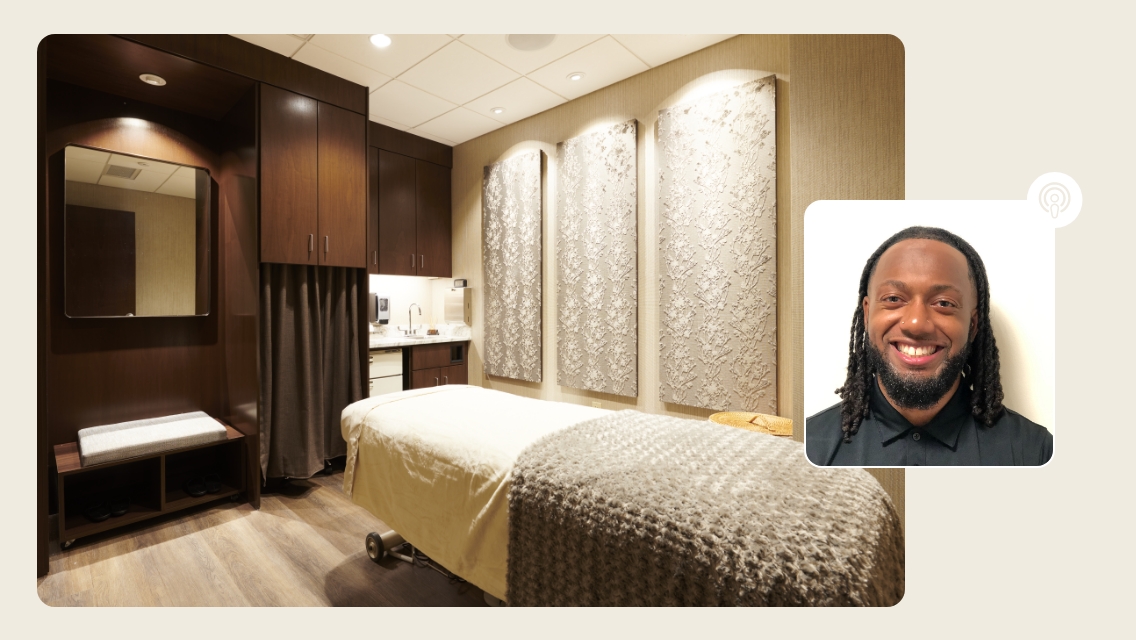




Stiff neck. Tight hips. Achy lower back. Whether the culprit is long hours at a desk, a demanding workout routine, or simply the wear and tear of daily life, most of us have experienced moments when our bodies haven’t felt quite right.
While getting to the root cause of that discomfort is important, knowing where you can turn to find relief also matters.
Should you book a massage to work out muscle tension? Try assisted stretching to improve mobility? Or visit a chiropractor to address joint restrictions and movement patterns?
Each service offers distinct benefits, and in many cases, they can work together to help you move more freely, recover more effectively, and feel your best. To that end, we spoke with some Life Time experts about when it makes sense to choose assisted stretching, massage therapy, or chiropractic care — and how combining them can support your overall wellness goals.
Assisted Stretch
In a Dynamic Stretch session at Life Time, your stretch specialist screens you for certain movement deficiencies like imbalances or tightness, according to Aaron Darity, Dynamic Personal Trainer and stretch specialist at Life Time in Woodstock, Ga. “Once we pinpoint those areas, we then use a style of stretching that can be difficult to do on your own, called proprioceptive neuromuscular facilitation (PNF). It aims to help improve strength and mobility limitations and stretch the entire body.” (Learn more: “What Is Dynamic Stretch?”)
Many people who feel like they’re already “flexible” might skip an assisted stretch session, but Darity recommends keeping the option on the table. “Having flexibility doesn’t mean you’re pain-free. I have had clients who are quite flexible but very weak when it comes to that end-range of motion,” he says. “Flexibility is just the ability to get into the range of motion; mobility is the strength that you can apply inside that range of motion.”
He adds, “The goal of a Dynamic Stretch experience is to strengthen your full range of motion and reduce your risk of injury.”
Signs You Might Need Assisted Stretch
You feel persistent tightness after stretching on your own. “Dynamic Stretch helps relieve persistent tightness by working on active end range of motion, whereas static stretching on your own only takes the muscle through a passive range of motion,” says Darity. “The latter leads to the body tightening up later as, neurologically, it thinks that it doesn’t have the strength in this new range of motion and uses the tightness to try to protect it.”
You have limited mobility and stiffness. “Dynamic Stretch helps with limited mobility and stiffness by assessing which muscles contribute to stiffness and restrict range of motion,” he notes. “From there, we work on releasing muscles that inhibit range of motion and start working on muscles that promote strength and better movement.”
You want to reduce your risk of injuries and prioritize recovery. “Assisted stretch versus stretching on your own helps reduce risk of injuries through the strengthening of end range of motion,” he says. “The movements we focus on are curated to the individual strength and limitations of each client. Having better mobility as opposed to flexibility will help the body move through the complete range of motion with good form, which enhances the ability to build muscle, move without pain, and recover.”
Massage Therapy
The perception of massage therapy is beginning to evolve, says Yasmine Habib, licensed massage therapist at LifeSpa in Woodstock, Ga. “Massage therapy isn’t just seen as a luxury service anymore — it’s a recovery and wellness tool. Instead of reserving massages for special occasions, like birthdays and anniversaries, people are integrating regular massages into their routine.”
Getting regular massages can help improve circulation, ease anxiety, and reduce soreness. “Massage can be a preventative tool,” says Habib. “It’s best not to wait until soreness or tightness happens because the road to fixing it can be more complicated than preventing it outright.” (Learn more: “Why Massage?”)
At LifeSpa, massage services are designed to meet you where you’re at by addressing your specific needs. “As massage therapists, we are going to customize the service based on your needs by adjusting the pressure, technique, and the tools we use,” Habib says.
Signs You Might Need Massage Therapy
You experience chronic muscle tension. “At LifeSpa, our therapists utilize a variety of techniques including Swedish massage, deep tissue work, trigger point therapy, and myofascial release to address chronic tension,” says Habib. “These techniques help reduce muscle soreness, improve circulation, restore mobility, and promote long term relief from everyday stress and physical strain.”
You’re sore from training. “Whether you’re dealing with tight or sore shoulders, tired legs, or overall muscle fatigue,” Habib says, “massage can help reduce tension and improve mobility, helping you feel refreshed, recovered, and ready for your next workout.”
You have persistent knots or muscle tightness. “Persistent knots and muscle tightness can develop from stress, repetitive movements, poor posture, or overuse,” she says. “Massage therapy helps address these areas by reducing or releasing restrictions within the soft tissues. Targeted massage techniques can help release areas of tension, ease muscle tightness, and restore flexibility, so your body can move more comfortably.”
Chiropractic Care
The main thing that sets chiropractic care apart from other treatment modalities is that it is diagnostically driven, according to Dominique Scott, DC, licensed chiropractor at LifeClinic in Woodstock, Ga.
“Chiropractors study the whole body with an emphasis on movement and orthopedic function,” he says. “Our main goal is to find the root cause of your pain, discomfort, or dysfunction and to act from there with a solution that’s based in soft tissue work, spinal adjustments, and rehab exercises.
“As chiropractors, we’re geared to look for the root issue on all levels, including joint, nerves, muscles, body positioning, loading, and more,” Scott adds. (Learn more: “Why LifeClinic?”)
Signs You Might Need Chiropractic Care
You have recurring pain or tightness. “When pain or tightness keeps returning, we focus on identifying and correcting the underlying cause rather than just treating the symptoms,” says Scott. “Through chiropractic movement assessment leading to treatments with adjustments and our soft-tissue technique called IMJT (Integrated Muscle and Joint Therapy), we target the sources of the related joint and muscle stresses — all while teaching the patient targeted rehabilitation exercises. This helps restore proper function and reduces the likelihood of the issue recurring.”
You have muscular imbalances. “Muscular imbalances often develop from repetitive activities, alterations of joint movement patterns, injuries to joints or muscles, or prolonged sitting,” he says. “We assess how the body moves as a system and create a personalized rehabilitation plan to restore movement from a musculoskeletal standpoint, guiding the patient to improve strength, stability, and coordination in the areas most needed.”
You feel restricted with certain movements. “Movement restrictions can result from joint dysfunction, soft tissue limitations, or faulty movement patterns,” Scott notes. “Our approach combines chiropractic adjustments, IMJT, mobility training, and corrective exercises to help restore comfortable, efficient movement.”
You have postural issues. “Poor posture is often the result of a combination of muscular weakness, tightness, and movement habits developed over time,” says Scott. “We address the structural and functional factors contributing to postural stress by using adjustments and IMJT to provide corrective strategies to help improve posture. We also guide patients in posture corrective techniques that they can apply themselves to help accelerate and maintain their improvements and prevent reoccurrences.”
(Learn more: “9 Common Reasons to See a Chiropractor.”)
How to Integrate All Three
Assisted stretch, massage therapy, and chiropractic care each have distinct benefits, but there’s room for all three in prioritizing your recovery. “The three services in combination can work really well together to enhance your musculature,” says Darity.
Scott recommends starting with a diagnostic chiropractic session to help inform your needs for the other services. For new patients at LifeClinic, the first exam and visit are complimentary. From there, the cadence and integration of each service can vary depending on your needs. “You’re going to get a positive outcome with both massage and assisted stretch, but when you have the information from a chiropractic assessment to inform those services? Even better.” Book a complimentary new patient exam here.
These services are available at many Life Time athletic country club locations, where the professionals can work cross-functionally to help you achieve even better results.
At Life Time Woodstock, Scott works regularly with Darity, Habib, and other specialists to craft holistic solutions for members. “Most people who work with several different providers can become frustrated when their doctors give them different information, have varying opinions, and don’t communicate with each other,” he says. “At Life Time, that roadblock is eliminated because we all work under the same roof.”
For example, once a member signs a consent form to share information with other providers, Scott can talk to a massage therapist about what he is specifically working on with a patient, so they can be more informed and thorough when providing massage services.
“Life Time members are interested in living their best life,” says Scott. “They want to feel their best, be active, and increase their endurance. Our priority is to provide the best care, and we can work together to create a plan that enhances your mobility and stability across your muscles, joints, and nerves.”