

As we age, many of us put a lot of effort into helping our skin look its best. But what about our hair? It also changes: Perhaps you notice thinning, a loss of volume, or dryness that wasn’t there before.
“When people think about the effects aging has on appearance, they often focus on wrinkles and skincare,” says Heidi Klegstad, hairstylist at LifeSpa in Eden Prairie, Minn. “But our hair ages too. The hair and scalp undergo changes that can affect thickness, texture, shine, and growth.”
Ahead, Klegstad shares common factors that can lead to hair concerns as we age, along with tips for keeping our hair and scalp healthy throughout the years.
What happens to our hair as we age?
Several factors can contribute to hair changes as we get older, explains Klegstad, though why it happens can vary for men and women.
“For men, hair loss often starts in their 20s to 30s, with a receding hairline and thinning at the crown,” says Klegstad. “For men, hair loss is strongly influenced by genetics. They also tend to see gray hair earlier than women, though that’s also due to genetics.
Women’s hair changes tend to be influenced by hormonal changes, stress, thyroid function, and nutrition. “Women may notice hair loss in their late 30s to 50s, [likely] due to hormone changes during perimenopause and menopause. They mostly experience diffuse thinning across the top but keep their full hairline. Women typically notice more gray hair around perimenopause and menopause, but this is also highly genetic.”
Other factors that contribute to aging hair include:
Shrinking hair follicles: Hair follicles naturally shrink over time through a process called miniaturization. “This can cause both men and women to experience a change in strands,” says Klegstad. “Men may experience thinner hair as the follicles start shrinking, while women can notice finer strands, more brittleness, less shine, and lack of elasticity.”
A shorter active growth phase: There are four phase cycles in hair growth: Anagen (growth) is the longest phase, in which follicles actively produce new hair. Catagen (transition) is the phase in which hair growth stops, and the follicle starts to shrink. The telogen (resting) phase lasts between two and four months — the hair remains in the follicle, but it’s no longer growing. Finally, the exogen (shedding) phase helps shed old hair to make room for new strands. A normal amount of hair loss is 50 to 100 strands every day for both men and women.
“As we age, the anagen phase naturally becomes shorter, so your follicles are not actively producing as much hair as they used to,” Klegstad explains. “Hair also tends to spend more time in the telogen phase, which can cause it to appear thinner.”
Shifting scalp health: “Collagen and elastin are essential structural proteins in the scalp,” says Klegstad. “As we age, our bodies naturally produce less of both, and this can affect the environment where hair grows. Collagen provides strength while elastin allows the skin on the scalp to stretch and bounce back. As the decline happens, the scalp becomes thinner and less supportive.
Blood flow also becomes less efficient, as aging is associated with reduced microcirculation and changes in the connective tissue around the hair follicles. When this happens, less oxygen and fewer nutrients reach the follicles, which are some of the building blocks for healthy hair growth.”
Genetics: “In many cases, thinning hair is largely due to genetics,” explains Klegstad. “You inherit specific DNA instructions that can make your hair follicles sensitive to a hormone called DHT, which can cause them to shrink over time.”
Hormonal changes: “As women age, estrogen levels naturally decline, especially during perimenopause and menopause,” says Klegstad. “Because estrogen helps support the hair’s active growth (anagen) phase, lower levels can lead to shorter growth cycles and increased shedding. At the same time, hormonal changes can also make hair follicles more sensitive to DHT, resulting in finer, weaker hairs and reduced hair density.” (Learn more: “Hair Health Through Hormonal Shifts: From Pregnancy to Menopause.”)
Stress: “Chronic stress can influence hair by pushing more hairs prematurely into the telogen (resting) phase due to the release of excess cortisol, the stress hormone,” says Klegstad. “This is why you might notice increased shedding even months after a stressful event.”
Nutrition: “Nutrition plays a big role in how the scalp ages,” says Klegstad. “Hair follicles are highly active structures that require a steady supply of nutrients to support healthy growth and function.”
Sun exposure: The scalp is often overlooked when it comes to sun protection. “Over time, UV exposure breaks down collagen and elastin while increasing oxidative stress, which can damage skin cells,” says Klegstad. “This can lead to dryness, sensitivity, inflammation, and a weakened scalp barrier, making the scalp less resilient and less able to support healthy hair.”
Lifestyle habits: Many of the same habits that influence how our skin ages can also affect your scalp and hair. “Hair follicles are living structures that depend on healthy circulation, hormones, nutrients, and a balanced scalp environment. Over time, certain lifestyle habits like poor nutrition, sun exposure, and inadequate sleep can speed up visible hair aging.”
6 Tips for Supporting Your Scalp and Hair as You Age
Like a skincare routine, there are steps you can take to address the effects of aging scalp and hair. “Prevention starting in your 30s and 40s is generally more effective than trying to reverse changes,” Klegstad advises.
1. Cleanse gently and condition with each wash.
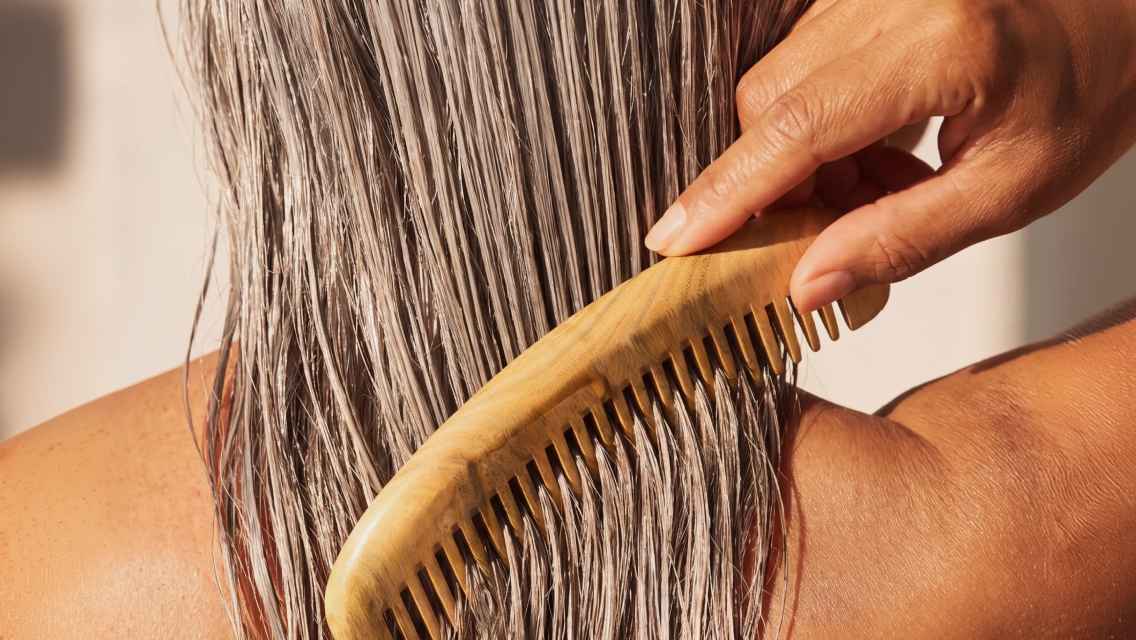
Thinning hair is often more fragile and prone to breakage, so it’s important to be gentle when cleansing. Conditioning after each wash helps to restore lost moisture.
“When shampooing, focus on gently cleansing your scalp by lightly massaging the shampoo into your roots rather than scrubbing the lengths of your hair,” Klegstad advises. “Follow with conditioner, applying it from the mid-lengths to the ends to replenish moisture without weighing the hair down at the scalp.”
You can also consider a shampoo and conditioner set that’s designed to care for an aging scalp and hair. “One of my favorite shampoo and conditioner duos is the Kérastase Chronologiste Bain Régénérant Shampoo and Fondant Régénérant Conditioner, which is formulated to address the visible signs of scalp and hair aging,” says Klegstad. “It includes ingredients like hyaluronic acid, Abyssine, and vitamin E, which work together to help hydrate and nourish the scalp and hair, helping strands appear plumper while improving smoothness, fullness, and shine.”
2. Exfoliate and massage your scalp.
Exfoliating the scalp supports circulation and can remove dry skin that may clog hair follicles. As you age, circulation tends to decrease, and the scalp can become more prone to dryness.
“An unclogged hair follicle will produce healthier hair,” Klegstad explains. “You can exfoliate your scalp using products containing salicylic acid or glycolic acid once a week to remove dead skin cells and styling product buildup without harsh friction on the scalp.”
Daily scalp massage can also support a healthier scalp by improving overall circulation. “Use the pads of your fingertips or a flexible scalp brush for a few minutes each day to stimulate microcirculation. This can help deliver oxygen and nutrients to the hair follicles,” Klegstad adds. “Be sure to massage with a gentle, relaxing touch, as opposed to a vigorous massage.”
3. Eat a healthy, nutrient-rich diet.
A healthy, balanced diet supports healthier hair from the inside out. “Key nutrients for healthy hair include iron, zinc, vitamin D, biotin, omega-3 fatty acids, and protein,” says Klegstad. “Omega-3 fatty acids support a healthy scalp barrier and can calm inflammation and support hydration. Iron is important for oxygen delivery to hair follicles. Zinc helps maintain normal follicle function and scalp repair. Vitamin D helps with healthy follicle cycling. Antioxidants, colorful fruits, and vegetables help protect cells from oxidative stress.
“Because hair is primarily made of keratin, which is protein, getting enough protein is also essential for strong, resilient strands,” Klegstad adds. “Without adequate protein, hair can become weaker, more brittle, and more prone to shedding.”
4. Minimize heat styling.
Heat styling can accelerate breakage, dryness, and brittleness, according to Klegstad. “When you use heat for styling, be certain to use a heat protectant product after shampooing and conditioning and before styling to help protect your hair,” says Klegstad.
5. Protect your hair and scalp from the sun and other elements.
It’s important to shield both your scalp and hair from UV damage to preserve strength and moisture. Exposure to UV rays breaks down collagen and elastin in the skin and scalp, and this leads to damaged skin cells. Sun exposure can also deplete hair of moisture, causing it to be dry and brittle.
“I always wear a hat to protect my hair and scalp in the sun,” says Klegstad. “Certain leave-in products can also be helpful to protect from heat, UV rays, chlorine, and salt water. These are all things you’d want to avoid, whether your hair is aging or not, as they cause breakage, dryness, and other unwelcome hair issues. I recommend looking for a product with SPF 30 or higher that protects the hair and scalp from UVA and UVB rays and goes directly onto the scalp.
6. Consider topical peptide products.
Peptides are becoming increasingly popular ingredients in healthy-aging haircare, especially in scalp and hair serums.
“These short chains of amino acids can act as messengers to help support a healthy scalp environment and strengthen the hair,” says Klegstad. “They can also support the scalp’s natural repair processes by attaching to damaged areas on the hair shaft and reinforcing weak spots. Certain peptides can also encourage the skin to produce proteins like collagen and elastin that help make the scalp stronger and the scalp more flexible. Using peptides on the scalp and hair can give you optimal results while helping improve the appearance of hair density by supporting the follicle environment.”
When you’re choosing products, Klegstad recommends looking for ingredients like tetrapeptide, acetyl tetrapeptide, and biotinoyl tetrapeptide.
Supplementing with collagen peptides may also help support the skin and connective tissue surrounding hair follicles. “I love adding collagen peptides to my morning coffee,” says Klegstad. My favorite is LTH Prime Collagen Peptides — I use the unflavored version and add one scoop.”