


Navigating the many treatment options for keeping your skin healthy can be overwhelming. From daily cleansers and toners to the occasional laser treatment, there are plenty to choose from. More recently, laser and light-based therapies have gained popularity for their ability to improve skin pigmentation, minimize fine lines and acne scars, and more. But they aren’t the only treatments to consider, and they aren’t right for everyone, whether because of cost, post-treatment downtime, medical considerations, or other factors.
“One of the biggest misconceptions I see is people thinking that lasers are the only way to improve collagen production and skin quality,” says Lucy Miranda, master esthetician at LifeSpa in Bridgewater, N.J. “While lasers and light-based therapies can be great treatments for the right candidate, they’re not the best fit for everyone. Some people aren’t comfortable with the downtime, cost, or temporary redness and peeling that can come with these treatments. Others simply prefer a more gradual approach with little to no recovery time. There are so many non-laser technologies that can deliver results.”
Skin type, pregnancy, taking certain medications like Accutane, underlying medical conditions, and even personal comfort level can all factor in to whether or not laser treatments are the right choice for you, adds Chelsea Newarski, esthetician at LifeSpa in Middletown, N.J.
“Timing is also an important consideration,” she Newarski. “It’s best to avoid laser treatments late spring through early fall, especially if you live in a warmer, sunnier climate and spend a lot of time outdoors. Laser treatments combined with sun exposure can increase the risk of unwanted pigmentation and other complications.”
A growing range of non-laser technologies and professional treatments can support collagen production, skin firmness, and skin texture. Used strategically, or even in combination, gentler treatments can meaningfully improve the look and feel of your skin.
Start With a Consultation
A consultation with a licensed esthetician can help you narrow down the right treatments based on your skin type, health status, and skincare goals. “I like to have an open conversation with my clients to understand what they’re looking for,” Miranda says. “Everyone is different, and the best treatment plan reflects that.”
Miranda emphasizes that beautiful skin isn’t about choosing the most aggressive treatment — it’s about choosing the right treatment for your needs. “With today’s technology, we can stimulate collagen, improve texture, and support healthy aging skin in ways that fit each person’s lifestyle, desired outcome, and comfort level.”
If you’re looking for skincare treatments that can deliver results similar to lasers — think increasing collagen production, reducing the appearance of fine lines, addressing pigmentation and more — but are achieved through a different approach, Miranda and Newarski offer the following options to explore both in a professional setting and at home. “Professional treatments can provide the biggest boost, but home care is what helps maintain those results,” says Miranda.
In-Spa Treatments
1. Radiofrequency Treatments
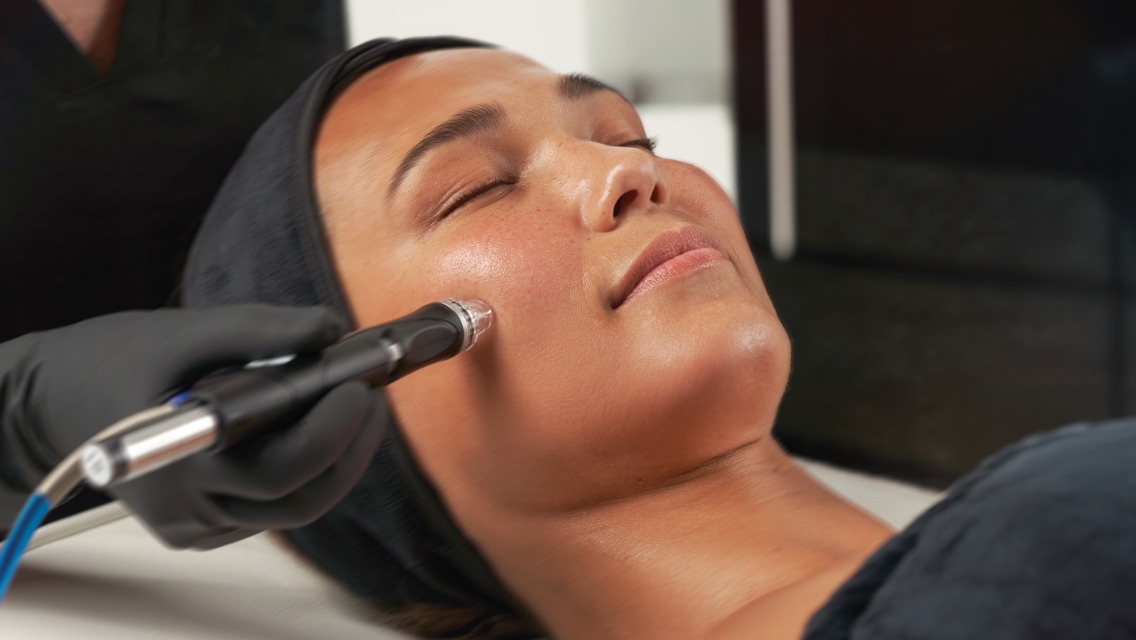
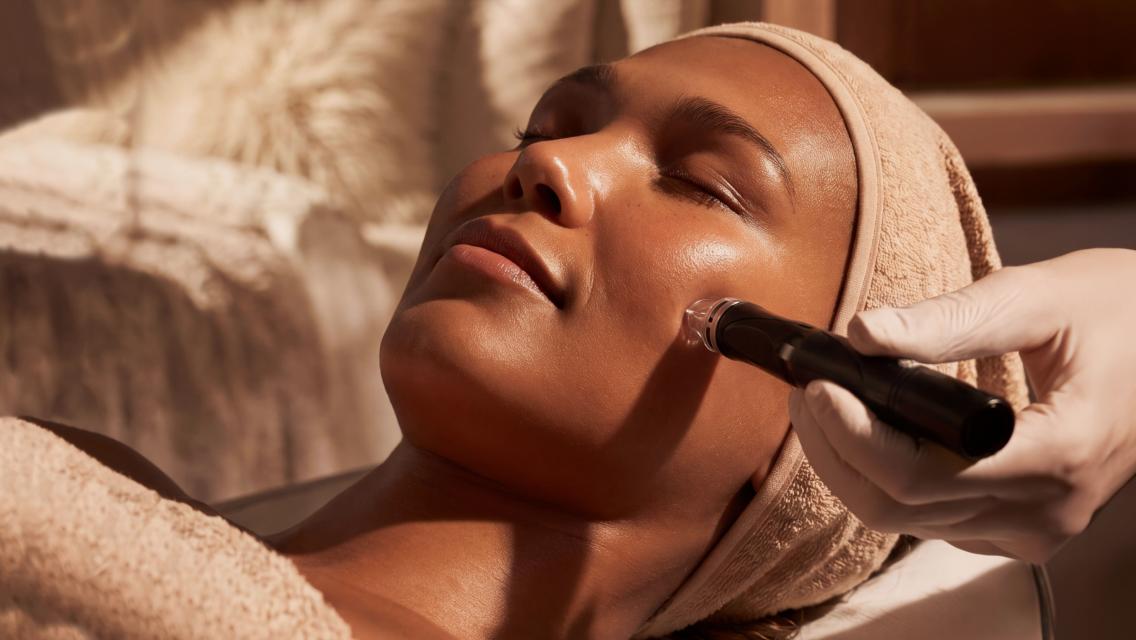
Radiofrequency is a noninvasive option that uses heat to stimulate collagen and help tighten and firm the skin. During the treatment, an esthetician uses a device that gently heats the deeper layers of the skin, triggering the production of collagen and elastin. This helps improve firmness, texture, and overall skin appearance.
Miranda recommends radiofrequency treatments that use controlled heat for those looking to stimulate their skin’s natural collagen and elastin production. “Over time, this can help improve firmness, soften fine lines, and tighten the skin without damaging the surface,” she says. “Results gradually improve over a few weeks to a few months, with a series of treatments usually recommended.”
To see if it’s right for you, ask your esthetician if radiofrequency would be a good add-on or treatment for your skin goals. Typically, it’s done in a series every one to four weeks, depending on the device and your skin.
2. Ultrasound Treatments
In-spa ultrasound treatments use sound waves to gently heat and stimulate the deeper layers of the skin and the body’s natural collagen production. Unlike a medical ultrasound, it’s used for skincare rather than imaging. It can help with hydration, circulation, and overall skin appearance.
“Ultrasound treatments are a great option for clients looking for gradual lifting and tightening without the downtime associated with more aggressive procedures,” says Miranda.
Ask your esthetician if ultrasound treatments might be a fit for your skin goals. They are typically added on to a facial appointment, and your esthetician can recommend a treatment plan.
3. Hydrafacial
A Hydrafacial is a highly recommended non-laser treatment with customizable applications and successful results without being invasive.
This hydrating skincare service uses a specialized machine to exfoliate skin and vacuum away impurities while simultaneously delivering nutrient-rich serums.
“A Hydrafacial is one of my favorite treatments for improving overall skin health,” Miranda says. “It deeply cleanses, exfoliates, hydrates, and infuses antioxidants to leave the skin smoother, brighter, and healthier.”
Although Hydrafacial isn’t considered a true collagen-induction treatment, Newarski notes it can create the ideal environment for healthy collagen production by deeply cleansing, exfoliating, hydrating, and reducing inflammation.
“Your Hydrafacial experience can involve a variety of booster serums containing ingredients like collagen peptides, growth factors, and hyaluronic acid,” she says. “These boosters help support the skin’s hydration and overall health while complementing its natural collagen-building process.” (Learn more: “What are the Benefits of a Hydrafacial?”)
4. Microcurrent Treatments
Microcurrent is a noninvasive facial treatment that uses a handheld device to deliver very low levels of electrical current to the skin and underlying facial muscles. The device has two probes that deliver the electrical currents, gently stimulating the facial muscles and creating a temporary lifted, toned appearance.
During a microcurrent treatment, a conductive gel or serum is applied to the face, allowing the device to glide smoothly over the skin in upward, lifting motions to target specific facial muscles.
“The goal is to temporarily tone and lift the appearance of the face while also supporting circulation and overall skin health,” Newarski says. “Think of it as a workout for your facial muscles. Regular treatments can temporarily lift and tone the face, leaving your skin with a firmer appearance. This is a great add-on to any type of facial, and it can be especially nice before a special event when you want your skin to look refreshed and more sculpted.”
Results are temporary, but with regular treatments, microcurrent can help maintain a more lifted, toned, and sculpted appearance. Newarski suggests starting this treatment one to two times a week for several weeks and then moving into a maintenance routine of once or twice a month. The ideal frequency can vary depending on the individual and device used.
5. A Medical-Grade Chemical Peel
A medical-grade chemical peel, like the iS Clinical Prodigy Peel (offered at select LifeSpa locations), gently removes dull, damaged skin while encouraging healthy new skin to surface, according to Newarski.
The iS Clinical Prodigy Peel uses a combination of exfoliating acids and active ingredients to encourage cellular renewal and reveal fresher, smoother-looking skin.
“Unlike a traditional facial, the Prodigy Peel is a more intensive treatment focused on resurfacing the skin and is performed as a stand-alone treatment,” Newarski says. “This is a great option for someone looking to improve the appearance of uneven texture, dullness, discoloration, fine lines, and other visible signs of environmental damage. Depending on the individual and the level of treatment, you may experience some peeling or flaking as the skin goes through its renewal process. The end goal is healthier-looking, smoother, and more radiant skin.”
If you are new to chemical peels, Newarski recommends starting with a series of treatments rather than a one-time service to achieve the best results. The timing between treatments can vary depending on your skin, your goals, and how your skin responds to the treatment. Your esthetician can help determine the appropriate treatment schedule and at-home skincare routine to support your results.
At-Home Care
6. SPF
Wearing sunscreen diligently is the single best thing anyone can do to help prevent premature aging, according to Miranda and Newarski. “It’s important to wear a broad-spectrum SPF 30 or higher every single day,” Newarski says. “UV rays break down collagen and elastin, leading to wrinkles, uneven texture, and pigmentation. Wearing sunscreen every day helps preserve existing collagen and prevents premature aging. Just be sure you reapply throughout the day for continued protection.”
7. Retinoids
Retinoids are vitamin-A-based topical skincare products that encourage cell turnover and stimulate collagen production over time. “Retinoids are one of the most researched ingredients for supporting aging skin with healthy results,” Miranda says.
Some retinoids are available only by prescription from your dermatologist, but many over-the-counter brands, known as retinols, can be quite effective. “Retinol is considered a gold standard when it comes to improving how the skin ages,” Newarski says. “By increasing cell turnover and encouraging collagen production, it helps to reduce the appearance of fine lines, rough texture, and uneven skin tone over time.”
Newarski notes that you can add retinols into your skincare routine a few nights a week alongside other products, such as vitamin C and SPF in the morning. On the nights you aren’t using a retinol, a copper tripeptide serum and collagen-supporting cream can help support smoother, firmer, healthier-looking skin.
8. Peptides and Antioxidants
Another set of ingredients that Miranda favors are peptides and antioxidants.
“Peptides can support collagen production, while antioxidants like vitamin C help defend against free radical damage and help brighten the skin,” says Miranda. “I typically recommend looking for these ingredients in serums or moisturizers since they’re easy to add into your everyday skincare routine.”
9. Exosomes
Exosomes are tiny cell-derived vesicles that help deliver proteins, growth factors, and genetic material to stimulate skin regeneration, increase collagen production, and reduce inflammation.
“In skincare, there are lab-cultured exosomes that are purified and formulated to be used in professional treatments and topical serums,” Miranda explains. “The exosomes contain growth factors, peptides, and signaling molecules that act like instructions for your skin cells. They can support firmer-looking skin and help soften the appearance of fine lines over time.”
For those interested in incorporating the benefits of exosomes into their at-home routine, they can be found in serums and moisturizers. It’s recommended to apply after cleansing and before heavier serums and moisturizers. (Learn more: “What Are Exosomes for the Skin?”).
10. Red-Light Therapy
Another effective addition to your home skincare routine is a red-light therapy device for the face, such as the HigherDOSE Red Light Face Mask.
“Red-light therapy devices have really gained popularity due to the science that backs them and results you can achieve,” Newarski says. “Red-light therapy uses specific wavelengths of red light to stimulate fibroblasts, the cells responsible for producing collagen and elastin. With consistent use, red-light therapy can improve skin firmness, fine lines, inflammation, and overall skin tone. I recommend aiming to use your device for at least 10 minutes, five times a week when using it at home.” (Learn more: “What Is Red Light Therapy?”)