



Have you seen the latest masks that personal-care enthusiasts are wearing? They’re not the clay, cream, gel, or cloth masks many of us have long used. Instead, those in the know are using red-light therapy masks to stimulate collagen production and treat acne, wrinkles, scars, and more.
Red-light therapy is delivered through specialty professional spa devices with LED bulbs, or masks that are often made from medical-grade silicone with the LED bulbs attached to them. The bulbs emit low-wavelength red light, which penetrates the skin as deep as 8 to 10 millimeters, working from the inside out to enhance mitochondrial function and rejuvenate the skin. This painless, noninvasive in-spa or at-home practice falls under the sphere of biohacking, a do-it-yourself option for achieving beauty and wellness benefits through innovative products and actions.
“Red-light therapy can be a powerful skincare tool,” says Lauren Berlingeri, a certified holistic nutritionist and health coach who studied at the Institute of Integrative Nutrition and cofounded HigherDOSE, the creator of the HigherDOSE Red Light Face Mask. After only one treatment, she adds, “your skin will feel refreshed and lifted, and you may notice a decrease in redness.”
With daily at-home use of red-light therapy over the course of four to six weeks, Berlingeri says users often experience other physical benefits as well, including plumper skin because of boosted collagen production, a youthful glow because of regenerated cells, reduced fine lines, and a balanced skin tone.
Red-light therapy can also help heal the skin from acne, rosacea, and other skin conditions because the wavelengths are working at the cellular level of the skin.
Red light works by creating better cellular energy production in your mitochondria, the tiny cell structures that create energy molecules called adenosine triphosphate (ATP). ATP helps your body use its natural defenses to heal and lower inflammation-causing skin issues. As we age, our mitochondria produce less of these molecules. Red-light therapy can increase their production. “This therapy is like charging your cells like a battery,” Berlingeri says.
Recent research also shows red and near-infrared light energy can improve cell signaling and growth factor synthesis, as well as help reduce oxidative stress. (Though the study authors note that more research on this therapy is needed — “its ubiquity and commercial success have outpaced empirical approaches on which solid clinical evidence is established” — it’s a modality that’s “here to stay.”)
In-Spa Red Light Therapy for the Face
Kristen Shoemaker, an elite esthetician at LifeSpa in Bridgewater, N.J., often incorporates red-light therapy as an add-on service to her clients’ facial treatments. “I love red-light therapy for its wide range of benefits, from treating wrinkles and redness to acne and scars,” she says. “It’s an inclusive treatment helpful to many skin conditions.”
The professional service is ideal to add on to a Hydrafacial or a customized facial after a deep cleanse, exfoliation, and extractions. “A Hydrafacial with a professional red-light therapy treatment is my favorite duo,” says Shoemaker. “I can notice — and clients have commented on it too — an immediate plumping to the skin and a decrease in fine lines and wrinkles.”
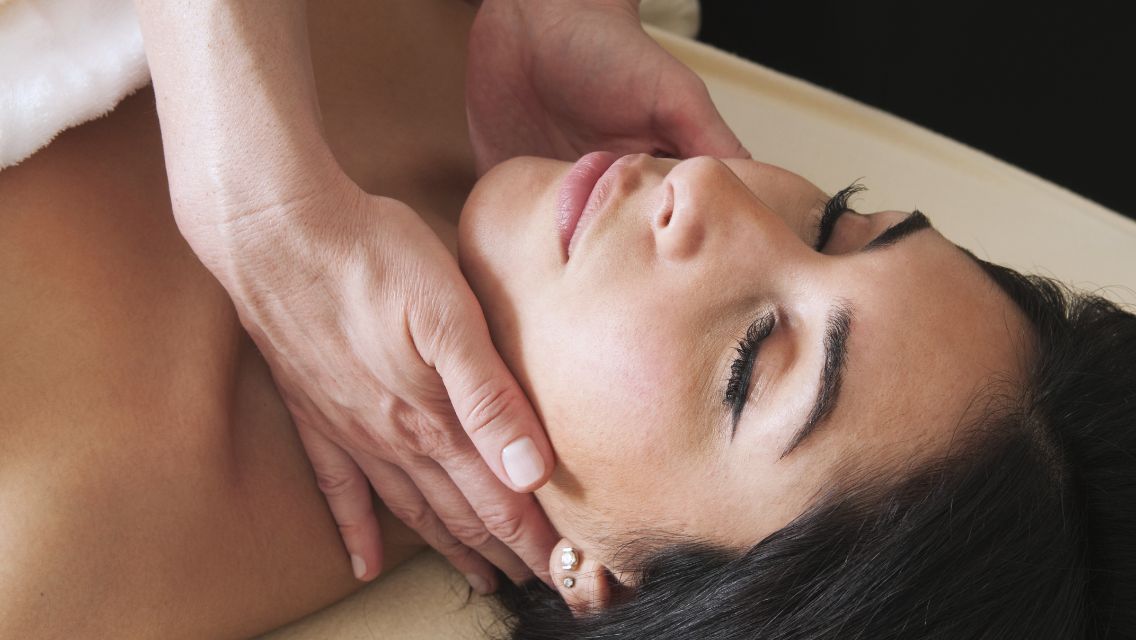
Shoemaker also notes how those 16 minutes under the professional-grade red-light therapy dome can be an extra moment of relaxation for her guests. “While my clients are getting the amazing benefits of red-light therapy, I can also give them a scalp massage or an arm and hand massage,” she says.
In-Spa Red-Light Therapy for the Whole Body
The benefits of red-light therapy extend beyond the face, too. For example, those dealing with back or chest acne may see visibly reduced breakouts and healthier-looking skin over time when they regularly expose those areas to red-light therapy.
But it’s the non-aesthetic advantages that can make the biggest difference. “One of the most important aspects of red-light therapy is that it helps to reduce inflammation signaling tissues, which can have a dramatic impact on overall health,” says Jim LaValle, RPh, CCN, chief science officer for Life Time. “Unhealthy levels of inflammation can damage our tissues, arteries, brain, and more, and accelerate aging in the body.” (Learn more: “Inflammation and Aging: the Hidden Connection.”)
Red-light saunas, like the RedZone Sauna (available at select LifeSpas across North America), are becoming more widely available, making red-light therapy for the entire body a more accessible option. These saunas combine infrared heat and red-light therapy through light panels that focus on the face, chest, head, back, and legs as you sit in the machine. Designed to deliver restorative benefits in a single, time-efficient session, these treatments support overall well-being while creating a deeply relaxing reset for both body and mind.
Other benefits include the following:
Boosted metabolism: “Red light therapy supports the body’s natural metabolic processes by helping improve mitochondrial function, circulation, and inflammation levels,” says LaValle. “All of these are connected to metabolism. Some research suggests it may also help fat cells release stored lipids, but those fats still need to be used by the body through movement, exercise, and a healthy diet. Red-light therapy is a supportive tool for body composition, not a replacement for nutrition, exercise, or lifestyle habits.”
Supported recovery from exercise: “Exercise creates stress in the muscles, and while that stress is normal, it can lead to soreness, inflammation, and temporary muscle damage,” LaValle explains. “Red-light therapy supports recovery by helping cells produce energy more efficiently, improving blood flow, reducing inflammation, and supporting tissue repair. This can help the body recover from workouts, reduce soreness, and prepare the muscles for the next session. In simple terms, red-light therapy helps create a better healing environment after exercise.”
Pain management: “Red light therapy may help with pain by addressing some of the underlying factors that contribute to pain, such as inflammation, poor circulation, oxidative stress, and irritated tissue,” says LaValle. “It does not work like a painkiller that simply blocks pain. Instead, it may help the body calm inflammation, improve blood flow, and support the repair of muscles, joints, tendons, and nerves. That’s why many people use red light-therapy as a supportive tool for soreness, joint discomfort, muscle aches, and recovery-related pain.”
Improved cognitive function and mood: “Red-light therapy may help calm overactive inflammatory signals in the nervous system,” says LaValle. “This creates a better environment for brain cells, nerve function, mood, and overall neurological health.”
To reap the benefits of whole-body red-light therapy, LaValle recommends two to four 10- to 15-minute sessions per week.
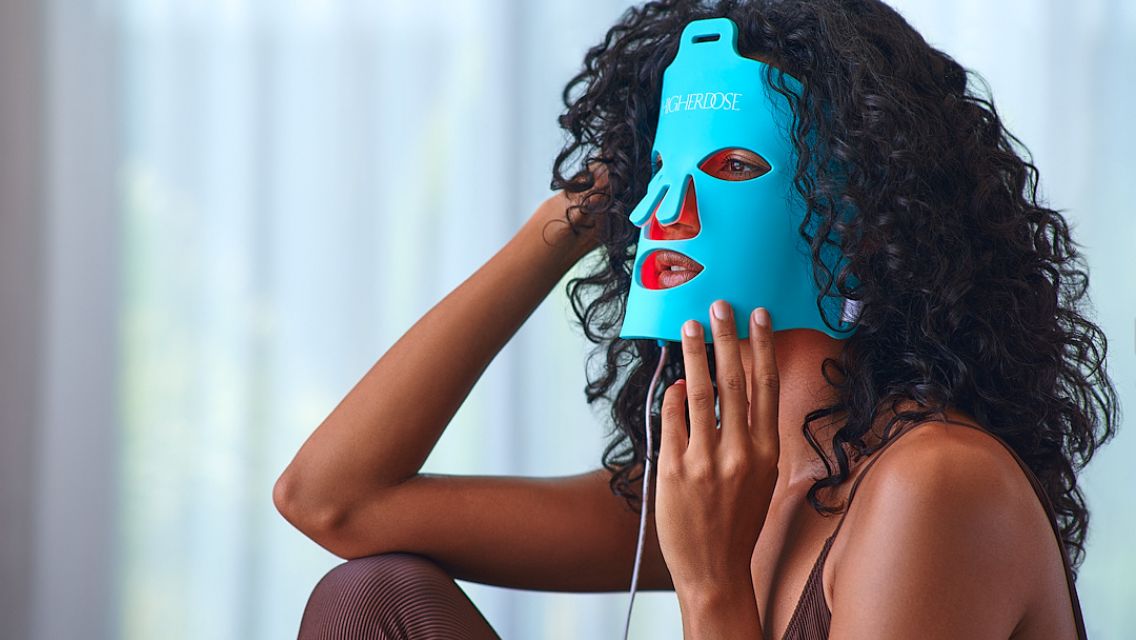
Photo by HigherDOSE
At-Home Red Light Therapy for the Face
For the benefits of red-light therapy at home, Shoemaker is a fan of the HigherDOSE Red Light Face Mask, which has a combination of red (630nm) and near infrared (830nm) wavelengths. The red-light wavelength helps reduce fine lines, wrinkles, and inflammation, and improve skin disorders such as hyperpigmentation and rosacea.
The near-infrared wavelengths can help boost mood by increasing feel-good endorphins and amplifying the physical benefits of red light. “Together, they are a powerful duo,” Berlingeri says.
“Once my clients experience an in-spa red-light therapy session, they are often enticed to continue further use of it in the privacy of their own homes,” Shoemaker says. “With at-home red-light therapy treatments, proper home-care products, and monthly skin-care treatments, clients are getting the skin they’ve always wanted.”
To enjoy the full benefits, Berlingeri recommends using the HigherDOSE Red Light Face Mask daily. “We designed our mask to deliver two timed sessions of 10 and 20 minutes,” she explains. “Red light is a micro-stressor, like exercise. Daily sessions can recharge our skin, replenishing the light energy that’s lacking in modern indoor lifestyles — without negative side effects or damaging UV.”
Before using the mask daily, work up to that cadence by first starting for 10 minutes, three to five times a week. “Ten minutes is the minimum length of time needed to see optimal results,” Berlingeri says. “Work up to next doing 20-minute sessions four to five times a week and then go to daily use.”
Berlingeri suggests proceeding at the rate that feels best for you. “Just like training in a gym, it’s important to start this type of therapy slowly and build a routine with care,” she says.
Berlingeri adds that you don’t just look better from red-light therapy because you covered something up, as is often the case with other skin solutions. “You’re glowing because you ignited healing from the inside out,” she says. “A red-light therapy device is likely to cost more than your favorite moisturizer, but its effects can last for years to come.”