


What Every Woman Needs to Know to Protect Her Brain Health
Learn why Alzheimer’s disease disproportionately affects women, how brain changes can begin as early as our 30s and 40s, and why lifestyle choices can play a powerful role in prevention.



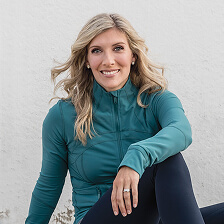


Women make up a staggering two-thirds of all Alzheimer’s disease cases, yet the conversation and research around aging and brain health often leaves them out. In this episode, Louisa Nicola, MMed, PhD, breaks down why this disease disproportionately affects women and reveals that the underlying cognitive changes can actually begin decades before a diagnosis, often starting in our 30s and 40s.
Rather than viewing cognitive decline as a foregone conclusion, though, Nicola explains that up to 95 percent of cases are heavily influenced by lifestyle rather than strictly genetics, meaning the opportunity for prevention is in your hands. She explains how to make sensible daily adjustments to support your long-term brain health.
Louisa Nicola, MMed, PhD, is a clinical neurophysiologist who’s on a mission to end Alzheimer’s disease.
In this episode, Nicola speaks about women’s brain health, sharing the reasons cognitive decline commonly occurs and the steps for preventing it, along with conditions similar to Alzheimer’s. Insights include the following:
- Women make up two-thirds of all Alzheimer’s disease cases. While it’s typically diagnosed around age 70, the disease can take some 30 years to progress. The buildup of proteins in your brain often begins when you’re in your 30s and 40s, making early intervention and prevention key.
- When you’re stressed, your brain interprets that as being “under attack” and releases amyloid proteins to act as a protective shield. Over time, this buildup can become harmful if it’s not cleared away.
- Getting into deep, slow-wave sleep activates the glymphatic system. This process acts like a washing machine for the brain, clearing out the amyloid proteins that accumulate during the day.
- Estrogen helps transport glucose into your brain cells for energy. When estrogen levels drop during perimenopause and menopause, the brain can lose about 30 percent of its energy.
- Flawed research from the Women’s Health Initiative study wrongly concluded estrogen causes cancer, steering females away from hormone replacement therapies. It’s now recognized that hormone therapy — when used appropriately — can protect against breast cancer, dementia, osteoporosis, and heart disease.
- Men carry high levels of testosterone, which naturally breaks down into estrogen. Because they do not experience a stage of rapid hormone drop like menopause, their brains are more protected as they age.
- Most Alzheimer’s cases are preventable. Only 5 percent of cases are strictly driven by genetics. The other 95 percent are heavily influenced by factors like sleep, exercise, nutrition, and stress management.
- Exercise encourages the release of brain-derived neurotrophic factor (BDNF). This acts like fertilizer for your brain, crossing the blood-brain barrier to grow the hippocampus and preserve memory.
- Resistance training does more than build muscle: When you contract your muscles, they release proteins called myokines that travel to the brain to improve executive function and reduce depressive symptoms.
- A Mediterranean diet is often encouraged to help preserve brain function. Eating a diet rich in fish, vegetables, nuts, seeds, and olive oil can be effective for brain health. Keeping key cholesterol makers like apolipoprotein B (ApoB) and LDL low can also offer protection.
- Omega-3 fatty acids help feed the fat structures of your brain. Creatine helps boost cellular energy and protect against inflammation.
- Women can take charge of their future by asking their doctors for precise blood work and advocating for their own brain health.
Transcript: What Every Woman Needs to Know to Protect Her Brain Health
Louisa Nicola
Okay, we’re gonna get into it. I’m gonna tell you what we’re gonna talk about tonight. We are going to talk about a disease that will affect 150 million people worldwide by the year 2050. A disease that is robbing 60 million people currently of their minds, of their lives, of their brains. A disease that is made up of two thirds women.
Two thirds of all Alzheimer’s disease cases are female.
When I was, I’m a neurophysiologist and when I was working, it was about 12 years ago in a hospital setting in neurology, I was tasked with the mission to scan the brains of cognitive impairment patients. Neurophysiologists use these funny things called electroencephalograms. Usually you’re seeing neurophysiologists when you maybe you’ve had a seizure, you go and see a neurophysiologist. I just got tasked with scanning the brains of the elderly.
And it was quite alarming. Four or five times a day, I would see a patient and declare them, have mild cognitive impairment, which is a pre-dementia state. We’re going back 12 years from now, 12 years ago. Whenever I would ask my attending, my superior, why are we getting so many, like, what are we supposed to tell these people? He would reply, just get on with it. There is no cure.
So. I didn’t know what to do with myself. was scanning these brains, mild cognitive impairment. Nobody came with a normal functioning brain.
But it turned out there was one patient who changed my life in the course of my life. And she was 52 years old. We’ll call her Mary. She kept coming to us with complaints of memory decline. I don’t feel like myself anymore. I’m forgetting little things like why I walked into the room. I’m agitated. I’m starting to hate my husband. And she didn’t have the answers, and neither did I. And neither did anybody in my department.
Over two years, she kept coming to us, and I still didn’t have the answers, and I saw a rapid decline in her cognitive states. At the end of those 24 months, she came to me, and while I welcomed her in, she said, who are you? She had completely lost all sight of who she was, who I was, who her husband was, and her three kids. And that’s when I decided to quit clinical practice at that time, and I moved to New York to study this disease.
And at that time, we were led to believe, as women, that we made up two-thirds of Alzheimer’s disease cases because we lived longer. Just because we lived longer. And yes, we live on average around 4.5 years longer than men, but we spend the last 20 years of our lives in decay.
So it’s not just about us living longer. There is more to the piece of the puzzle. We represent 51% of the population. There is currently 90 million women over the age of 40 in the United States. We make up 80% of all household health care decisions and financial decisions. And yet, less than 1% of academic funding goes towards female research. Less than 1% and less than 2 % of funding from VC venture capital firms goes towards funding companies for female products.
So then it becomes political. Women in healthcare is political, and it has to be because we have to have policies in place. But a woman in need becomes apolitical. I can’t merely talk to you about Alzheimer’s disease without taking you back to the very start.
In 1901, 1901, stay with me for a moment. By the way, congratulations to the men who have come here. You’re really brave. There’s one and my videographer and you’re very brave. In 1901, a woman by the name Auguste Deter, in Frankfurt presented to the emergency room with complaints of disorientation. She forgot where she was, she forgot her keys, she started to forget her husband. Her husband was quite scared at the time too. They went to the emergency room and she was met with a wonderful man, a 37-year-old neurologist. He was a psychiatrist and neuropathologist by the name of Aloise Alzheimer and he was assigned her case. Nobody wanted to take her on because they believed that she had delirium.
People believed that she was delirious and she was diagnosed with senile dementia. They just wanted to get rid of her. No one was listening to her and she was crying. She was saying, do you not understand me? I don’t know who I am. I don’t know where I am. She couldn’t make sense of what was happening in her brain and she was dismissed. Four years later, she died. Upon investigation, Aloise Alzheimer looked into her brain.
It was dedicated to research. He looked into her brain and he found something remarkable that they’ve never seen before on autopsy. He found that this brain possessed amyloid beta and tau protein. And these two proteins remain the hallmarks of Alzheimer’s disease today. So Alzheimer’s disease was first found in 1901.
Then let’s move on to what is happening today. But first of all, let me just give you a brief introduction because I hear so many people say the word dementia. My grandmother died of dementia, so and so, but it turns out that you don’t die from dementia. You don’t die from Alzheimer’s disease. Dementia actually comes from the word demented and it represents a decline in your cognitive performance.
So dementia is the umbrella term that is used to describe a demented or altered mental state. Parkinson’s disease or Parkinson’s dementia is a form of dementia. Frontotemporal dementia is a form of dementia. Frontotemporal dementia is what Bruce Willis has. We’ve got vascular dementia, dementia with Lewy bodies, and there we’ve got Alzheimer’s disease. And Alzheimer’s disease is the most common cause of dementia, right?
So Alzheimer’s disease is a progressive neurodegenerative disease. And we think about it as a disease of old age because you are generally diagnosed at age 70. But guess what? The disease takes 30 years to progress and it starts in your 30s.
And it starts by the accumulation and buildup of amyloid beta and tau protein. And we used to demonize amyloid beta as this toxic protein that’s killing us. But it turns out that amyloid beta is not a toxic protein that’s killing us. It’s not. It’s an antimicrobial peptide.
Who follows me on Instagram here? On social media, yeah. Yesterday I posted something that became out of hand. It got around 1,500 comments because it was political. But it didn’t have to be political. I stated that an antiviral vaccine or the Herpes vaccine, if we want to call it, has been shown to lower the risk of dementia. And I got flooded with hate messages. How dare you? You’re promoting vaccines. Vaccines have lead in them. I don’t promote anything. And I don’t believe in politics when I think about women’s brains in health care. I’m just presenting the data. But you have to understand, if a vaccine is used to prevent and it’s used as an antimicrobial agent and we’re trying to get rid of amyloid, wouldn’t it suggest that, okay, great, that can probably down-regulate the amount of amyloid in the brain. That’s why it has an effect on dementia. When you are stressed, ladies, when you are stressed, which is probably all day, I get it, all right, when you are stressed, your brain thinks you’re under attack.
So it starts to release cortisol and inflammation and so your brain is like hang on we’re under attack let’s release amyloid. We start to release amyloid why? Because amyloid think of amyloid as a shield so amyloid rises in the brain it comes out of the cell and it’s there to shield the brain cell like this against harmful effects.
But then what happens is if we don’t sleep at night during deep sleep, we don’t clear the brain of amyloid. So here you are, you’ve got a stressed out female in her prime at work. Maybe she’s made partner. She’s got a spouse. She’s got kids. She’s at the mercy of estrogen decline. She raises the amyloid in her brain. She can’t sleep. Maybe she’s got kids at night. And there we have it. There’s another piece to the puzzle.
That’s what Alzheimer’s disease is, is it accumulates and it compounds over time. That’s why it starts in your 30s. You don’t see Alzheimer’s disease in your 30s. No, it starts to occur in your 40s.
Just by show of hands, has anyone walked into a room and thought, why am I here? Has anyone forgotten someone’s name? And they’re like, that guy, yeah. My good friend, Vonda Wright, she claims that she was in the OR at 47. She’s a surgeon. She said, where’s that thingy? What’s that thingy called instead of asking for the scalpel? Okay, so it shows up in ways that you don’t know. It shows up in agitation. It shows up in memory decline. It shows up in so many different ways. we, women, which is what we’ve been led to believe, we just brush it off to stress. We don’t brush it off to, could this be a lapse in hormones, possibly.
So now that we know that 1901, let’s stick to that 1906 Auguste Deter died. Nothing happened. Aloise Alzheimer died at 1915. They preserved Augusta’s all of her brain slides and all of the journal entries. And it’s currently in Munich, I think. Munich? Munich. Then nothing progresses. Nothing progresses then. This is when we get political.
- The Women’s Health Initiative. It was this large study that sought out to go and study the effects of estrogen and progesterone, which are our primary hormones as women. We have estrogen, we have progesterone, the estrogen is released from our ovaries, and we used to think of estrogen as a reproductive hormone, right? So this group of women, this group of researchers decided, let’s study estrogen’s effects on cardiovascular disease, breast cancer and other forms of disease. And so they did. And so what they did was they gave women who were post-menopausal, aged 63, a decade after menopause, the average age on cent of menopause is 52.
So they gave women conjugated estrogen, which is synthetic estrogen derived from the urine of horses, right? Synthetic hormones to these women and synthetic progesterone to study their effects. And it turns out that they saw a mild increase in breast cancer and cardiovascular disease. When I say mild, and you can correct me with the statistics, one in 10,000, is that correct? One in 10,000, which is a very small value, by the way, one in 10,000, and what happened? They stopped immediately. They stopped the funding, they stopped the research, and then the headlines read, estrogen causes breast cancer.
And to that day in 2001, we went from an entire nation, 40% of women, taking menopause hormone therapy to less than 4%. And that there was the decline in my, this is what I believe, it was the most flawed study in academia to date. And that was where women were robbed. Millions of women over the last 25 years have been robbed of hormones in fear of getting breast cancer. And it turns out that the study has been retracted. It was flawed and estrogen does not cause cancer. It’s actually protective against breast cancer. It’s protective against dementia, Alzheimer’s disease. It is protective against osteoporosis and cardiovascular disease. So no wonder we have two-thirds of women being diagnosed with Alzheimer’s disease because a group of researchers are to blame for that. So here we are.
What is the answer? I hope, by the way, at the end of this talk, you all walk away as ambassadors, ambassadors of your brain, ambassadors of your health, and ambassadors of women worldwide, because it has to stop here. It is my mission to end Alzheimer’s disease one brain at a time, and I’ve chosen to focus narrowly on women just to make matters worse. Let’s talk about estrogen for a moment.
Estrogen actually lives, we have estrogen receptors in your brain. You can imagine estrogen is the hormone, a receptor is a lock, right? It’s like a key in a lock. And once the hormone is in the lock, in the estrogen receptors, that means the receptor opens the door and things can go into the cell, right?
During our perimenopause stage, which is around, it starts in your 40s, right? Everybody’s different. Let’s say 43, 44, maybe 45. We start to see a decline in estrogen and progesterone. And then there’s a sharp decline until it ends at age 52 or whatever you’re going to get estrogen. When we start to lose estrogen, take away the estrogen receptors have nothing to lock to.
We see a decline in brain energy metabolism. Your brain lives on glucose. And estrogen helps the transport of glucose into the cells. So if there’s no estrogen to support the transport, your cells in your brain become starved. And that’s why you get, what is it? Brain fog.
But instead of thinking about estrogen, most of us reach for caffeine, maybe water, maybe you think it’s sleep or it’s stress, it’s not. It’s just the fact that you now have 30% less energy in your brain because of the loss of estrogen. And there’s a wonderful, wonderful woman by the name of Dr. Roberta Brinton who I look up to and study and she’s at the University of Arizona and she coined this term, which I’m going to gladly steal from her.
During perimenopause, the brain literally eats itself. Your brain starts to eat itself, because it’s starved of glucose and it looks around. Your brain starts to look around and it says, where can I get my energy from? And in order to produce its own ketones, it starts to eat itself. And when it starts to eat itself, that’s when we get the decline and collapse of our neuron network, and that’s what the brain fog is. So that’s one thing that estrogen does.
It helps with glucose metabolism. We have estrogen receptors on our bone, and this is why when we cannot stimulate our bone, when you don’t have enough energy to go to the gym, and you don’t have enough energy to create new bone, it’s called osteoblasts, the cells in your actual bone. What do we end up with? Osteoporosis.
My mother is 70 years old and she was never spoken about estrogen therapy. Never. She went through menopause. Never spoken about estrogen therapy. Long behold, here we are at 70. We did a DXA scan on her. She received a T score of minus 2.5, putting her in osteoporosis.
A woman who breaks her leg in menopause has a 30 % . . . breaks her femur, this bone here, large bone by the way, not uncommon. If you break your femur, you have a 30% chance of dying and a 50% chance of never returning home.
Estrogen, we have estrogen receptors on the muscles of our heart. It helps our muscles and the blood vessels dilate so we can get more blood flowing to the brain, to the heart, to the working muscles. Estrogen, in my opinion, in my 20s I was chasing peak performance, human performance, little did I know now in my mid-30s that the true and ultimate human performance of a woman is hormone replacement therapy.
I’m not an OBGYN. I don’t work for a pharmaceutical company. I never have. I don’t get funded. I’m not here to tell you to take it. But I know for damn sure that I’ll be taking it in my 40s. Then there’s also testosterone, which I think is the missing point to this trifecta.
Women have a lot of testosterone, and I think testosterone needs to be spoken about because it does help with Alzheimer’s disease. these hormones, progesterone, estrogen, testosterone, are neuroprotective. And if there are three things that are absolute certainties, ladies, three certainties that we all have are death, taxes, and menopause.
Here’s where it gets a bit tricky. Right now, we have, actually let’s date it back. don’t know, I think it was 1985. Correct me if I’m wrong on the date. 1985, was, the FDA almost declared a national emergency because one man couldn’t get an erection.
It was a national medical emergency. Within six months, the FDA fast-tracked the approval of Viagra, Sildenafil, Viagra. Within six months. Fast forward to 2025, now have 20, men have 29 FDA approved drugs for erectile dysfunction. 29, can you imagine what the men were thinking in the boardroom? Ah, it’s a national emergency, these men can’t have sex, let’s fast track this, need, and we don’t just want one.
We want the men to have a whole suite of drugs available to them so they can just get up and take any drug just to make sure that they are sexually fulfilled. Women, women have the same problems, sexual dysfunction during the menopause stage. We have two FDA approved products for women. Not just that, we also, it also took seven years for them to get approved. And they were discontinued and rejected almost 15 times before their approval. This is why I said to the men, like, this is why it’s a women’s event. Hello.
So let’s now move on and talk about what we can do for Alzheimer’s disease because no matter what, no matter if your mother had it, your father had it, we all have actually the same rate of getting it. Who here thinks that Alzheimer’s disease is a genetic disease?
Yeah, kind of, maybe, sort of. Right, okay. Let me give you some stats. 95% of all Alzheimer’s disease cases today are preventable, could have been prevented. 5% of the diseases were driven through genetics. Only 5%…
So why is the other 95% getting Alzheimer’s disease if only 5% was driven through genetics? What’s the other 95%? Why are we getting it? One is because of the protective role of estrogen. We stripped that away from women. We’ve told them they’re not good enough. We’re not going to give women funding for academic research. Women don’t need to be funded over the age of 40. What are they good for over the age of 40, really? We don’t need that. So what do we know?
Well, we know that lifestyle drivers, sleep, exercise, nutrition, these, and stress, and the quality of your close relationships, by the way, are drivers of this disease. So that means that you don’t have to be at the mercy of this disease. You can take an agency over your brain so you don’t get the disease and so you don’t succumb to it. I was on the phone to, I was in LA quite recently and I was on the phone to a friend and we talking about Alzheimer’s disease, she didn’t really know what it was and she said, is it like cancer of the brain? And I thought, yeah, it kind of is.
And I don’t want to take away from actual brain cancer research and glioblastomas, but yeah, because getting diagnosed with Alzheimer’s disease is comparable to end stage cancer, but we don’t see it that way because a glioblastoma is going to kill you within one to five years, but Alzheimer’s disease, that’s a slow progression, right? But I want you to do something now. We’re going to do a task together. I want everyone to close their eyes. Every single person, just for a moment, close your eyes.
I want you to imagine the finest memories that you have from childhood. Take yourself back to age six and seven when life was so beautiful. You were hanging with mum and dad and your brothers and you were going on holidays. Imagine the first ever family trip you took, how fun it was. Then let’s get a bit older. Let’s think about when you graduated high school. Maybe you went on to college or your first job.
Imagine your first kiss. Imagine the first time you met the love of your life. All of these experiences. The experiences that you’ve had with your mum, with your dad, with your sister. Now imagine the life that you’ve led. All, like you’ve gone to college, you’ve gotten your first job, you’ve had a child. Imagine all of this.
Now open your eyes and imagine all of those being stripped away from you. Nothing. Nobody talks about losing your identity from Alzheimer’s disease. just talk about cancer. We just talk about cardiovascular disease.
Cardiovascular disease is the number one killer, yes, but dementia is the number one killer of women in the UK and the third leading cause of death in the UK, like, amongst both men and women. We don’t talk about it because we don’t think about the fact that we lose who we are. Isn’t the sole purpose of, know, if you want to go spiritual for a moment, isn’t the sole purpose of why we’re on this earth is to know thyself? Why? To have it stripped away from us at the age of 60?
It’s just not fair. And when you know so much, and I’ve been studying this disease clinically with patients and academically.
When I’m not in a hospital, I’m actually deep in the weeds of academic research. I first authored many papers to do with this. So I’m really deep into this, and I’m really mad. And that’s why I’m here, to teach you to not get this disease and to really start to love your brain. Because when you love your brain, it’ll love you back. So what are the things that we can do to prevent this disease? This here, let’s take Henrietta.
This is your brain, it’s two pounds. It represents, it ingests 20% of the total calories that you have. I love all the phones going up right now, it’s not a real brain, trust me. It’s not, everyone’s like, my God, did she get that from that? It’s the most vascular rich organ in the entire body. What does that mean?
That means it houses out of every organ in the body, this houses the most amount of blood vessels. We’ve got three types. We’ve got arteries, veins, and capillaries or capillaries. And capillaries are one cell thick, right?
The reason why it’s got so much vasculature is because it delivers blood flow. Every single neuron, we’ve got 87 billion neurons in the human brain, and each neuron has around 15,000 connections. Can you imagine that? 15,000 connections. And as we get older, those connections start to die off.
They just die off due to stress, brain aging process, physical inactivity, smoking, hypertension. They start to die off. And that’s actually what Alzheimer’s disease is. Because when these systems start to break down, maybe we get a cell that’s got 2,000 connections instead of 15,000. And those connections are responsible for everything we do, who we interact with, how we think, how we move, how we touch down to the person that you choose to be with can be the result of how your brain is functioning at the time.
There was a recent statistic that came out in the last six months that said the number one, 89% of divorces happen due to menopause. Did anybody see that? The headlines, it was phenomenal, right? Because your brain changes during that stage. And as you see the decline and the collapse of these, of this network, we see the decline of your brain. Now the way I want you to think about brain health is this. We’ve got supply and demand. Just like in business, we need to have enough supply to keep up with the demand, but right now we’ve got too much demand, not enough supply.
So when your brain signals there’s too much demand — text messages, work, kids, husband, trying to look good, this new episode of the Kardashians, too much demand happening, not enough supply. Your brain says it’s down to, it’s time to down-regulate right now. Your brain says you don’t have enough supply, just like in business. You go bankrupt, your brain starts to go bankrupt, and it starts to recluse. That’s where lifestyle becomes so important.
I have been, I’ve had literal arguments with my parents around exercise. Exercise, exercise. We hear about it, yet 80% of the U.S. population is inactive. 80% of the U.S. population are not exercising. Why is that? Are they lazy?
We don’t know what it is. Maybe it’s just lack of education, but let’s start there. Exercise. What does it do? It’s not there to make us look good, It is there to build muscle and to build bone. That’s what we need. And it’s divided into three aspects. We’ve got aerobic or VO2 max, which we’ll get to. We’ve got resistance training exercise. And then we’ve got this other field I coined neuro-athletics.
And we’ll get that. That’s your hand-eye coordination exercise. Who here exercises more than five hours a week? Wow. You’ve got a lot of time on your hands. I love that. I’m kidding. I’m kidding. OK, great. Who is lifting heavy weights? Good. I love it. I love it. My friends didn’t put their hands up. See what I mean? The closest people to me don’t listen to me.
Why do we need to be exercising? Let’s talk about cardiovascular exercise or aerobic exercise, right? That’s when you’re doing your long runs. And it’s really good for the heart. It grows the chambers in your heart. Actually, there was a phenomenal study by a sports cardiologist. His name was Ben Levine. This one’s going to blow your mind. Ben Levine, what he did was he took a group of 50-year-olds and he 3D modeled their heart. He looked at their heart. He took photos. He did CT scans. Image of their heart. He subjected them to two years of vigorous intensity exercise. Exercise that gets you to that death zone really, where you’re really, you when you’re on the Stairmaster, you’re on maybe level 12 and you feel like you’re going to die. He got them to do two years of that four days a week.
And guess what happened? After two years, he looked at their heart again and he saw that the age-related decline in the heart had not just disappeared but had been reversed by 20 years. So he took a 50-year-old heart and made it look 20 years old. 30 years old. All these numbers. So why does that happen?
Because as we age, especially at the age of 40, your heart undergoes many chambers. You’re all going to go through it, will too. First of all, we get stiffening of the arteries. We have this huge artery that comes out of the heart, it’s called the aorta. The aorta actually connects to the vertebral arteries and the carotid arteries, and that’s our main blood supply to the brain. These start to become stiff. What happens when they become stiff? They’re like tubes. That means that blood can’t flow through them smoothly.
So what happens then, if we don’t get enough blood to the brain, what happens? Well, brain cells start to die because if you are not feeding the brain cells, if you are not feeding your cells with blood because blood delivers oxygen and nutrients, what happens? They die. The second thing that also happens is those little capillaries that are one cell thick during hypertension, which is elevated blood pressure, which really is anything over 120, over 80.
The small capillaries start to die. They’re the first things to go. They die, they die, they die. And you start to get a decline in the brain. So exercise helps pump blood to the body. It helps vascular compliance, which is the flexibility of your blood vessels. Women have an increased risk. A three-fold increased risk of having a heart-related event at the onset of menopause. Why? Well, estrogen helps keep your blood vessels really nice and flexible. So if we’ve got no estrogen, then they become stiff. Likely with progesterone as well. Progesterone’s that calming hormone that helps us feel calm at night. So exercising at least 20 minutes a day, or if you want to call it 150 minutes a week, of aerobic slash VO2 max hard out work is actually not just good for you, but it will save your life.
Exercise is medicine. And if you do it correctly, it will give you a life that you had never dreamed of. One thing happens during aerobic training. We get the release of this hormone called BDNF. It stands for brain-derived neurotropic factor. And basically what this is, is it’s fertilizer for the brain doing a hemorrhoidectomy right now.
So you’ve got two hemispheres of the brain. And deep within the brain here, they’re called the temporal lobes. They sit right behind the ears and they’re involved in your auditory processing. But deep in there, these little is this little seahorse shaped structure called the hippocampus. That holds your memories. It’s the first thing to go and memory consolidation and formation is the first thing to go during Alzheimer’s disease. Starts to shrink.
But BDNF, when you’re exercising, BDNF not just goes into the bloodstream, it crosses the blood-brain barrier, it goes into the cells of the hippocampus and it grows them. You can grow the hippocampus and the regions around the hippocampus by 20% just from exercise. So you can preserve your cognitive functions.
Then we’ve got resistance training, which is my favorite of all of them. It’s the hardest, it’s the most annoying. And it turns out it requires a lot of attention, right? But when you exercise, my friend here has got her weights here. I love that she’s brought her weights with her. Did you walk up fifth with that? You did? And no one thought you were next. New York. She’s got her dumbbell here. We need to strength train. Not just for growing muscles, even though growing muscles is going to be so good for you as we age, because muscle is an endocrine organ, meaning that it secretes a lot of hormones and it talks to the rest of our body.
It’s a massive glucose sink. So ladies, we can eat more, really, that’s what it is. It can store more glucose. We’re at the mercy of type 2 diabetes and insulin resistance during perimenopause, so it can help with that. But it’s not just about that, it’s about what are we doing during resistance training?
And it turns out that when we resistance train, we release, it can only be released during resistance training by the way, we release these little chemicals in the cells of our muscles when we contract our muscle. We release these cells called myokines, muscle-based proteins. When they’re released, they go into the brain and they help with executive functioning at the front of your brain. They help with hand-eye coordination. They help down-regulate depression.
Did you know that when a woman goes to her doctor complaining of memory decline, depressive-like symptoms, fogginess, instead of being spoken to about estrogen therapy, she’s prescribed an SSRI? An antidepressant, just like Auguste Deter? Exercise can help combat that.
Let’s move on to the next form of protection, which is sleep. Sleep is the holy grail for the brain for women. Right? And I know, whenever I talk about sleep on Instagram, get to get all these new mothers like throwing things at me saying, you don’t know what it’s like. I get it. I get it. I’m just telling you what the science says.
When we get into deep, slow wave sleep, which is stage three sleep, we activate this system in our brain. It’s called the glymphatic system. It only gets activated during sleep, in some forms when we exercise. When we activate the glymphatic system, guess what happens? These little cells in our brain called glial cells, which comes from the Greek word glue, by the way, they start to shrink. Right, it’s so beautiful. The brain is the most fascinating organ to me.
These brains still start to shrink, and that means the cerebral spinal fluid in your brain, all of that fluid that’s in your brain, washes the brain like a washing machine. And guess what it takes out with it? Amyloid. Amyloid probably doesn’t scare you, but I’ll tell you this. We now have, we have blood tests for the first time ever that can detect amyloid and tau and neurofilament light, these toxic proteins in your brain.
If every single, and I put a million dollars on this, if I scanned every single person’s brain, I don’t care how young you are, every single person’s brain in here, I would find amyloid in your brain. You all have it in your brain right now. We all do. Especially it’s late at night. Well, it’s quarter past seven, it’s almost my bedtime. We all have amyloid in our brain. You do have it. Maybe you’ll clear it out tonight, maybe you won’t. I don’t know. But sleep is the best way of clearing it out. So practicing good sleep hygiene is absolutely necessary for your brain, not just today, but when you are 80. For every good night of sleep that you have, your 80-year-old self will thank you. Turns out, though, that one night of sleep deprivation can actually raise the amount of amyloid in your brain, which is scary.
Let’s talk about nutrition. I hate this. I hate nutrition politics on Instagram. I’ll tell you what the data shows. It shows, and it’s not in my favor by the way, it shows that a plant-based or Mediterranean diet is the best diet for preserving brain function. There was a diet called, there’s a diet called the MIND diet. Mediterranean Interventional Dash Diet, which is pretty much a little bit of fish, you can have red meat sparingly, lots of vegetables, lots of nuts, lots of seeds, lots of fruits and olive oil. These are the best things for your brain. I’m just going to stop there on the nutrition aspect, because I love my red meat.
And nutrition really only pushes the needle forward slightly. I’m not telling you to go and eat whatever you want, but if you maintain low cholesterol levels, also controversial, but low LDL, low ApoB, you can really, really be on a good path forward. And by low, I mean we’re looking at an ApoB of below 60 and an LDL below 80.
I’ll get to the genetics part of Alzheimer’s disease in a moment because I skipped that. Let’s actually talk about that now. So 95% of all Alzheimer’s disease cases are preventable. 5% is made up of genetics. there are genetic mutations and there are genetic predispositions. So we’ve got, mutations are mistakes. If you think of Huntington’s disease, Huntington’s disease is a mutation on chromosome 4. If you’ve got it, if you’re born with it, you will get Huntington’s disease. We can’t help that, right? There’s only really three genetic mutations for dementia.
That means that if you’ve got these, it’s a foregone conclusion that you will get the disease. It’s presenilin 1, presenilin 2, an amyloid precursor protein. A genetic mutation in any of these three genes, mainly this is what happens with frontotemporal dementia, will mean that you’ll get the disease, unfortunately. But Alzheimer’s disease, it only has risk genes, meaning that if you have the gene, it just raises your risk of getting the disease. It doesn’t mean you’ll get the disease. This gene is called the apolipoprotein E gene. Has anyone been tested for this? Great. Mind sharing what you are?
You’re a 3-4. Okay. So you get one allele from mum, one allele from dad. You’re either going to get 2-2, or you’re never going to get a 2-2. You’re going to get a 2-3, 3-3, 4-4. If you’ve got the APOE4 gene, that is the increased risk factor of getting this disease. If you have one allele, like our beautiful friend here, it raises your risk by threefold. If you have two, a 4-4, which is around 5% of the population, it raises your risk 12 times. Raises your risk.
Part of Brain Code, Brain Code will actually be released on Tuesday. It’s decoding a woman’s risk of Alzheimer’s disease. You will get an actual printout of blood work and genetic tests to literally take to your doctor and say, give me these. Because when you go to your doctor and you ask for a standard blood test, they give you absolutely none of these. They don’t test for something called Lp little a, which is a genetic risk factor of cardiovascular disease. They do not check A per B for God knows what reason.
I don’t know, you have to beg your doctor. They’re not checking your genetics profile of APOE4. You have to be really on the ball to ask for an APOE4 gene. They’re doing none of this. They’re just doing basic blood work because they’re not there. The medical, and I’m not against them by the way, it’s not their fault, it’s an institutional problem and not trained for precision medicine to keep you thriving and alive and functioning at 90. They’re just there to basically say, you about to die in front of me? If not, then get out of my office, really.
So they’re not there to give you these blood tests, but you’ll get that as a printout on Tuesday if you join Brain Code. But what I’m trying to say is these are the ones I’m giving you them to them now. You want to check these in your blood work. You want to check, you can go to your doctor for this.
So the APOE4 gene, what does it mean? Here’s what’s really going to piss you guys off. A male at 45 years old and a female at 45 years old. One man, this man has, he’s an E3, E4. This woman is an E3, E4. Both same age. Everything else can be the same, everything else.
A woman at this stage has a 100% increased risk of getting Alzheimer’s disease over the male counterpart. Do you know why? Yes. Estrogen loss. But why doesn’t it speed up in men?
Because men have testosterone. Testosterone aromatizes, breaks down into estrogen. And men don’t go through their menopause, andropause, until, what is it, 70s? Maybe never. So men are just walking around like, I swear to God, the more I read, the more I think that men can run into oncoming traffic and get out alive. I look at a banana and I gain two kilos. So men have a protected mechanism. They have testosterone. They’re always protected as they get older. So we have to take agency.
I am literally here at my mercy for someone who is looking at the disease. I’ve seen the disease. I’ve seen the diagnosis of it. I’ve seen what it does. I’ve seen the progression of it. I’ve seen the halting of it. Okay? Through lifestyle interventions, there is no reversal. There is no cure. The FDA might think that they’ll give you a lie that there is a cure. There is something, we’ve got some IV medications right now, Aducanumab, Donanemab, Leqembi, these are monoclonal antibodies.
So basically you get Alzheimer’s disease, you’ve got this head full of amyloid, you go and get this drug which is a lot of money. I think every infusion is around 30 grand. They give it to you in the hopes of clearing amyloid and it does, but guess what it takes with it? Brain tissue and gives you micro hemorrhages. So bleeding of the brain and in some patients, death. So there is no cure. There is only halting and slowing the progression through lifestyle interventions. Last but not least, I’d be remiss if I didn’t talk about supplements.
You all know which one I’m going to talk about, If there’s two supplements that I could recommend that you all take, the first one is omega-3 fatty acids. They come from fatty fish. Your brain is made of water and fat. 70% is made of fat, but not the fat that comes from butter, right? Not the fat that comes from egg yolks. It’s made of DHA. DHA comes from fatty fish. So when you eat omega-3 fatty acids, you are literally feeding your brain. You want to stick to two grams of EPA and DHA per day. Then the holy grail of supplements, and the only one that’s widely studied, is creatine.
People think I work for big creatine. But I don’t. Creatine is phenomenal. It’s phenomenal for women at a dosage of around 10 grams a day because what it does is it helps with cell energy metabolism. It helps your brain have more energy. It also is neuroprotective. So it’s going to fight against the inflammation, fight against the harmful insults that are happening to us. Ladies, I’m going to just say the statistic one more time. 51% of the population. You know what that means? That means that you no longer have to ask for what you want. You can demand it. You can exercise your right to what you deserve. I’ll leave that with you.
You, I will tell you, you have the power to write your own history of your brain. As I look around the room, unfortunately, two-thirds of us will get Alzheimer’s disease and the other third will be a caregiver. So you have to ask yourself, is that going to be you? Because it doesn’t have to be.
Thank you for coming to Brain Code.
More like this
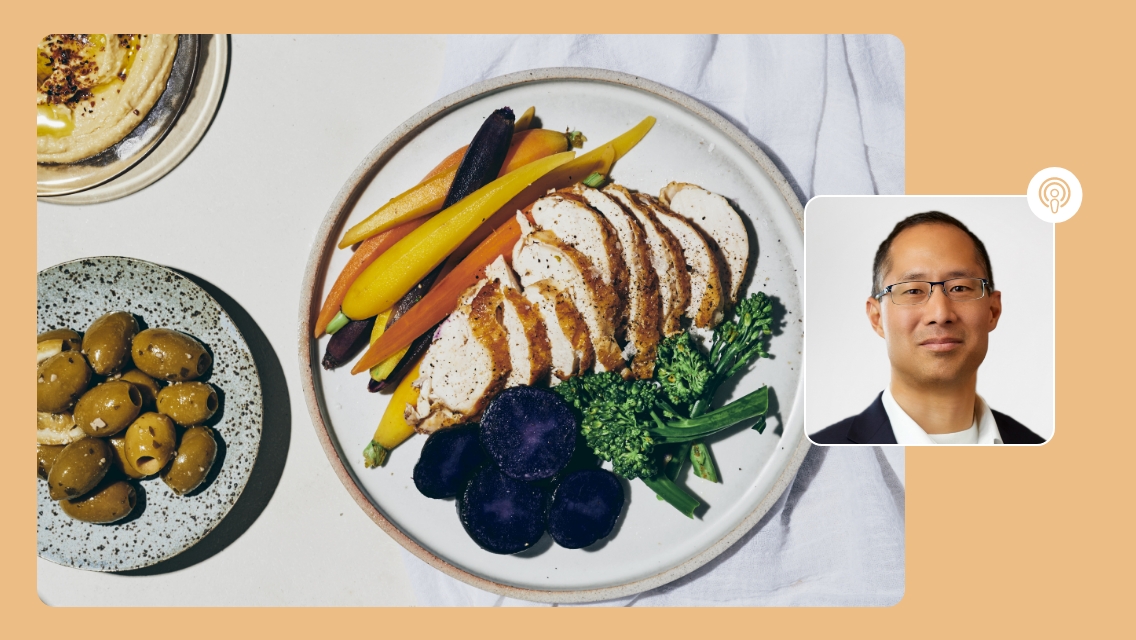
Talks — S7, EP3 / How to Keep Your Brain Healthy as You Age
Our brains age just like the rest of our bodies, and just like it’s important to care for our bodies so we can move functionally well for as long as possible, it’s also essential to do everything we can to maintain and support healthy brain function as the years pass by. With the current absence of effective treatment options for most neurological diseases, prevention really is the best treatment for them, and it’s never too early — or too late — to start. Edward Park, PhD, explains what to know about normal and abnormal brain aging, as well as the lifestyle strategies we have control over to support our brain health and help reduce the risk of decline and disease.



We’d Love to Hear From You
Have thoughts you’d like to share or topic ideas for future episodes? Email us at lttalks@lt.life.
The information in this podcast is intended to provide broad understanding and knowledge of healthcare topics. This information is for educational purposes only and should not be considered complete and should not be used in place of advice from your physician or healthcare provider. We recommend you consult your physician or healthcare professional before beginning or altering your personal exercise, diet or supplementation program.
Life Time provides administrative, non-clinical support to MIORA as well as services and amenities related to general wellness and fitness; Life Time does not provide medical advice, diagnosis, treatment or care.
Advertisement