


Move Better, Hurt Less: The Truth About Low-Back Pain With Dr. Reza Alizadeh
Learn what causes low-back pain as well as ways to prevent and treat it so you can be empowered to move and feel better.


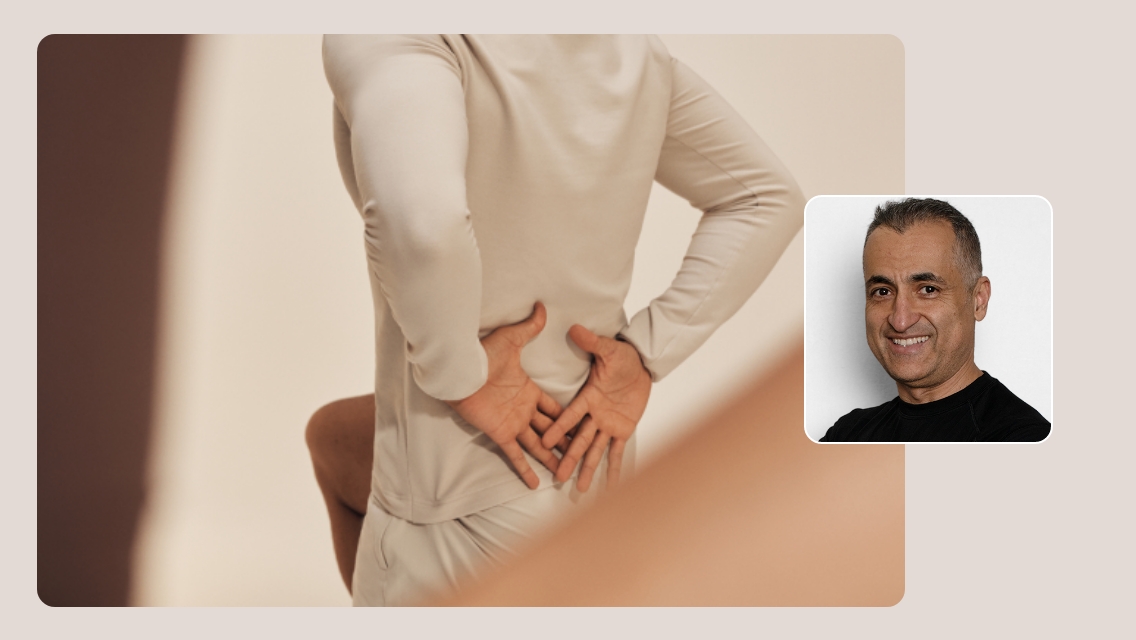
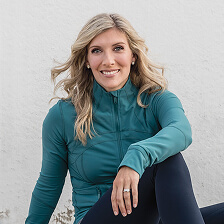

It’s estimated that 80 percent of adults will experience low-back pain at some point in their lives. For some, it’s a temporary concern; for others, it’s a chronic issue. For both, it can affect their day-to-day lives.
In this episode, Reza Alizadeh, DC, shares some encouraging news: Most of these issues are preventable or reversible. He breaks down the causes of low-back pain as well as ways to prevent and treat it, so you can be empowered to move and feel better.
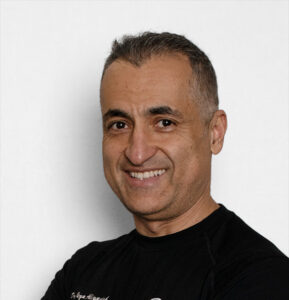
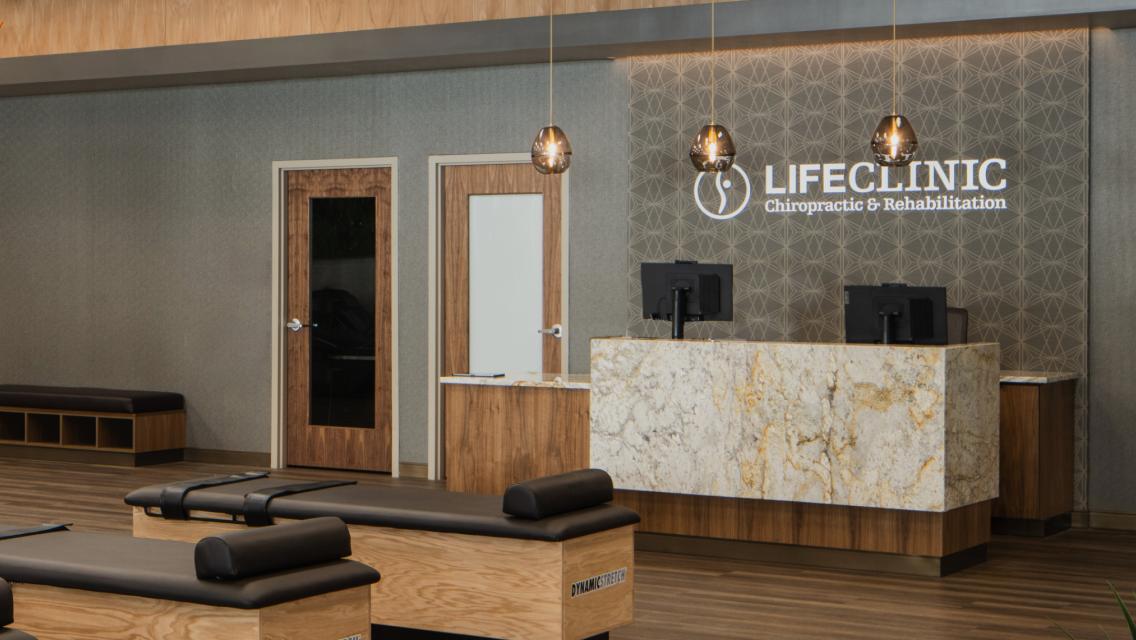
Reza Alizadeh is a doctor of chiropractic and the founder and CEO of LifeClinic Chiropractic and Rehabilitation, which is a nationwide network of clinics at Life Time dedicated to restoring, maintaining, and optimizing human function.
With more than 30 years of clinical experience, Dr. Alizadeh has helped thousands of patients overcome pain, move better, and live healthier lives. He is known for developing the IMJT (Integrated Muscle and Joint Therapy) technique, a patented technique used exclusively at LifeClinic that integrates chiropractic care, functional rehabilitation, and lifestyle medicine into one seamless system that empowers patients to take control of their health.
In this episode, Dr. Alizadeh shares how understanding the causes of low-back pain and treatment options can help you find relief and move and feel better. Insights include the following:
- An estimated 80 percent of adults will deal with low-back pain at some point in their lives. If you’re struggling with it, you’re far from alone, and there are solutions.
- For musculoskeletal pain, movement can play a central role. Dr. Alizadeh makes the point that the spine functions best when it stays mobile, and that movement can reduce the conditions that allow pain to persist.
- Modern sedentary living has stripped away the natural, multi-position movement our bodies crave. The result is stiffness and compensation patterns that can lead to pain over time.
- Hunching over phones and screens causes rolled shoulders and forward head posture. This can restrict blood flow and trigger tension headaches. Small posture corrections throughout the day can add up.
- In chronic pain, your psychology often plays a role. Dr. Alizadeh shares that after roughly six months of chronic pain, the brain’s primary pain center quiets down, while the amygdala (responsible for anxiety and worry) wakes up. If you treat only the physical body, you may be missing a piece of the puzzle.
- Pain is often a warning sign, not the diagnosis, as it may not always reflect the root cause, which is where the real fix lies.
- Roughly 40 percent of people experience an injury within six months of starting a new exercise routine. The common culprit? Movement compensations in the body. Compensations are hard to spot on your own, which is why it can be helpful to work with a professional who can identify them before they lead to injury.
- Alizadeh recommends including low-force movement and mobility work in your exercise routine.
- LifeClinic’s Integrated Muscle and Joint Therapy (IMJT) approach blends chiropractic care, functional rehabilitation, and lifestyle medicine to restore motion and address what’s actually driving your pain.
Transcript: Move Better, Hurt Less: The Truth About Low-Back Pain With Dr. Reza Alizadeh
David Freeman
Welcome back to another episode of Life Time Talks. I’m David Freeman.
Jamie Martin
And I’m Jamie Martin.
David Freeman
In today’s topic, we’re going to be talking about low back pain. Low back pain is one of the most common issues many people deal with today, and it’s estimated that 80% of adults will experience back pain at some point in their lives. For some, it’s a temporary concern, and for others, it’s a chronic issue. For both, it can affect their day-to-day lives. And we got a special guest with us today. Who we got?
Jamie Martin
Yeah, we have Dr. Reza Alizadeh with us today. He is a doctor of chiropractic and the founder and CEO of LifeClinic Chiropractic and Rehabilitation at Life Time. It’s a nationwide network of clinics dedicated to restoring, maintaining, and optimizing human function. With over 30 years of clinical experience, Dr. Reza has helped thousands of patients overcome pain, move better, and live healthier lives. He is known for developing the integrated muscle and joint therapy, also known as IMJT for short.
It’s a patented technique used exclusively at the LifeClinic that integrates chiropractic care, functional rehabilitation, and lifestyle medicine into one seamless system that empowers patients to take control of their health. And we like that when people feel empowered. Dr. Reza, thanks for being with us.
Dr. Reza Alizadeh
Thank you for having me.
David Freeman
Yes, welcome, welcome, welcome. So I kinda mentioned it in the intro, how prevalent low back pain is and how many people are probably being affected by it. How common within the practice of what you’ve seen over the years is lower back pain?
Dr. Reza Alizadeh
One of the most common areas. The reason behind it is it’s a complicated joint and it sits at the base of your pelvis where all movement is leveraged in that area. So any dysfunction, any stress, any malposition of those vertebra, or the musculature around it, or the nervous system around it will trigger a pain response.
Jamie Martin
Yeah. Well, why is this happening to so many people? What are some of the most common causes for this low back pain? I mean, to say that almost 80% of people will experience it in their lives, that’s huge, right?
Dr. Reza Alizadeh
Well, the culprit is what we’re doing right now. It’s a chair. The invention of the chair literally put us in a disadvantage of the low back. Because when we squat we have full flexion in our hips, knees, low back is supple. When we move around the floor, getting up from floor to stand, these are all motion that we don’t have anymore. We sit in our chair, we go home.
Jamie Martin
Too much sitting.
Dr. Reza Alizadeh
We sit at our table, we go sit in the car, and then we get excited to put in an hour of, like you know, working out and we think we’re heroes. But really it’s a lack of multiple position movement during every living life day that would put us in disadvantage. Just think about it. If you sit in a couch for two hours and you wanna get up, what happens?
David Freeman
Yeah, back pain.
Dr. Reza Alizadeh
So there is a very beautiful harmony in human spine that you can only have either pain move fibers or you can have motion fibers. You can’t have both of them. When you smack your thumb with a hammer, you feel pain. Yeah. Immediately what do you do? You grab and you move.
The minute you move, it’s such a beautiful cascade of neurology. There is a nerve right around the area that you move and it’s called recurrent meningeal nerve. It comes and suffocates any of the pain fibers from reaching this brain. So that’s why movement is actually the medicine for majority of the musculoskeletal pain, particularly low back.
Jamie Martin
Yep.
Dr. Reza Alizadeh
This lack of movement caused pain. Movement is the remedy.
Jamie Martin
So what about, I’m thinking about people holding their devices and posture problems, like how we’re sitting. What impact is that having? I mean, so often we hear about the impact of like, where a lot of people are looking at their phones, their heads are tilted down. What is that doing to our low back?
Dr. Reza Alizadeh
No, it’s everything in the body is related. We call it compensation. If you let’s say smack your big toe with the hammer or drop a brick on it, you automatically shift your weight away from that big toe to make sure that you can not irritate that. And then you have to move to the left and then upper back gonna come to the right.
Ultimately, as a human being, the most important thing is keep your eyes level to the ground. Even the most crippled person in the world sits down like that. You don’t gonna walk him like this. So that balancing movement with the eye would determine where the compensation is coming. So anytime we are hunched over, we are exacerbating this back curve. Something else got exacerbated and compensate for that excessive motion.
If you hunched over on the device, that means your pectoralis, your chest muscles gonna tighten up. Because muscles are expensive. If they’re not using, your body says doesn’t need to have a lot of motion. So just keep like that. And when the shoulder is rolled, the head drops too forward. And then these little muscles are trying to pull the head back. Well guess what happened when those muscles gets to be so tight?
The blood flow to the brain stops, slows down. Interesting. There is a case called hypoxia, like because brain loves the oxygen. There’s no oxygen. There is a nervous system that goes and says, Hey, dilate those veins and vessels and send me more blood. That’s why you get that pounding headache. So it comes in from here, this kind of scooching motion like that. And it has a ripple effect to the rest of the body.
Jamie Martin
That makes sense. Okay.
David Freeman
Yeah, and prior to jumping into the podcast, you said something super interesting that I wanna make sure our listeners get. I was talking about acute pain in the lower back and then you said once it goes beyond three months, it becomes chronic and you said something about the mental piece of that. Can you think about it?
Dr. Reza Alizadeh
Right, yes. So we used to think pain was just biological. Like I squeeze you and you say ow. But then we learned that it’s biopsychosocial. So there’s a huge element of mental need when you treat low back or any pain that is over six months.
You have a pain centers resides in bunch of places in your brain. But posterior insula is like a seed of pain. Like when you have pain, you took a functional MRI, you see this lights up like a grand opening in fourth of July. So but after six months that area kinda shuts down.
And then amygdala, you know, wakes up, which amygdala we all know is a seed of anxiety, overprotective mama bear that makes you get jittery, makes you be worried about anything that happens around you. So that’s what chronic people, people who have pain for so long, not only you have to treat them biologically with their spine and with their nervous system and with their skeletal system.
Also, you gotta go and work with them on how they perceiving this pain. Because pain is completely subjective. You could have all the evidence that you should have pain based on your MRI and you absolutely have no pain. Or you have all the pain, but no pain fibers are actually firing at all. So pain is a very complicated matter. So pain is not really the most important thing, the root cause.
David Freeman
Okay.
Dr. Reza Alizadeh
Of why that pain is there to begin with, that’s the most important thing.
David Freeman
If you can walk us through an example of how to treat the mental piece. Like how would you, if I’m going through it now more than six months, what’s an example of if I’m across from you and you’re treating me, how would you address me mentally?
Dr. Reza Alizadeh
Perfect. Every time we get conditioned how we perceive pain. Right. You say, I can’t do this because it’s gonna cause me pain. I can’t do this, it’s gonna access me, I can’t do this. Rather than worrying and being afraid of pain, you have to accept that for every thought of pain, I’m gonna have a thought of healing. See, for me to when I work with patient at the life clinic, we ask the patient to close their eyes.
Because there is a system called sympathetic and parasympathetic. I explain. Sympathetic is fight or flight or run. Parasympathetic is wine and dine and healing. So if my eyes are open, I’m automatically watching for predators to attack or do I attack them. That’s just primordial response with eyes are open. And so I want to make sure our patients go into parasympathetic state of mind during the care.
They’re with us for half an hour. We work on them and we ask them to close their eyes. One. Mm-hmm. Have them take a deep breath through the nose. Every time you inhale, your blood pressure and heart rate goes up. You can do this with this. And when you exhale, it comes down. So low blood pressure and low heart rate. So if you elongate the exhale, you create a parasympathetic state of mind. Okay.
And then we ask also we ask our patient to breathe with the sound of a shush. Okay. Because it’s the first sound that primordially we’re geared toward and we respond to. That’s the uterus that we reside in that the embryonic fluid was there.
David Freeman
Mm-hmm.
Jamie Martin
And that’s hear it like on an ultrasound. Absolutely. You hear it, yeah, yeah.
Dr. Reza Alizadeh
That’s why moms that they have received those white noise as it’s it. So we drive patient to parasympathetic and at parasympathetic the sympathetic fibers are slowing down. So the mental aspect of it is not affiliating the treatment to pain, rather treatment to a state of relaxation, state of rejuvenation. And when we get our elbows and knees on patient and restoring their motion, they have a much different encounter with treatment rather than pain, pain, pain focus.
Jamie Martin
Yep.
David Freeman
Does that make sense to you? I mean the nostalgic piece of what you just did, taking us back into the womb, like 100% from the mental side of it, the closing the eyes, usually what you said, if you see something, you believe it, right? The fear factor there. Then you went into the breathing, bringing them into a calm state, and then that sound effect of what takes us back to. Yeah, that’s it. So all of that makes sense.
Jamie Martin
Right.
Dr. Reza Alizadeh
And ultimately, David, if I tell you you have your structure just your shoulders are sitting, I want to ask you a question. Take a deep breath in. On top of the exhale, drop that shoulder for me. There we go. You saw. Yeah, so I’m training you that on the exhale this can be relaxed. And automatically you respond to it, just like Pavlov and the dog. If I have you to six, ten visits with me and I direct you to say when you’re exhaling, feel this low back is loosening up. And then you kinda let it go. And then I will actually, not hallucinatingly, actually physically I’m gonna induce that motion. And then you can couple those things together in subconscious mind, yeah, and it will open a door to have a mental breakthrough from this pain.
Jamie Martin
You can see it happen. Yeah, I saw it happen.
David Freeman
Yeah. I wanna ask from that though, like how many sessions usually does it take? I know everybody could be different, it can vary, but like what would you say is usually where you start to see that light bulb?
Jamie Martin
Yeah, keep going.
Dr. Reza Alizadeh
I’m gonna give you the best case scenario. Okay. I just got a testimonial from one of our doctors. Okay. And I would love to share it with you guys. This patient comes in for months and years of shoulder issue. The orthopedic has suggested shoulder replacement. Okay. Not replacement.
Jamie Martin
Yeah, that’s a big deal in this. Like, does that happen very often? I don’t think.
Dr. Reza Alizadeh
Very seldom. Yeah. And she is a swimmer. One visit was able to say I can swim right now and I don’t have to go through shoulder replacement. So however the fastest way we can restore the motion, the fastest recovery there is. Right now on average we what we like to do not only bring people out of pain, yeah, but also maintain and optimize them. Right.
So to get off the pain, six to twelve visits I would say on average. Okay. We do a eighteen visits program because after the acute stage, we want to drive patient toward a bit of an independence. And I tell you why is it complicated. I can’t say an exact number. Right, right. If you look at this microphone, what does it weight? Like ten pounds, fifteen pounds. So this is gonna be constant. Weight is the constant. I can come back in ten years, it’s still gonna be the same. Right.
But today I’m in a good mood. I’m next to you guys. I feel good. I slept great. I’m like, you know, having a good time. So I can maybe put this and push it over my head twenty times. Yeah. Without exhausting. Yeah. But tomorrow, if I have a bad day, if I didn’t sleep, if I’m not hydrated, I’m pissed off at the world. Mm-hmm.
David Freeman
Okay.
Dr. Reza Alizadeh
If I do the same exact thing, I became a variable. This is the constant.
David Freeman
Yeah, the veriable.
Jamie Martin
Yep, you’re the thing that’s changing.
Dr. Reza Alizadeh
Exactly. So we try to teach that to our patient. So they are mindful of their movement on the floor. In lifetime, we’re blessed to have millions dollars worth, millions of dollars worth of equipment. So we want to make sure our patient are completely comfortable and confident that when they go on their own doing alpha, doing Pilates, doing yoga, that they can understand where the movement needs to be safely induced. Right.
So weight is constant, we are the variable. How variable? Well you’re in a great shape, no? So you can get there much quicker. Mm-hmm. So if somebody is like really out of shape, they’re not moving, they’ve been hurt by injury for a long time, obviously it takes a little bit longer. But we’re extremely blessed. The technique has been working, we’ve been healing and treating thousands of people.
David Freeman
That’s awesome.
Jamie Martin
That’s awesome. I want to bring it back to the low back because that’s the one you hear about all the time. Why is it so much more common than like mid or upper back issues? I mean, obviously you talked about why this happens, like how we’re sitting, but it’s just, we don’t hear about mid back pain or upper back pain very often or nearly as often.
Dr. Reza Alizadeh
There is so mechanically there is a lot less stuff going on in our neck than in our hips and the low back. So if you’re pregnant women what’s their first thing? They have to shift. They have everything we lift requires destabilization of the low back. Yep.
We have, you know, the older weight train weightlifters, they make a belt. Why do you make a belt? In here. Why don’t they make a belt on their neck? Why don’t they make a belt on their T-spine? Right. Because that’s where the load resides. But knee is kind of a simple joint, it just flex and extend. With there is so much neurology also going there where all the nerves distribute to the lower extremity. Yep. So that’s one of the reasons is biomechanically we’re at disadvantage.
Now if we didn’t have this, we probably wouldn’t have to treat low back pain as much because by nature, this is our corset. The core is not just front, the entire segment of all and also the fascia model. There is a model that it’s kind of that when you cut meat, when you get to that white area that’s very hard, it’s not cutting. That fascia model also crosses at this area. So it’s physiologically a challenging zoned area.
Jamie Martin
Yeah, there’s a lot happening in that region of the body. Yes. That makes sense.
David Freeman
I like how you alluded to like strength training, the references that you were giving. So when it comes to strength training, individuals who are looking to strengthen that midline and that overall core, what are certain exercises that you would say that they should be doing?
Dr. Reza Alizadeh
Starts with breathing. It’s amazing that how we don’t know how to breathe with our diaphragm. So it’s just crazy that you ask people to read, they can’t. You’ll be able to induce a lot of mobilization just by breathing alone. And holding our plank would be another great thing. You know.
Bird dog is another great thing. Again, depends on where the sources of pains were. Then the exercises will be delivered for that condition. Like you know, people who’s got their, they call it stenosis, like those narrowing of those holes that the nerve root exits, they actually have a much better time when they’re flexed forward. But if I have a disc patient, I ask them to flex forward.
Jamie Martin
Right.
Dr. Reza Alizadeh
That’s gonna flare them up. Right. So it definitely I would say if you have pain, don’t try to figure it out on your own. Just go see your practitioner. And obviously at clinic we’re there to help every one of our members to that they might need. But it’s complicated so you can’t say. But what I would say mobility would be the best thing for everybody. Low force mobility.
David Freeman
Yeah.
Jamie Martin
Yep. Talk us through that, like, because we do, you’re talking about the bird dog, you mentioned the plank, but let’s talk. You said low force mobility is a little force. OK, what do you mean by that?
Dr. Reza Alizadeh
Means not swinging, not twisting, not like you know. Okay. We want something gentle and mindful. Flexion, extension, rotation, lateral flexion. Those are the mobilities that we just wanna have. And you’ll be surprised how many of us don’t have.
Jamie Martin
Well, it’s so interesting. I have, obviously at Life Time, we have more than a million members and they’re there because they want to move their bodies in many ways, right? So making sure that we encourage and are always letting people, like mobility is part of your routine. Like how do we make sure? Because that’s going to help hopefully prevent injuries or problems down the road. So how do we encourage that everyone, like take five to 10 minutes before you start a workout, you’re not just jumping in cold, right? Get in there and move your body a little bit.
Dr. Reza Alizadeh
Absolutely. I mean again swimming would be one of the best thing because it’s not weight bearing. Right. So that’s one great thing. Our stretch labs are great, the dynamic stretch, the clinics, we have a, you know, great response with people on mobility. I would say any kind of movement is great. But let me alarm you that forty percent of people within six months of beginning an exercise routine, including walking, they will have an injury.
Jamie Martin
Well, that’s a lot of people.
Dr. Reza Alizadeh
It’s a lot, and I’m talking about simple walking. Because if I’m compensated under normal circumstances that I’m not putting my body at the pressure on force. Yeah. And now I begin a routine of I keep walking and I’m like shifted. Yeah. It’s just like a tire in the car. It just gets worn out. Even in a simple walking or a stepmaster in a level two or three. Yeah.
Jamie Martin
Right.
Dr. Reza Alizadeh
So it’s always nice if you’re already investing to come to lifetime, if you’re already investing putting the time, take another step, look at yourself and talk to a trainer, talk to a clinician, and get a consultation at least. That’s the least you can do. Yes. And our consultations are free for all of our members. Yeah. They can come and get a consultation at any time and there’s no charge for it. And that’s why we’re there. Because we want to make sure our members never quit.
Jamie Martin
Yeah, we want to keep them moving as long as possible. That’s right. Right.
Dr. Reza Alizadeh
Because if you go to your primary care you say I have a shoulder pain, the first thing they’re gonna say, Well, stop doing what you’re doing.
Jamie Martin
Yeah, don’t do that. Well, I think that gets right to what the next question was. We talk about how many cases of low back pain are preventable and fixable. So can you speak to that for a little bit? We’re kind of getting to that here.
Dr. Reza Alizadeh
You know, most people, particularly in the older population, when they get pain they think is a death sentence. It’s absolutely not. First of all, let me bring some awareness on low back. We’re talking about mobility. In that last vertebra of the lower back area, you’re contributing maybe 2% of your flexion to it, 2–3%. Now, I don’t want to stand up and demonstrate, but I have a lot more motion in when I’m flexing in my hip.
So even though people with a highly arthritic low back, they don’t have to suffer for inability to move. Mm-hmm. Because they get worried that if I move my arthritis is unstable and it causes me more. It’s completely the opposite. When you have arthritic issue, you need to move more. And most people get afraid. So that’s why us as a professional should be able to hold their hand, walk them through, get them over this fear factor. Because what fear does inhibits you from getting engaged into the activity. Rather than take the obstacles and let them run.
Jamie Martin
Yep. Yep.
David Freeman
Yeah, and I think also we always are reactive in this space. So how would you explain to the listener right now, one, when can someone start this proactive care, if you will, instead of waiting till something actually happens? And then also is it certain ages that can come into and do this or is it no?
Dr. Reza Alizadeh
Anybody with the spine. And again, let me assure you, there is nothing different from low back remedy than a shoulder remedy than an elbow remedy. It all follows the same principle. It’s a little bit more complicated, but still the treatment protocol is very similar from low back to the shoulder to the elbow to the knee.
David Freeman
And I remember it was somebody it was youth. I think it was an infant. And literally we’re getting like little adjustments and it helped with their digestion. Absolutely. So it’s like all these different benefits behind the. Yeah. They’re just mushed out.
Dr. Reza Alizadeh
They’re mushed up.
Stuff and you know, by the time they come out, they might carry those some remnant of that mushing, you know, area that is kind of stuck, they’re not kinda moving. And the simplest thing is hold them from hip upside down. That’s all. You don’t need to go hammer on them. It doesn’t need to be doing. All you gotta do is practice that with your little, just hold them from the hip, flex their hip, lift them up so their head’s dangling down because head’s pretty heavy. That’s enough to pull the rest of that spine so create that unanimous disassociation with the compaction. Mm. So it kinda unwinds the tissue.
Jamie Martin
Man, there’s a lot here.
Dr. Reza Alizadeh
I wish I could do it with the older adultery grammar from.
Jamie Martin
Lift you up David. Lift you up.
Dr. Reza Alizadeh
That’s the decompression table, what it does.
Jamie Martin
Yeah, absolutely, absolutely.
Dr. Reza Alizadeh
So I’m gonna give you an example. Yeah. If I’m having a left arm pain and you’re gonna rub my left arm and I’m dying of the heart attack, was that gonna do anything for me? So the pain doesn’t necessarily associate to the dysfunction. Right. So if you’re chasing pain, you’re missing the diagnosis by fifty percent.
Jamie Martin
Yeah. Yeah.
Dr. Reza Alizadeh
What we do, we put people on their actual functionality to see how they are moving when the body is loaded. Again, if I’m a mattress tester, I’m not gonna get hurt. Yeah. I’m just testing mattresses. But if I’m in the gym and I’m in the alpha classes and I’m on the, you know, weightlifting and I’m just hustling, I gotta know what’s going on. Yeah. So I would say anybody with the spine and definitely get on movement as quick as possible.
David Freeman
Yeah.
David Freeman
From a technology standpoint, we continue to advance in this space. We know that AI has emerged. How has AI helped support what it is that you do in your practice?
Dr. Reza Alizadeh
You know, there’s many apps that are out there that can look at you and with certain degree of accuracy to tell you where your restrictions are. I’d rather have a professional look at me because there’s still so many restrictions with those apps. Okay. Where you stand, how you stand, and the degree of accuracy and the interpretation of it. You can get a shotgun approach and say, you know, yes, I have limited motion on my left shoulder, but it doesn’t necessarily would connect it to the root cause.
Jamie Martin
Right.
Dr. Reza Alizadeh
Right. And I’ll tell you what the billion dollar question that we can resolve. If I come in with neck pain, hip pain and ankle pain, and I don’t know how it all happens because body compensates. The only way I can find out what was the primary diagnosis, what was the cause of the pain, is if I put you on a treatment plan of twelve to eighteen visits.
Jamie Martin
Right. Yep.
Dr. Reza Alizadeh
And I would say which one of them falling down quickly because compensation stuff comes down very quickly. The one that’s stickler is the one that was primarily issue. Apps don’t do that. That’s what I’m talking about. It can rudimentary say, Well, this is not your hip is not moving, your back is not moving, and your knee is excessively moving. So therefore, strengthen this, soften that. But you can’t differentiate where is the primary diagnosis, where is the cause of the issue, where is the root cause. Root cause only will reveal when you actually put the patient in program and see how they respond to your care plan. Yes.
David Freeman
Right.
Jamie Martin
Yeah, that absolutely makes sense. Okay, we’ve already talked about why movement is so important, like not moving is actually more detrimental when you have low back pain. Let’s talk about the role of strength because that’s really important. You know, what areas of the body need to be strong to support the low back?
Dr. Reza Alizadeh
The entire core structure. The entire core structure. Adductor. Well because adductors reside in a close to genitalia area. And again, as a chiropractor, we don’t discriminate biceps from hip flexors or adductor. So most practitioners elsewhere they shy away to get to adductors because they say, well, we might not be comfortable with the patient.
But we know if you really are genuinely coming to see us and your glutes is the issue, we will explain to you how we arrived to treat that glutes. And then once the patient consents, we definitely can go and do our work around the glute area, around adductors, around hip flexors, around your obliques, around your transverse abdominalis. So it’s not just one. It’s a cascade of the entire thing. And it has to be treated with wisdom because you don’t want to overload an area like the hip flexor. So you’re gonna have that flexion motion and forget about the glutes or hamstring. Or your low back.
So it’s intricate and complicated. I can’t give you a one-size-fits-all answer. But definitely it’s a complication of all the neurology that goes there, all the musculature that goes there, and all the structure of the skeletal system that is also there. Because the skeletal system tends to get stuck when not moving. And I wanna make sure we address this. If I want to move my back into extension, I can willingly do that. You all can do that. Right. But if I have an L5 and an L4 that are not working properly, I can’t just meditate and say I’m gonna move the L4 over L5. You need a skilled hand to diagnose the issue and induce a proper force to that particular segment. Otherwise that segment is never gonna move. That’s the magic of adjustment. Because things get stuck. When we go on the couch we get formed into that mechanic. When we sit too long in a chair we’re forming into that mechanic. And the body has a system: use it or lose it.
Jamie Martin
Or lose it. There it is.
David Freeman
Yeah. To complement a lot of what’s going on within the chiropractic practice, we’ve seen certain things out here to help support recovery, whether it’s going to the sauna, cold plunge, Normatec compression sleeves, the percussion guns. Where does that sit within your thoughts in that space?
Dr. Reza Alizadeh
I love the recovery modalities. Any time you expose yourself, it’s called hormesis. Hormesis means: can I expose myself to a stressor, come back without getting destroyed, and get stronger? Heat. Cold. Intermittent fasting. Sauna. When you go there, you know if you stay too long you’re gonna get damaged. But you go right to push the envelope and then come back. I support that standpoint of hormesis.
The other ones, red light therapy is great. I don’t know about hydrogenated water. Those are new things coming in, but the red light therapy, heat, cold, submerged ice, I love those. Mitochondria respond to those. That’s the powerhouse of the cell. It rejuvenates you, makes you feel better. One quick note: how do you know you’ve gone too much? When you leave that therapy, if you’re excited and you want to pick up a phone and call your friend and meet them for dinner, that’s a good thing. If you get out of the cold submersion and you just want to go to sleep, you did too much.
Jamie Martin
Okay. Why is that an indicator?
Dr. Reza Alizadeh
Because the mitochondrial repair has gone too much and the body needs extra time to get it back.
Jamie Martin
To get it back, so you’re like, I’m ready to go to sleep and I need all that recovery time from this recovery tool.
Dr. Reza Alizadeh
And remember, if you’re looking for a human growth hormone response, you don’t want to go straight to recovery. You want to pay the price of the pain of lifting heavy. That delayed onset of muscle pain from heavy lifting is actually what produces the human growth hormone. So you don’t want to go to recovery if your goal is to increase human growth hormone.
David Freeman
Yeah, yeah. Put that in there.
Jamie Martin
Another side of it. Yeah, absolutely. Let’s talk about mental practices for dealing with pain. We talked about the importance of breath, which to me is always one I come back to. The breath is always accessible to us. So if we learn how to breathe right and how to breathe to calm ourselves, to encourage us to acknowledge what’s happening in our body and be aware. What about some other mental practices that you would recommend?
Dr. Reza Alizadeh
There is a simple thing called the awareness technique. And you can do it any time. I’ll do it in the morning because my eyes are not open yet. I can do it in bed. For every five senses that you have, relate to each one and activate them, wake them up. What is your eyelid feeling when they’re touching each other? What is your body feeling when it’s touching the mattress? What is the noise that you’re hearing from the fan? What is the sound coming from outside? What is the taste in your mouth? What is the smell of the air? You don’t have to do anything. You just have to acknowledge this sense is working. This sense is working. The whole school of meditation is to reduce the noise. Don’t make it complicated. You don’t have to sit cross-legged for 45 minutes. I don’t believe that.
Because the essence of all of us is intelligent. All we gotta do is shut out the interference so the wisdom can stand up and talk. And the best way to do it is to stop thinking. Since it’s hard to stop thinking, stop thinking less. The less you can quiet yourself down and just have a present-time consciousness. Present-time consciousness doesn’t require a trip to the Himalayas. It’s how I look at you to give you my hundred percent attention. That’s my present moment.
Jamie Martin
Right.
David Freeman
Yeah. That kind of fits within a lifestyle habit of knowing how to shut out the noise. Is there anything else you would add to that?
Dr. Reza Alizadeh
Breathing. The shushing breath. That’s what we do with all our patients. Inhale, exhale longer.
David Freeman
Give an example of the shush. Is it just like…
Dr. Reza Alizadeh
Like shh. And listen, do you have a dog?
David Freeman
I do, not by choice though.
Dr. Reza Alizadeh
When he or she acts up, what do you say?
David Freeman
Mm.
Dr. Reza Alizadeh
You have children. When they wake up and they are cranky, what noise do you make?
Jamie Martin
I have children and a dog. Usually I would shush, you know, I shh…
Dr. Reza Alizadeh
And if you go to Bangladesh, guess what they do?
Jamie Martin
Yeah, it’s the same thing.
Dr. Reza Alizadeh
It’s a universal noise. So that’s why when you close your eyes, take a deep breath in, and you exhale with the sound of a shush, it is very soothing. As a matter of fact, Huberman said if you can exhale for 45 seconds. By the way, we’ve been doing this for 18 to 20 years. So it’s not something new. I created that breathing technique. The exhale with the sound of a shush is very soothing. You can do it.
David Freeman
Forty-five seconds?
Dr. Reza Alizadeh
Ten seconds is great. Fifteen is beautiful. Forty-five and you’re an elite breather.
David Freeman
Yeah, you’re in the matrix at that point.
Jamie Martin
No kidding. Okay, here we go. So we talk all the time about healthy routines. We want to be taking care of our bodies. Obviously, in the work you’re doing, chiropractic care can fit in with the prevention and treatment of low back pain. So talk a little bit about that. What does a regular care plan look like beyond the acute phase?
Dr. Reza Alizadeh
What we like to do is evaluate you first, diagnose you second, and find the remedy third. Usually 99% of the time it requires movement of the spine or a relative joint. Because we need motion. If we don’t move it, it gets stuck. Number two is making sure we can achieve flexion, extension, and rotation. And we want to make sure there is a neurological element involved, because you have to address the muscle, the joint, and the nerve.
How do you address the nerve? By controlling the motion. So if you’re doing a bench press, rather than just pressing and done, you want to control it so you can stop at any given time. We want both strength and power. Power is strength times velocity. You need both. Because power is when we move through space with load and speed: pick up a kid, jump, land. So you want to make sure the body gets trained in all aspects.
Strength, power, adjustment, and soft tissue technique. That’s the IMJT that we do. Our body has a certain wisdom to maintain motion. If you push past a certain threshold, it’s going to say stop and pull back. We have a way to bypass that safely so we can introduce the motion. Once we introduce the motion, we put it in test right away. We bring in the neurology. My famous saying is that muscles are like good underwear. You pull it, it stretches. You let go, it goes back. So if you’re just stretching the tissue and not loading it, you’re not getting all the benefits. That’s why the adjustment, the soft tissue work, and the rehabilitation all have to happen at the same time.
Jamie Martin
Yep. How can someone support that work in between visits? Because those visits are a small window of time in the grand scheme of things.
Dr. Reza Alizadeh
Remember we said constant and variable. We introduce lifting technique on the first day with our patient. And we give exercises, we give homework. No more than one to two exercises at a time. Because if you do three, the rate of compliance drops significantly. One or two. If one is good, two is the best. Three is too much.
And we check in on them every time they come in. We actually take them to the floor. If you tell me you know how to squat, okay, then let’s go see you squat. That’s where we see if they’re understanding what we teach and putting it into practice. On-site supervision, two exercises at a time. They carry that with them and integrate it.
Dr. Reza Alizadeh
And we have really good guidelines. When you ask them to flex forward and they’re 17 inches from the ground, they can’t touch it. But in about three or four visits they can get within two inches of it. They can see it’s working.
Jamie Martin
They can see the difference.
David Freeman
Yeah. We covered a good amount here, and before we get to our mic drop moment with you, is there anything else you want to leave our listeners with around back pain?
Dr. Reza Alizadeh
Just don’t be shy. Go and find a person that can help you and do it. This is not a journey worth taking on your own. Because just like picking up a new sport, if you build good habits right at the start, it will lead to a much better outcome. If you just wing it and watch some YouTube or ask your buddy, I don’t think that’s enough. Just find a professional, do a free consultation, get a green light from them, and then go tear it up. And if it’s not the right path, we’ll tell you these are your issues. You can do it on your own or you can team up with us. We just want to make sure you have the awareness.
Jamie Martin
Yeah. And I want those who are suffering from low back pain to know that this isn’t something you have to continue suffering with. In many cases, this is something that can be helped or that you can do things about. You can feel empowered to take action.
Dr. Reza Alizadeh
Ninety-five percent of these issues are reversible. Ninety-five percent. It’s a shame to just suffer with it. Remember the swimmer who was facing a shoulder replacement? One visit. I love hearing those stories.
Jamie Martin
Right. That’s good.
David Freeman
Yeah. Changing lives. Alright, I’m gonna throw the mic drop moment at you. You ready? We’ve gone through the eighties, the nineties, the two thousands, and now we’re in our twenties. You said it a few times: constants and variables. Has anything that was a constant turned into a variable, or a variable turned into a constant, within your years of practice?
Jamie Martin
Ooh, that’s a good one.
Dr. Reza Alizadeh
Has anything always been a constant and become a variable? That’s a good question. What was constant was that life is a struggle. Physically, mentally, financially, spiritually. And I thought that was just a variable. As I’m getting older, I realize that’s the constant. And if you embrace the grind and if you embrace the obstacles and get the determination to go through things, you have a much better journey in life than avoiding grind and avoiding toughness.
David Freeman
Another side of comfort is growth.
Jamie Martin
Absolutely, right.
Dr. Reza Alizadeh
About struggle. If you look at your yard, the grass and weeds are struggling together. Eighty-six percent of life force consume each other to live one more day. There is nothing with a guaranteed, beautiful, smooth space. Look at the black holes. They’re consuming galaxies violently. What do I expect, that my life should be smooth sailing? Right. So I say pain is part of it. As a matter of fact, there are certain people who have no pain fibers. They die very quickly because they have no apprehension of doing things. They jump off the third story, don’t feel it, but they’ll break every bone. So pain is not a bad thing. Embrace it and work through it. Struggle is part of it.
Jamie Martin
Yep. Well, that’s a good note to leave us on. All right, Dr. Reza, we’re so glad you could finally join us. We’ve been trying to get you on here for a while, so we’re excited you were able to be here. If people want to learn more, they can visit lifeclinics.us to learn more about LifeClinic and the services offered there. Anywhere else we should point them to?
Dr. Reza Alizadeh
Anybody who’s got the wisdom to help and can be trusted. I would love for all the members to go and be seen by somebody.
Jamie Martin
Absolutely, because we have LifeClinics in many of our Life Time locations. We also have content from LifeClinic at Experience Life that we want to make sure to point people to for education and information. Thank you. Thank you. Thanks for coming on.
Dr. Reza Alizadeh
Thank you so much.

More like this

We’d Love to Hear From You
Have thoughts you’d like to share or topic ideas for future episodes? Email us at lttalks@lt.life.
The information in this podcast is intended to provide broad understanding and knowledge of healthcare topics. This information is for educational purposes only and should not be considered complete and should not be used in place of advice from your physician or healthcare provider. We recommend you consult your physician or healthcare professional before beginning or altering your personal exercise, diet or supplementation program.
Life Time provides administrative, non-clinical support to MIORA as well as services and amenities related to general wellness and fitness; Life Time does not provide medical advice, diagnosis, treatment or care.
Advertisement