

Load Up: The Science of Weighted Vests and Building a Stronger Life
Learn about the science behind the weighted vest movement and why everyone from professional athletes to everyday walkers are putting them on.


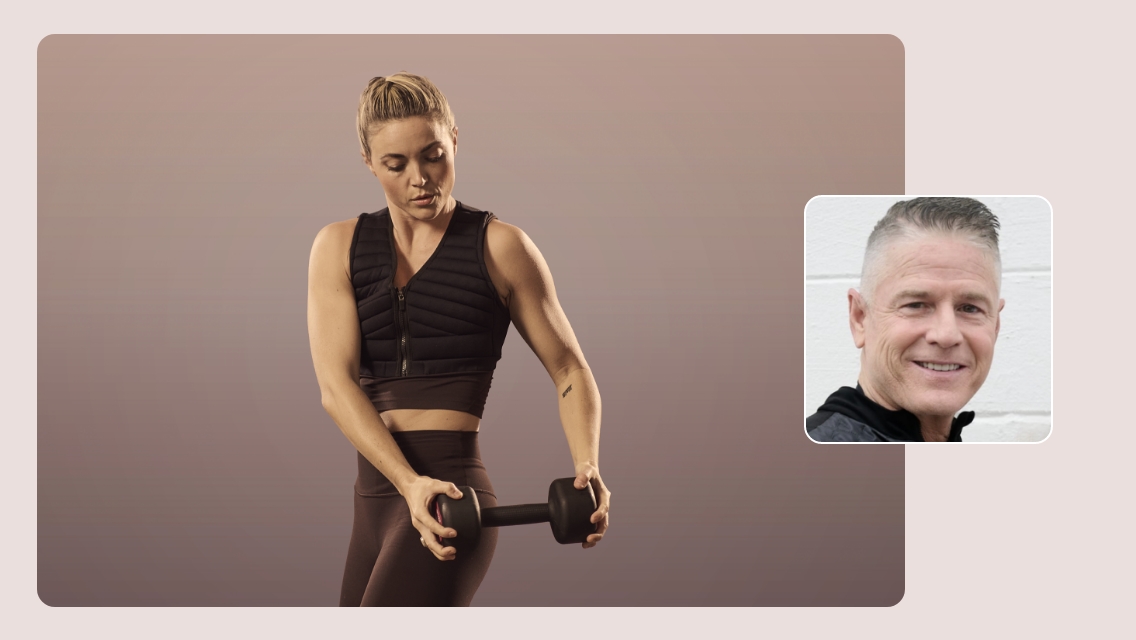

Chances are, you’ve noticed a lot of people wearing weighted vests lately. In this episode, Brent Yates, founder of Aion weighted vests, explores the science behind the trend and why professional athletes, everyday walkers, and everyone in between are putting them on for workouts and daily activities.
Yates explains how the combination of compression, heat, and dynamic resistance in Aion’s vests supports bone density, lean muscle development, and caloric burn all at once. He also shares how his own experience with injury and muscle loss, and how his frustration with existing products led him to build something better.
Beyond the vest, Yates reflects on his journey through physical and emotional rock bottom, what real recovery looks like, and why prioritizing fitness in your 30s and 40s can pay off for decades to come.
Brent Yates is a serial entrepreneur with over 30 years of experience in the business world. He’s the founder of Aion weighted vests and the Wall Street Journal bestselling author of The Gravity of Up.
In this episode, Yates explores the rise of weighted vests, their health and fitness benefits, and the lessons on resilience he’s learned through personal setbacks. Insights include the following:
- Weighted vests are having a real moment: The category grew 50 percent in a single year, driven by rising interest from both everyday fitness enthusiasts and elite athletes. This isn’t viewed as a fad; it’s seen as a category in full stride.
- A fitness tool only works if it becomes part of your lifestyle. Because you can wear weighted vests to the gym, on a walk, or while errands, they fit that description.
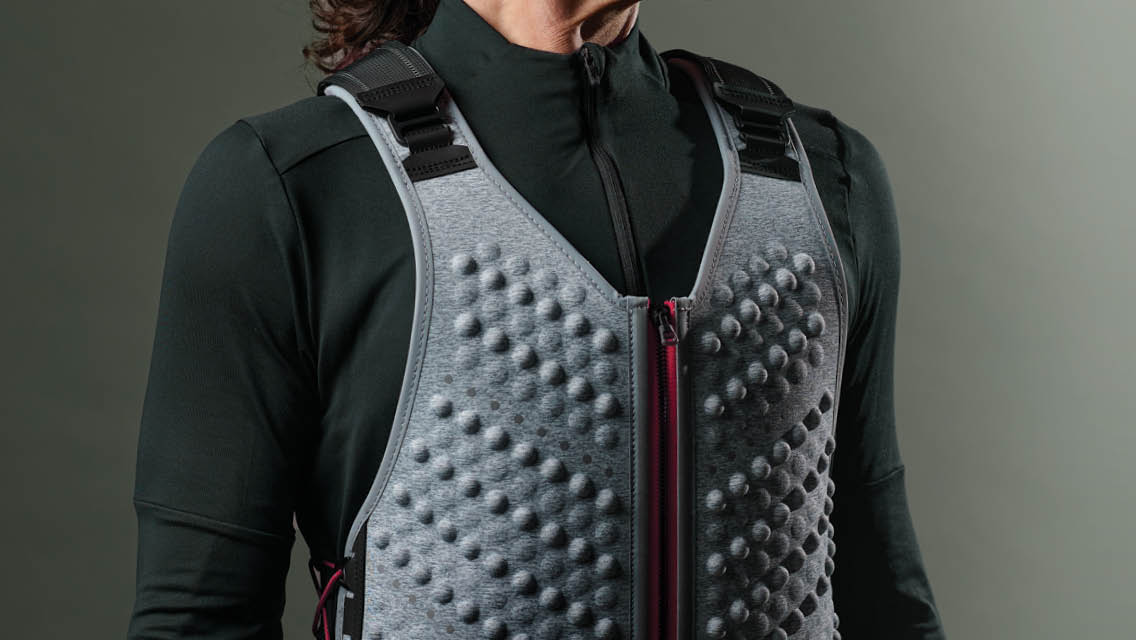
- Many weighted vests only add load; the Aion vest is different in that it adds compression for blood flow, trapped heat for thermogenic benefit, and dynamic resistance that engages your body without constricting your movement.
- Comfort and appearance are factors in whether a weighted vest gets used or ignored. If it feels clunky, looks bad, or limits your range of motion, you’ll stop wearing it. Design is not only cosmetic, but can also help drive adoption and consistent use.
- Adding the weighted vest to your routine can deliver multiple benefits simultaneously, including bone density support, lean muscle development, caloric burn, improved blood flow, and faster recovery.
- Tools that stack multiple benefits into a single session mean you get more from what you’re already doing — without adding more hours to your efforts.
- Start actively engaging in healthy aging practices — including building lean muscle, fueling your body well, focusing on bone density, and moving consistently — as early as you can. It’s never too late to start, but don’t wait until your 60s to take it seriously if you have more time on your side now.
- Hitting rock bottom forced Yates to rebuild his health, mindset, and sense of purpose. That process became the foundation for his book, The Gravity of Up, and how he now helps others.
- Gratitude, the right mentors, and people who believe in you before you believe in yourself are often factors in making a comeback possible. You can’t outwork a broken mindset, and it’s challenging to recover alone.
- Real recovery starts at the bottom of the mountain. Rebuild the habits, do the reps, and remember the mindset that got you there the first time. Rushing the process may only extend it.
Transcript: Load Up: The Science of Weighted Vests and Building a Stronger Life
Jamie Martin
Welcome to another episode of Life Time Talks. I’m Jamie Martin, and I’m really excited for our conversation today. We are talking about the trend that everyone is seeing everywhere of weighted vests. They’re having a moment right now. I’m excited to talk with the founder of Aion, Brent Yates. He created Aion not that long ago. It’s only been a couple of years since you’ve had this. But Brent, you’ve kind of seen the growth of weighted vests rising. So we’re gonna talk about the trend, what’s behind it, the science behind it, how it’s helping people with their health and wellness.
And then I also want to delve in a little into your own personal story. So a little bit of background, Brent Yates is a serial entrepreneur with over 30 years of experience in the business world. You said you founded five companies. I believe so. Five or six companies here. He’s also the founder of, like I said, the Aion Weighted Vest, and a Wall Street Journal best-selling author of the book The Gravity of Up, in which you chronicle what you describe as your arduous passage from brokenness to holistic health. And I definitely want to get there. So thank you for joining me.
Brent Yates
Absolute pleasure to be here.
Jamie Martin
All right. Well okay, so let’s start with this trend that everyone is seeing with weighted vests. It feels like within the last, even just the last six to twelve months, all of a sudden you’ll be — I’ll be in my neighborhood and I see multiple people walking by with weighted vests. What is that about? Where did this come from, it feels like?
Brent Yates
Yeah, so it’s a really really interesting story. When I opened the company sixteen months ago, I would have a team meeting, ten, twelve people and go like no one’s doing what we’re gonna ask them to do. Yeah. And when I said that, very few were doing it. Yet I felt completely passionate that if they would and understand the science and the data that it can transform their bodies and their life, their health inside and outside, that we’d have an amazing company, an amazing run, where we could impact people across the country, across the world. And now we’re headed across the world.
And so our mission statement is to inspire and give people tools to transform their lives. And so that’s kind of my backstory and where I came from. Obviously you mentioned the book, but ultimately the trend is like I asked Chad because it’s really hard to measure, right, a new industry. He said that the weighted vest industry grew 50% last year when I started, and I’m guessing it’s way over that this year. Yeah. And as we get into a partnership with Life Time it’s gonna continue to rocket. So excited to be here.
Jamie Martin
It’s awesome. It’s so fun to see and to see how — I mean I want to get into the science of it too because I know there is actual evidence behind the benefits of putting on these vests. And we want to get into the specifics of the Aion vests too, like what makes them different. But let’s talk about the science. What is that showing about the health and wellness benefits for people right now who are wearing them?
Brent Yates
Yeah, so let me tell you why I built it. Yeah. And then what it took to get what I wanted out of it. Absolutely. And then to study the science, bring the physiologists and the kinesiologists around me as I built the product. Which was key because I was a pipeline welder. A lot of what I built the vest with comes from the oil patch, the synthetic, from the neoprene. We’ve got it loaded with stainless steel slugs, it’s all antimicrobial. But ultimately, I tore my shoulder in 2000.
I wanted to be the longest driver of the golf ball over 62 in the world. That was my — and I had just sold a company but wanted to impact people too. So we had started a foundation, my wife and I, in 2017, wanted to impact people, helping people through natural disaster, got to 2020, COVID hit. And I was doing these long drive golf ball contests and I tore my supraspinatus. Knew it was the end of that run to be the longest driver of the golf ball over sixty. But within five months waiting for surgeries, the protocols for the doctors were messed up, it was in COVID.
Jamie Martin
Like that’s not gonna happen anymore.
Brent Yates
Within five months of PT slowing down, never worn weight before, I went, I have to do something different to get the body back that I had worked so hard on. Right. I’d lost ten pounds of muscle and it had gone to my stomach and I’m like — and now I’m sixty, so I’m fighting father time at the same time.
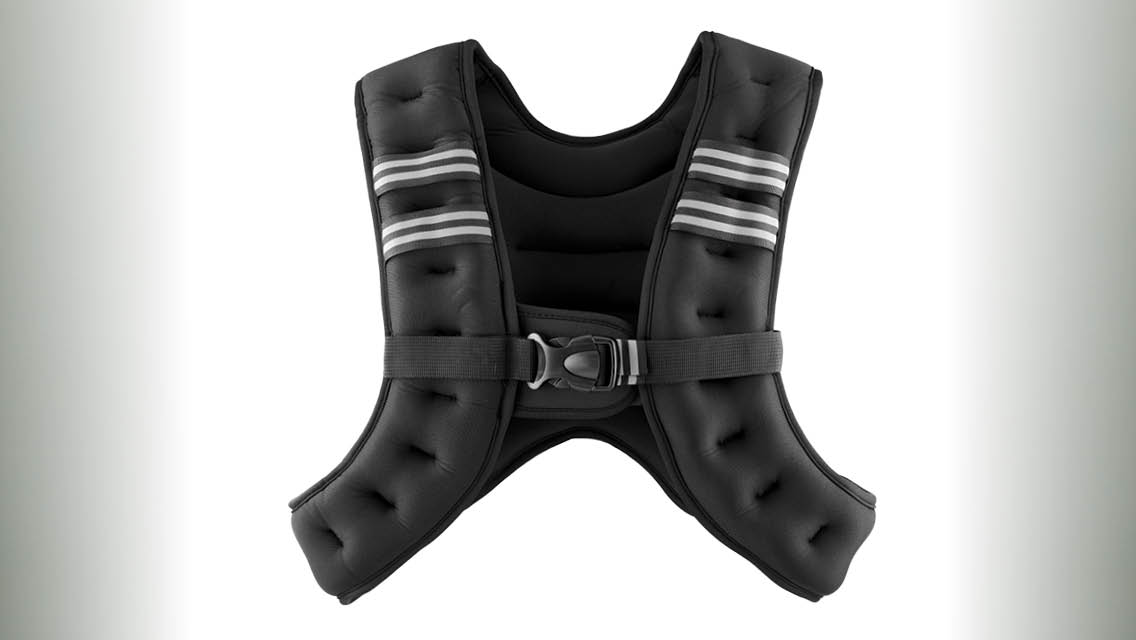
So the process to figure it out was I ordered everything on the market and went, man, if I can put weight on, like load my body, I’ve got a chance to get it back. But again, never doing it. Right. And so the first process was I ordered everything on the market and thought, okay, I’ll find the right weighted vest. And what I found was they all hurt my body and they all looked terrible. And so I’m packing sandbags and there’s steel hanging off me. I can’t do most of my exercise. I did a very F45-type workout where it’s high intensity and on my back, on my legs, moving around, and so I couldn’t do half of what I wanted to do and it hurt my neck. Yeah.
And so I went, okay, what do I know? I know scuba diving and I thought of thermogenics because I wanted to get rid of this. And I thought, if I could compress it to my body, what would that look like? And so I went back to all I knew was compression sleeves and my legs and I’m like — blood flow, recovery. Man, if I could compress this vest to my body and load it, what would I have? So in about a year, probably a less than a year process, I started loading neoprene. It’s all made of neoprene. Okay. Had I just put neoprene in it, it would suffocate your body. So I had to put airwaves in this neoprene and yet trap thermogenically part of your body heat so that we could get the big toxin flush and the caloric burn.
But what came from it obviously is what you’ve seen and what the world is now seeing, and that is a compression weighted, fractional weighted loaded vest that compresses your body. It’s really cool. Nike just came out with the hyper boot.
Jamie Martin
Yes, I’ve seen it.
Brent Yates
The modalities are heat and compression. That’s what I patented. Interesting. And so two years ago, like three years ago, starting in that patent process, it was about heat, it was about compression, and compression is blood flow and recovery. Absolutely. So we’ve loaded it, we’ve made it look good, and now we’re talking bone density, we’re talking caloric burn, we’re talking lean muscle. Yeah. All happening at once. All when you put that vest on, as soon as you get the heart rate going, all these modalities are happening, the science is right there.
Jamie Martin
Right. And just thinking about it, it feels like something you’re wearing more, right? Like versus something you’re adding to your body that feels clunky and uncomfortable. Like this, because of the way it fits, right? It’s not uncomfortable. Yeah. And it’s just different in that way.
Brent Yates
Yeah, you become one with the vest. We talk about that all the time. When you first put it on, you kind of need to hold the weight to go, that’s real. That weight is real. Yeah. Optimally weighted for everybody, for the mass that the NBA’s wearing it, the NFL’s wearing it. There’s professional golfers, hockey players, Jalen Hurts, Kevin Love, LeBron James’ trainer just asked for him about two weeks ago. So we know that we’ve optimally weighted the vest, not to overload your body, but to become one with the vest, move with the vest and do everything in it. That’s where the most results are — once you get the heart rate going. The lungs are compressed a little bit, heart rate goes and everything goes. You’re right into level two and rocking your body.
Jamie Martin
I love that you referenced level two and how do you get there, and I’m sure then you kind of spike up probably into level three depending on what you’re doing. One hundred percent. What are you finding? You’re talking about professional athletes, but there’s also everyday recreational people who are doing this as well. I mean, we’re walking in them, doing workouts in them. Are they doing HIIT workouts in them or what are you seeing in terms of everyday use of the vests?
Brent Yates
Yeah, we just built a walking vest. Well, I have — this is weighted as well. Did I tell — this is weighted as well.
Jamie Martin
No, you didn’t — wear a vest, like a fun vest.
Brent Yates
On the box that goes out with your vest it says to be at the top of your game, it has to become a lifestyle, and I signed that. So every box, thousands of boxes, have gone out with that statement. Yeah. So we want to take it not just in the gym but outside of the gym. Everyday life. We have a compression vest when you’re gonna move, when you — we don’t want to compromise movement, so we compress that to your body. And then we have a more swaggy, much better-looking, but a different design, different makeup of the material. But we want you to look good while you’re toning, while you’re burning calories and doing life.
Jamie Martin
That’s awesome. Now it sounds like the whole development of it — was that in partnership with engineers? What, how did — who did you partner with? Or was that you? Like that was you and then just figuring out how to patent it? What’s the story?
Brent Yates
It’s really a cool story. Fifteen years ago when I went through the transformation of life, went through some really tough times in 2007 and ’08, through the financial crisis, etcetera, went through some hardships. I met a life coach in Phoenix, met a trainer, which is key in my story. Okay. Because I wasn’t training — this would have been at forty-seven years old. I wasn’t training, I wasn’t taking care of my body. I think we kind of live until we have a problem. Yes. And I had no problems until I had a problem. Mentally, physically, I broke down in 2007.
But ultimately a life coach came into my life and we built the vest together. He was very tapped in, I was very tapped in to what the body needed. And so as I built it for my own body, it was like we tapped into what the world would want from a weighted vest, something that would be a tool to transform our bodies. Transformational, 100%. I did Muscle & Fitness magazine at 60, almost 62 years old, and images of me are in there and I look back and go, man, huge comebacks, but what really I see in those pictures is the vascular proponent. Like I’ve got veins — I just got done training in the vest. Veins are popping everywhere and that’s the blood flow. And the recovery, that is the holy grail of the vest.
Jamie Martin
Well and that’s so interesting. You mentioned the compression piece of it. You’re doing the work, but you’re setting yourself up for better recovery after the fact, right? It’s huge.
Brent Yates
Thank you for saying that. Yeah. It takes a minute for people — you can introduce weight and people have heard of weight, but they’ve never heard of dynamic resistance and that’s what we’ve given. The dynamics and the compression and the heat. It’s so cool. Gary Brecka, as you know, is part of our team. It took somebody like him to really enlighten people on like, we’re biohacking here. There’s four or five modalities. You can go buy a weight vest, but you’re just gonna get weight that’s unfunctional and hurts your body, or you can buy Aion that you’re getting compression, resistance, a load, and it intensifies everything you do without slowing you down, and that’s when you get into level two, level three. Yeah. And you get there faster and you stay there. It’s an incredible tool.
Jamie Martin
Yeah. Well and I just think when you think about the importance of setting yourself up for success, right? Like having the right tools in place in order to make progress towards whatever your health and wellness goals are. So if you can be doing four different things at one time, how efficient is that for all of us, right? Like let’s be more efficient in our efforts because we’re putting in the time and effort. Let’s make it as efficient as possible.
Brent Yates
Yeah. Well said again. Ultimately you just have to put the vest on. You change nothing else. You can take a couple of days off because of the benefits you get in the first three days of just wearing the vest. I don’t do that. I’m that other guy that went, I could slow down, but man, if I go the same speed, it’s light years of benefits. The caloric burn is in the hundreds of thousands just by dropping this vest on and doing it weekly in a year. Yeah. It’s incredible. But ultimately you’re gonna be lean or you’re gonna be F45 better and stronger. And you look good while you do it.
Jamie Martin
That’s exciting. Exactly, right? And you’re not gonna feel like I’m wearing this clunky thing on my shoulders or whatever.
Brent Yates
We solved so many things in Aion right from the chute. I knew what we wanted, I knew what we wanted to create, and we did that.
Jamie Martin
That’s awesome. Yeah. I wanna jump back to your story because I think it’s really interesting. You said, you know, you didn’t really do anything to change until something presented itself to you. And I think it’s something we talk a lot about on this podcast and in the magazine, Experience Life, that I run. There’s this whole thing about whether you’re reactive or proactive. And it sounded like 2007, 2008, you had kind of a reactive thing that happened, like forced to change for you. So let’s talk about that a little bit because I think there’s a lot of people who wait until that turning point moment where something has to change, not something I get to change, right?
Brent Yates
100%. Well, obviously it created a book, but I would strongly suggest that if you’re in your thirties and your forties, like you’re paying attention to me, to what’s coming for you. And I talk about comebacks. My platform with podcasts across the country as I go, it’s — I had four surgeries in the last four years. No one would know that because I prepared for the comeback, but know that something’s coming for you. Every day when I wake up, first thing I do is get grateful for where I’m at. I feel that abundance, I tap into the man above and I find peace, but mostly it’s gratefulness. If I can do that every day, life is still gonna come at you. But ultimately when I had the setbacks, the right people came.
And when we tap back into the book, The Gravity of Up, I’ll go into that. But a trainer came. I went to Phoenix. I had gone into Phoenix in 2002 and followed the Buckeyes there from Ohio. Okay. So I followed them in ’02. When I went through the setbacks, I knew something was different about Phoenix, the moon, the stars, the mountains, just the air, the energy of people was different. And I was sick. I had lost about fifty pounds in about four months. I was on a crutch. I had MRSA. It went on and on, convulsions, like I didn’t know if I would live or die. Nor did I feel well enough to really know that I cared. I had almost given up. And so that’s where the book takes off. But in 2002 I had followed the Buckeyes out there. In ’07 when I got ill, I said, I need to go to Phoenix.
Jamie Martin
We need to relocate.
Brent Yates
And people came. If I’d known what I needed, I’d have went and found it long before that. A trainer came, which I lived with for almost a year. He saw me outside of a gym. I wasn’t in the gym, looking up at Camelback Mountain in Paradise Valley, thinking about the mountain. Have you been there?
Jamie Martin
I have.
Brent Yates
So in about a year, that’s what my training, that was my competition. How fast can I run that mountain and get back down? And when I started, I was on a crutch. And so he takes me in, mind, body, and soul, completely tapped in. I lived with him, built a gym right across from the mountain inside of a home and I just changed my life. How I thought, how I ate, what I was putting in my body, how I honored my body. Yeah, I’d never thought of any of that. When you’re healthy, you’re not thinking about that, right? And so when you said, you had to do something — then the life coach came, which Al Fuentes helped me build the vest. He was one of the first guys I grabbed and I went, hey, I got this idea. I’ve been doing it with neoprene. I’ve got nuts and bolts shoved in this thing and it’s transformative. Like I can feel it’s transformative. It feels great, but man, we’ve got to get a utility patent. We’ve got to go through all that, but let’s build this. And so we started doing it in LA.
But he’s been a driving force in my book. He does some meditations in the back of the book. But I transformed. In that — it was about a two-year period. I went from it was all about me to how do I help others? How do I tie people into now what I’ve learned, which I did in the book. Yeah. And then an amazing church and other organizations came in all at once, not just kind of an ego-type-driven dude at that point. Okay. Like had they all not come at once, I probably wouldn’t have made it out. But they all got God-sent all at once. And so we just took off from there.
Jamie Martin
There is something we talk a lot about, kind of the energy that we put out into the world when we need something, right? And it often is like when we just put that out there, the right people, the right resources, they start to come to us, right? Or they start to appear. It’s that whole reticular activating system where it’s like you start to notice it’s there for you if you have it. So let’s talk about your book, The Gravity of Up. Sure. When I was reading through the background for it, talking about invention, adventure, and change is kind of one of the founding pieces of that. So tell me about that and how that fits into what The Gravity of Up is.
Brent Yates
Yeah, so, adventure. I think most people think of change as maybe like, let’s not change, I like where I’m at. Man, I want to change. I want to evolve every day, I want to learn every day. And really what the book tells us and talks about is all the changes that I went through in those 13 years till I wrote the book. Like it’s all about that. If I can transform my body, my mind daily, and I can add value to whoever I’m around, it changes everything in your businesses. Growth is change. Everything I do, I’m looking for what’s next, how do we get there? I still stay in the present moment. But man, if I can change my body at sixty-four years old, like I see that in the mirror, I want to get up and do that again.
Versus back to 2007, everybody was trying to lift me up, I couldn’t pull anybody. And so it all evolved to 2020 when now I’m ready to write the book, tell my story, be very open and appreciative about the people that helped me get there. And the gravity of up on the cover, it’s a vortex and it’s really a magical title. One that — Robbie Tebow, if you know the Tebow family, I — yes, I know. Robbie was in my circle out in Phoenix and one night he called me and goes, dude, I got the title of your book. I’m like, what? He goes, I’m driving in Colorado, I’m in the snow, and I’m listening to Teddy Swims, and he goes, I got this message. He goes, the name of your book’s The Gravity of Up — I just got goosebumps. The Gravity of Up. And I’m like, dude, wow. And so that’s how that happened. But ultimately the book had been written. We were like three weeks away from going to publishing and we dropped the title down, and here we are.
Jamie Martin
Oh my god, that’s exciting. It’s so interesting you say the whole idea of people were pulling you up, you weren’t ready to bring people with you. Let’s talk about the importance of that piece of it, the bringing people along. Because I think when you have it — it’s like the giving back piece of it. So tell me about that.
Brent Yates
Yeah. And so I think when we’re struggling, if we’re fortunate and blessed, people are gonna come around us. Now it’s just about when you look — I know today we’re gonna do an event, the people that Aion has attracted, that we have attracted, the energy that you and I talked about, it’s everything. If I go out there and put off bad energy, that’s what I’m gonna get in return. One hundred percent. And I’ve lived a lot of my life that way, so I recognize that very clearly. But ultimately you can only go so far by yourself, and now it’s about the people you can energize on the mission, and they’re all around me.
So it’s just like, all right, well, let’s go, let’s appreciate today, but I know the vision and where we’re going, and we set that before we started. Like the mission statement, the people that we wanted to attract, the marketing, the companies, the strategic partners. I didn’t want to be in the — how do I want to say — to start a company at 60. We opened, I was 63 years old. I want to go at warp speed. Right. I’ve learned, I’ve done other businesses that have went pretty fast, but we want to go really, really fast. We want to impact people. That’s been my life for about 15 years — how do I tie people into different tools, give them the resource, give them the tool, and help them transform? And I’ve done that. I wrote about it, I published my life and how bad I was and where I’m at now. And so it’s pretty energetic. It’s so true, but the experience of being on a downturn and then turning around your whole — I got a new lease on life. Yeah. And I feel like in this process I’m just getting started.
Jamie Martin
Right. Well and that’s exciting. I think that’s such an important message for people. It’s like no matter where you are, what age or stage you are in life, there’s always another day, a way to start again. Right. And I think there are some practices that help build resilience so that when those hard things happen and a comeback is necessary, what do you tap into personally? Right. And I think that’s huge.
Brent Yates
Yeah, I tap into what’s it gonna look like when I get through PT, what it’s gonna look like when I get through it, 100%. I know I can still go higher, but I’ve got to focus in that moment. Here’s a tool that I’ve learned in comebacks, and I have to articulate it in the right way. I’ve been in the zone, I was a professional golfer, I’ve had some amazing scores, and when people talk about being in the zone — or LeBron James or Michael Jordan — they’re not thinking about how they do it, how they shoot it, it’s just going in. The zone. And it’s a place that most people can’t relate to unless they see it or feel it.
And what happens when you go through a comeback or through a setback — you then have to get in comeback mode, but you usually can’t go right back to where you were in flow. You have to go back to the bottom of the mountain. You’ve got to remember what got you to the top of the mountain, and you have to slowly — not as slow as it took you to get there the first time, but you almost gotta go, all right, I gotta go back to the baseline, I gotta get my mind right. I’ll also maybe summarize it with a professional golfer. If he went through an injury and two months later he goes, okay, I’m ready to play again, he goes to the driving range. He goes, man, I gotta retune this thing. I’ve got to remember what got me in flow. And it’s a process, but really going to the bottom of the mountain and going, all right, what tools did it take me to get where I was at, not trying to go right back there. So many times I went, all right, I just get this done, I’m gonna go right — doesn’t happen that way. And so preparing, going back up the mountain, remembering what got you there is huge.
Jamie Martin
Jump back in. Yeah. My co-host who’s often with me, he often refers to like, you just have to put in the reps. Right. It takes the repetition and the practice so that, you know, when the thing happens, we’re ready. We’ve got the practice, we’ve got the background behind us and the support that we’ve done the work.
Brent Yates
Hundred percent mindset, though. But knowing that we’re gonna get back there and not giving up on that is critical. My wife went through cancer fifteen years ago and her mindset, her strength — I think it almost takes a setback to get that strength. And that’s what I’ve seen from her and kind of what I’ve seen from my own life. But I think preparing, yeah. Something’s coming and being ready for that and then being ready to cross over and get back to where we’re — to where we’re sitting here smiling and laughing and talking about what’s next is so important, and remembering that’s where you’re going. Continue that mindset, then it’s not a struggle.
Jamie Martin
Yes. Always having that. Yeah, absolutely. You’ve mentioned a couple times your age and I just wanna — because I think we have this really great audience at Life Time of people who are in fifty-five plus, who are really all about this active aging and healthy aging. And so we focus a lot on longevity and performance. And I’d just love for you to speak to that for a moment, like what that looks like for you or what that means to you when you hear that.
Brent Yates
Sure. So I think one thing that I talk about, if they’re not a member here or they are a member here, don’t wait until you’re fifty to try to get in shape. Right. I started in my forties, luckily, but I was in terrible shape, because that’s when your body’s gonna start breaking down. It’s naturally degenerating very fast. So getting this right and getting your fitness right, what you’re putting in your body, what you’re feeding your mind, it’s all happening. It’s all gotta be happening at once. But ultimately, don’t wait. Yeah, that’s key.
But once you get here — if you come into your fifties overweight, more than likely you’re in there trying to lose weight and you should be trying to build muscle and lean muscle, and at fifty to sixty, Father Time says no. So you’ve got to get after it right away. You’ve got to get serious about bone density, lean muscle, what you’re putting in your body, how you’re fueling it. I look at it as a race car — I race cars, by the way.
Jamie Martin
So — you got a lot of cool hobbies.
Brent Yates
Yeah, yeah. But ultimately, what are you gonna put in there? And then I look at like my team. Who’s — if I’m in the car, who’s changing my tires, oiling it up, who’s changing the chassis? That’s my team. That’s Life Time, that’s the tools that we give. But you’ve got to focus. If you wanna live healthy, man, you’ve gotta start in your forties. Yep. Don’t take anything for granted, ’cause Father Time’s gonna get you. So those in their 50s coming in, they gotta build muscle. They gotta build this. And that’s why I’m loading my body. Every step I take, I’m toning, I’m burning calories, but it’s also a mindset. Really — if I’ve been like this, I lose posture, it’s gonna beat me up, right? So everything’s engaged right now. Yeah. While I sit here.
So it’s a lifestyle. And like I said on the box, if you wanna be at the top of your game, you’ve got to make it a lifestyle. I’ve made it a lifestyle and it’s a blast. The people that have come — Brian and Jesse and all your Life Time people and all the people around me, Jeremy, Gary Brecka, Jen Gott — we’re all training. We’re in this society, we’re in this process together. And it’s enlightening. It’s, what are we gonna do next? How are we gonna get better as we age? It’s a lifestyle.
Jamie Martin
I love that. So I know we’re coming up on time, but I just wanna — there were two takeaways like right now from your book that you would want people to take in this moment and where you’re at with your life right now, knowing you wrote the book a few years ago. Sure. What would those takeaways be?
Brent Yates
I think the first thing is change. You’re programmed a certain way, certainly as an adult, as a child, how you were brought up, what you thought — that was all fed into you. I think about change as like, who are you, what do you want to do? Not what the world wants you to do, what the world wants you to conform to. It’s not about that. It’s about what’s gonna fulfill you, whether it’s a relationship, whatever it is. And I think it’s all — I don’t think it’s two things. I just think it’s adventure. It’s all in change. It’s all in the people you put around you. One hundred percent you’re gonna break down. Who’s gonna pick you up? What relationships, what mentors have you taken on? I wanna be a mentor. I wanna be a guide for people. I’ve been through so much and now it’s my give-back time. So if the book says one thing, it’s I wanna be your guide. I’ve been through it, I’m now living right here. How did I get there? Well, it wasn’t an easy road, but I can show you some paths.
Jamie Martin
Right. And how do you learn from other people’s experience that relate to that, apply it to your own life and go from there? Yeah.
Brent Yates
So lastly would be — and I tell the young people this — number one, we’re gonna celebrate today, we’re gonna celebrate life, relationships, where we’re going, but it’s mentorship. Everybody on this planet needs to have people that have been there and done that, because you can just get stuck in the weeds and not get out if you don’t have the right people around you. Build relationships, find a mentor, find the right source and get after it.
Jamie Martin
I love that. Well, Brent, thank you so much for joining me today. I’m really excited about the partnership that Aion now has with Life Time. Where can people learn more about you and your product? I know it’s Aion. What’s the website?
Brent Yates
Aion.gear is the website, and then Aion Gear is the Instagram. I can be found at Brent Yates Official. That’s, I think, what they’re calling me, Brent Yates Official. But yeah, you Google me, you’ll find me. And just one last story. Yeah. About three years ago when I started to write the book — four years ago — and then it came into the book and the book came out, and I got to take my grandkids on TV regionally and I did some national TV. But the proudest moment in all this was my grandkids were at school Googling their paw. And I was like, you were doing what? And he was like, yeah, we wanted to show everybody. They were eight years old. And that was like, okay, I can make a bigger impact. And just that went, all right, I can do more.
Jamie Martin
And what a cool role model for those grandkids to have. So I love that they were, as my daughter would say, searching you up and figuring out what you’re all about. So that’s so great. And then they wanted to share it and they wanted to tell their friends about you. That’s amazing. Well, thank you for sharing your story. Thanks for joining.
Brent Yates
One of my coolest moments in the last decade. Absolute pleasure. Thank you for having me.
More like this
We’d Love to Hear From You
Have thoughts you’d like to share or topic ideas for future episodes? Email us at lttalks@lt.life.
The information in this podcast is intended to provide broad understanding and knowledge of healthcare topics. This information is for educational purposes only and should not be considered complete and should not be used in place of advice from your physician or healthcare provider. We recommend you consult your physician or healthcare professional before beginning or altering your personal exercise, diet or supplementation program.
Life Time provides administrative, non-clinical support to MIORA as well as services and amenities related to general wellness and fitness; Life Time does not provide medical advice, diagnosis, treatment or care.
Advertisement